A virtual tour ad is a digital banner or display creative that links directly to an immersive 360° walkthrough or hosted video tour, delivering interactive property viewing before physical visits. Define entities: virtual tour (360° panoramas or stabilized video walkthrough); banner ad (HTML5, GIF, or static creative sized for web inventory); landing experience (embedded viewer or standalone tour page); ad server (delivers creative and counts impressions); tracking pixel (captures engagement events). Virtual tour ads appear on property portals, programmatic networks, social platforms, and publisher sites. They serve exact creatives that open an in-page viewer or a lightbox tour on click.
How do firms set up virtual tour ad campaigns that convert?
Set objectives, select inventory, create standardised creatives, implement event tracking, and connect ad events to CRM for lead qualification and conversion. Start with objectives: booked viewing targets, qualified leads per month, and offer submissions. Select inventory by format: programmatic display, premium publisher placements, and property portals.
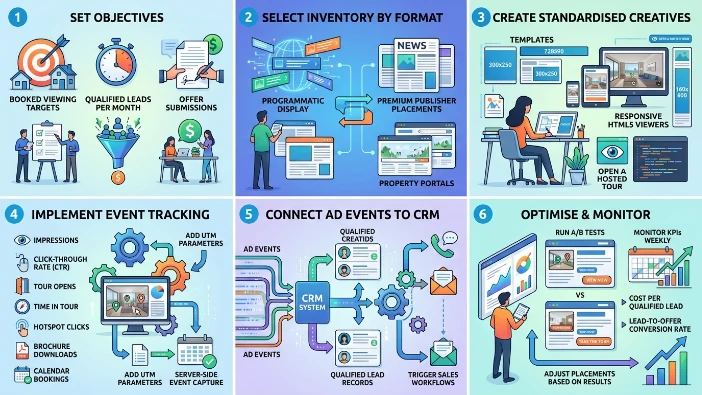
Build creatives to standard ad sizes and responsive HTML5 viewers that open a hosted tour. Implement event tracking for impressions, click-through rate (CTR), tour opens, time in tour, hotspot clicks, brochure downloads, and calendar bookings. Add UTM parameters and server-side event capture. Sync tracked events to CRM to create qualified lead records and trigger sales workflows. Run A/B tests on thumbnails, headlines, and CTA overlays. Monitor KPIs weekly and optimise placements based on cost per qualified lead and lead-to-offer conversion rate.
Which creative elements drive trust and action?
High-fidelity 360° captures, accurate thumbnails, explicit property facts, verified credentials, and calendar booking links create credibility and prompt actions. Produce at least 8–12 panoramas or a 90–180 second walkthrough video for each property. Thumbnails must display a well-lit interior shot with a concise microcopy headline and price in GBP. Include exact area in square metres and square feet, tenure type (freehold/leasehold), EPC rating, and completion date.
Add agent name, registration number, and professional photo. Embed calendar booking buttons that open a pre-filled scheduling form. Display secure page indicators (HTTPS) and a brief privacy note. Ensure thumbnail and tour content match precisely to prevent misrepresentation and reduce complaint rates.
How do firms measure trust and buyer intent from tour interactions?
Measure trust and intent with engagement metrics (time in tour, hotspots), conversion metrics (booked viewings, qualified leads), and revenue metrics (offers and contracts). Primary engagement metrics: average time in tour and percentage of users interacting with hotspots. Secondary metrics: brochure downloads, floorplan views, and calendar bookings. Conversion metrics: booked viewings per 1,000 ad impressions and qualified leads per 100 clicks.
Revenue metrics: offers per 100 booked viewings and closed contracts per quarter. Attribute events using UTMs and server-side signals. Pass tour interaction scores into CRM to prioritise outreach: assign 0–100 engagement scores based on duration and interactions. Use cohort analysis by source and creative to determine which combinations yield the highest offer rates.
What technologies support production and delivery?
Use 360° capture tools, WebGL viewers, HTML5 creatives, dynamic creative optimisation, ad servers, and CRM/analytics integrations for end-to-end delivery. Capture with professional 360° cameras and stitch using standard software. Host tours on WebGL-based viewers that support tile loading and hotspot events. Build responsive HTML5 banners with animated previews or short autoplay video.
Use dynamic creative optimisation (DCO) to swap thumbnails, headlines, and CTAs by audience segment. Deliver creatives through SSPs and ad servers that support click tracking and viewability reporting. Integrate tour events with CRM via API and with analytics platforms for multi-touch attribution. Implement server-side event collection to prevent loss of attribution due to ad blockers.
How do firms manage compliance and user data?
Comply with UK property advertising rules, implement GDPR consent flows, and apply secure storage and limited retention for personal data. Display clear property details, pricing ranges, and tenure information as required by UK regulations. Implement cookie consent banners with granular tracking choices and record consent. Store lead data in encrypted databases and retain contact data for defined periods, for example, 24 months for active prospects and 12 months for inactive records. Provide data subject access and deletion workflows. Add privacy links on tour landing pages and include purpose-specific tracking disclosures for analytics and ad retargeting.
What are the measurable benefits for decision-stage campaigns?
Decision-stage campaigns lower cost per qualified lead, reduce physical viewing volume, and increase offer rates by directing high-intent prospects straight to sales-qualified actions. Compare metrics: campaigns that feed CRM with tour-engaged leads show a 15–35% lower cost per qualified lead versus photo-only campaigns (example: a London development reduced CPL from £320 to £220). Tours lead to a 25–50% reduction in unnecessary viewings for sales teams, saving an average of 5–12 hours of agent time per property per month. Offer rates increase when sales teams receive engagement data: example—a Manchester project converted 22% of tour-engaged leads to offers within 60 days.
Which use cases require tactics?
Final-stage qualification uses engagement scoring and pre-qualification forms to confirm budget and timeline. Guided live tours schedule agent-led walkthroughs via integrated calendar links and video-conference viewers. Retargeting serves specific messages: reduced-price banners, limited units remaining, or exclusive viewing slots. Use personalised creative that references previous tour interactions, such as “You viewed Unit 5B — book a viewing.” For campaign structure and solution selection, where readers need more context on building trust using virtual tour banners.
Explore More Expert Insights:
Mid-Funnel Property Ads That Turn Intent Into Booking Requests
Retargeting Real Estate Campaigns That Convert Warm Leads Into Deal Inquiries
How do firms optimise creative delivery for UK audiences?
Localise pricing and measurements, use British English, prioritise mobile experiences, and target specific postcodes and commuter belts for relevance. Show prices in GBP and areas in square metres and square feet. Use UK spelling and local terms like flat and completion date. Deliver mobile-optimised tours since 60–70% of property browsing in the UK occurs on mobile devices. Target top postcodes and commuter belts for desired markets: central London W1, SW1, Manchester M1, and Edinburgh EH1 for premium prospects. Adjust ad schedules to peak browsing hours: 07:00–09:00 and 20:00–22:00 local time.
What operational controls reduce risk and ensure performance?
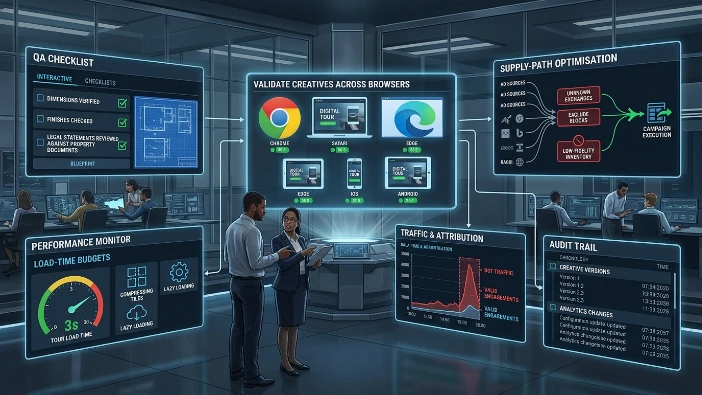
Apply quality assurance on measurements, use load-time budgets, validate creatives across browsers, and exclude low-quality inventory via supply-path optimisation. Run a QA checklist: verify dimensions, finishes, and legal statements against property documents. Keep initial tour load under 3 seconds by compressing tiles and using lazy loading. Test creatives on Chrome, Safari, Edge, iOS, and Android. Use supply-path optimisation to exclude unknown exchanges and lower-fidelity inventory. Monitor for bot traffic and exclude invalid engagements from attribution. Maintain an audit trail for creative versions and analytics changes.