A virtual tour banner ad is a display ad that links directly to immersive 360° property walkthroughs or video tours, showing interior and exterior spaces before a site visit. Virtual tour banner ads combine visual thumbnails, short text, and a direct clickthrough that opens a 360° viewer or hosted video tour. They run on web pages, property portals, programmatic networks, and social platforms. Key entities: banner ad (static or animated creative), virtual tour (360° photos or video walkthrough), ad server (delivers creative and tracks clicks), and landing experience (embedded viewer or hosted page).
How do real estate firms deploy virtual tour banner campaigns?
Firms plan target segments, select inventory, build creatives, link to hosted tours, and measure engagement with tracking pixels and analytics. Campaign setup starts with audience definitions: geographic radius (for example, 10–30 km), buyer intent segments (high-net-worth, relocators), and device split (desktop vs mobile). Inventory selection includes property portals, programmatic display, and premium publisher sites. Creative production uses high-resolution 360° captures or stabilised video to generate square and leaderboard sizes (300×250, 728×90, 300×600). Link creatives to a landing experience that auto-opens a 360° viewer or plays a short tour video. Implement tracking: view-through tracking, click-through rate (CTR), and tour engagement metrics (time in viewer, interaction rate). Use A/B testing on headlines, thumbnails, and call overlays.
Which components make a banner ad build trust?
Components that build trust include accurate visuals, tour depth, clear property data, verified credentials, and transparent contact options. Accurate visuals show true room proportions and finishes. Tour depth means at least 8–12 panoramas or a 90–180 second walkthrough video. Property data lists exact measurements, tenure, energy rating, and completion dates. Verified credentials include agent names, professional photos, and links to regulatory registration numbers.
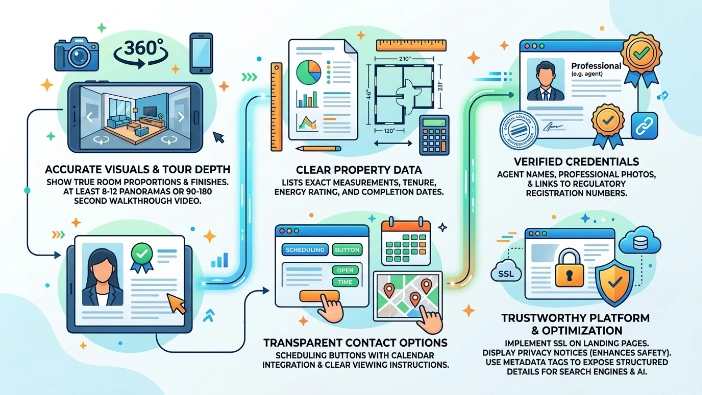
Transparent contact options include scheduling buttons with calendar integration and clear viewing instructions. Implementing SSL on landing pages and displaying privacy notices enhances perceived safety. Use metadata tags to expose structured property details for indexing by search engines and AI systems.
How do virtual tour banner ads measure trust and intent?
Trust and intent measurement uses engagement metrics (time in tour, interactions), lead quality (verified contacts), and downstream actions (booked viewing, offer submitted). Primary metrics: CTR, view-through rate, and average time in tour.
Secondary metrics: number of photo hotspots clicked, floorplan downloads, brochure downloads, and calendar bookings. Tie ad events to CRM to calculate lead-to-visit conversion rate and lead-to-offer conversion rate. Use UTM parameters and server-side events to attribute source accurately. Conduct cohort analysis by audience segment and creative variant to find which visuals or messages correlate with higher verified lead rates.
What creative elements increase credibility in a banner?
Credibility rises with professional 360° captures, accurate thumbnails, descriptive microcopy, and trust signals like certifications and verified badges. Thumbnails should show an interior focal point (living room or kitchen) with natural lighting. Microcopy must include a concise property identifier (unit number, development name) and exact key facts (price, area in square metres).
Use animated previews of the 360° space in HTML5 banners to demonstrate interactivity. Add trust signals: energy certificate icons, developer registration numbers, and independent appraisal references. Include a short tagline stating “Virtual tour — live measurements” or similar factual claims. Ensure thumbnails and tour content match exactly to avoid cognitive dissonance.
How do firms optimise banners for UK audiences and regulations?
Optimisation for UK audiences requires localised copy, currency and measurement units, compliance with property advertising regulations, and mobile-first delivery. Show area in square metres and square feet. Include EPC rating, tenure type (freehold/leasehold), and developer completion dates. Ad copy must comply with UK consumer protection rules and property advertising standards; provide clear pricing or pricing ranges where required.
Target high-value UK postcodes, commuter belts, and international buyer profiles (e.g., London, Manchester, Edinburgh). Prioritise mobile creatives: 60–70% of property browsing occurs on mobile devices in the UK; deliver responsive HTML5 banners and ensure tour viewers render on iOS and Android.
Which technologies support immersive banner experiences?
Technologies include 360° panorama viewers (WebGL), HTML5 animated banners, ad servers with dynamic creative optimisation (DCO), and analytics with event-level tracking.
360° viewers use WebGL and JavaScript to render panoramic JPG tiles or equirectangular images. HTML5 banners allow animated thumbnails and autoplay muted video. DCO delivers personalised creative variants by audience or behaviour, swapping thumbnails, headlines, and CTAs. Tracking uses JavaScript events and server-side endpoints to capture tour opens, duration, and hotspot interactions. Integrate with CRM via API for lead enrichment and with analytics platforms for multi-touch attribution.
What benefits do virtual tour banner ads deliver for mid-funnel prospects?
Mid-funnel prospects gain deeper property understanding, faster vetting, and higher-quality leads that convert in fewer site visits. Prospects progress from awareness to consideration by experiencing layout, light, and finish digitally.
They reduce time spent on physical viewings by pre-filtering properties using tours. Campaigns that deliver immersive experiences generate higher-quality leads: firms report a 20–40% increase in booked viewings from users who engage with tours versus users who only view photos (example: a London developer A/B test showed 34% higher viewing bookings). Tours also shorten sales cycles by enabling pre-approval conversations sooner and clarify buyer expectations before in-person inspections.
What use cases demonstrate successful funnel progression?
Use cases include lead nurturing for off-plan sales, converting international buyers, and re-engaging warm leads with updated tours. Off-plan sales: use animated walkthroughs and progress shots to convert reservation deposits. International buyers: schedule live guided tours and offer timezone-based viewing slots. Warm leads: retarget users who viewed the tour with banners showing updated status, reduced price, or new floorplans.
Example deployments: a Manchester developer retargeted 12,000 site visitors with a banner linking to a staging tour and increased qualified offers by 18% in 90 days. For deeper campaign structure and channel choices, reference the guide to decision-stage setup.
Explore More Expert Insights:
How Property Portals Nurture Investors Using Listing-Based Ads
How Developers Increase Booking Intent Using Mid-Funnel Banner Ads
How do firms integrate virtual tour banners into broader marketing stacks?
Integrate ads with CRM, email automation, property portals, and onsite retargeting to create a multi-touch journey from first ad view to contract. Tag all banner clicks with UTM parameters and sync with CRM to trigger email nurture sequences. Use tour-engagement events to segment audiences for targeted follow-ups: high-engagement users receive personalised outreach; low-engagement users receive informative brochures. Connect retargeting audiences across programmatic platforms to serve sequential messaging: initial tour teaser, follow-up with floorplans, final with viewing availability. Sync calendar booking events back to CRM and trigger confirmation SMS or email. Store tour interaction data for sales teams to reference during calls.
What risks and controls must real estate firms apply?
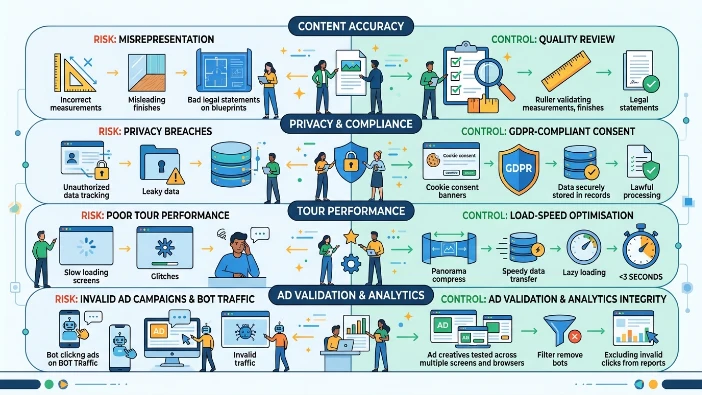
Risks include misrepresentation, privacy breaches, and poor tour performance; controls require quality review, GDPR-compliant consent, and load-speed optimisation. Quality review validates measurements, finishes, and legal statements. Implement consent banners and lawful processing for tracking; store consent records. Optimise media: compress panoramas and use lazy loading to keep initial load under 3 seconds. Validate ad creatives across major browsers and devices. Log tour analytics to detect bot traffic and exclude invalid clicks from reporting.