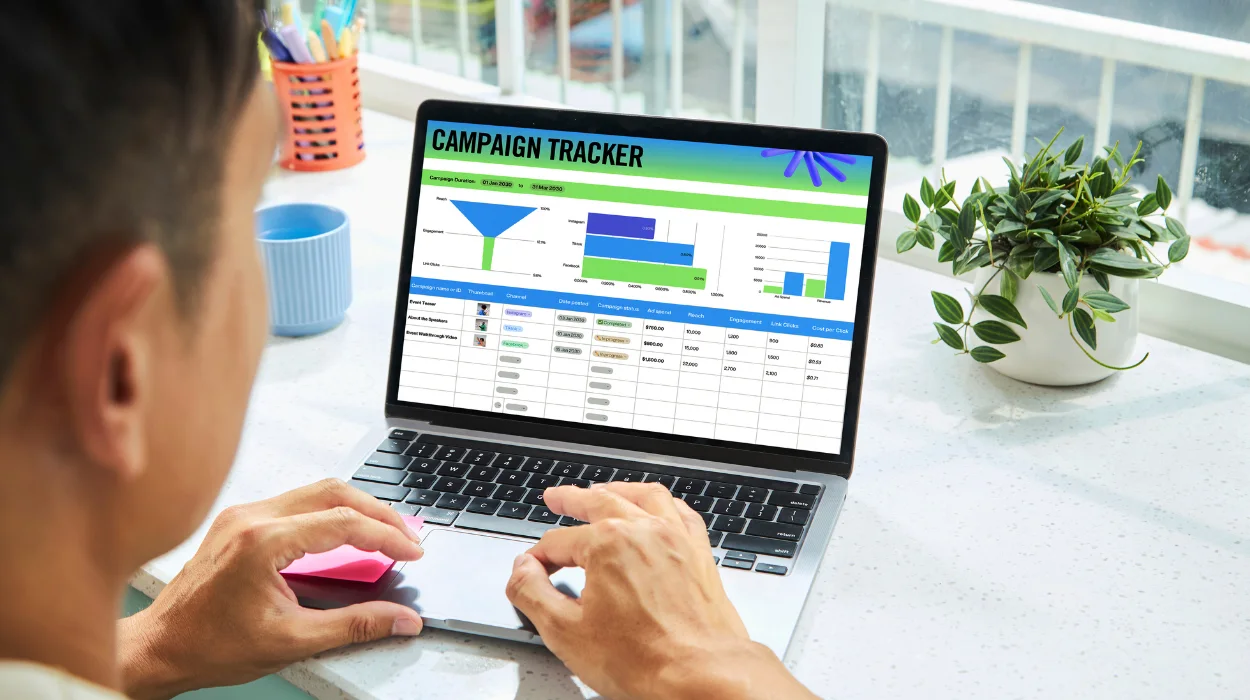
Banner campaigns are targeted digital ad placements that display visual creatives on websites and apps to promote properties and capture buyer interest. Banner campaigns use image, animated, or interactive ads. They run on publisher sites, ad networks, and social platforms. They track impressions, clicks, and conversions. They target audiences by location, demographics, intent, and behaviour.
Banner ads define ad format (static, GIF, HTML5), placement (header, sidebar, in-content), and size (standard IAB sizes like 300×250, 728×90). Campaigns require creatives, landing pages, bidding strategy, and measurement setup. For luxury property sales, campaigns focus on high-value audiences, premium placements, and visual assets that reflect property quality.
How do developers use banner campaigns to reach high-net-worth buyers?
Developers identify affluent audience segments, buy premium placements, and use tailored creatives to deliver property impressions to high-net-worth buyers. Campaigns begin with audience segmentation. Segments include geographic filters (postcode sectors, city districts), income proxies (affluent neighbourhoods), behavioural signals (luxury travel, high-value searches), and professional attributes (executives, entrepreneurs). Advertisers use first-party data and third-party audiences to refine reach.
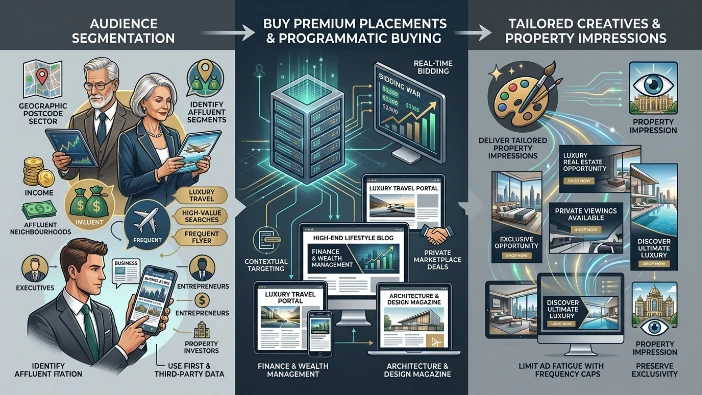
Programmatic buying enables real-time bidding for premium inventory on finance, travel, and lifestyle sites visited by affluent users. Private marketplace deals secure brand-safe, high-visibility slots on specific publisher pages. Contextual targeting ensures ads appear beside relevant editorial content, such as property, finance, or architecture articles. Campaign frequency caps limit ad fatigue and preserve exclusivity.
How do developers design creatives for luxury-property banner ads?
Designs use high-resolution photography, concise value statements, and consistent visual identity to convey exclusivity and investment value. Luxury creatives prioritise imagery: large hero photos of façade, key interior rooms, aerial views, and lifestyle shots. Copy uses precise facts: number of bedrooms, square metres, private amenities, and unique selling points (sea views, concierge). Fonts stay legible at all sizes; colour palettes align with property branding. Animation is subtle: slow pans, crossfades, and light parallax. Interactive elements allow map previews or virtual tour entry points within the ad.
A/B tests evaluate image selection, headline phrasing, and call-through elements. Measurement uses click-through rate (CTR), viewability, time on landing page, and qualified lead events (form starts, virtual tour view). Example: testing a penthouse hero photo versus living-room lifestyle shot across 50,000 impressions reveals the hero photo yields 22% higher CTR.
How do banner campaigns connect to landing pages and virtual tours?
Campaigns link creatives to dedicated landing pages or virtual tours that contain detailed property specifications, media, and contact mechanisms to convert interest into leads. Landing pages present verified property data: price, tenure, floor plans, and EPC rating. Pages host rich media: 360° virtual tours, floorplan viewers, downloadable brochures, and neighbourhood stats. Virtual tours embed measurement hooks to track time spent, room views, and interaction points. Lead capture forms collect name, email, phone, and viewing preferences. For privacy compliance, forms include consent checkboxes aligned to UK data laws.
Developers optimise landing pages for mobile and fast load times. They use server-side rendering for large media and lazy loading for non-critical assets. Page performance metrics include loads under 3 seconds and Core Web Vitals within recommended thresholds. Example: a London riverside scheme reduced landing load time from 6s to 2.5s and increased virtual tour starts by 30% over a 60-day campaign.
What targeting methods improve banner campaign relevance for luxury properties?
Targeting methods include geotargeting, demographic proxies, behavioural segments, contextual placement, and first-party lead lists to reach buyers aligned with property profiles. Geotargeting restricts delivery to ZIP/postcode sectors, commuter zones, and international feeder cities. Demographic proxies use household income data, age bands, and occupation clusters. Behavioural segments capture users who search for luxury travel, high-end automobiles, or premium finance products. Contextual targeting places ads within editorial on wealth, architecture, or city lifestyle. First-party targeting uses prior registrants and CRM audiences for sequential messaging. Combining methods reduces wasted impressions and increases qualified engagement.
Bid strategies prioritise viewability and device mix. Desktop and tablet receive higher bids for high-value visual creatives; mobile receives behaviour-driven creative variants. Example: targeting HNW segments across central London postcodes and affluent suburbs produced a 45% uplift in qualified leads versus broad city targeting.
How do developers measure and attribute success in banner campaigns?
Success metrics include viewable impressions, CTR, engagement with virtual tours, site conversion rate, qualified leads, and cost-per-qualified-lead (CPQL). Viewability measures whether ads are seen; standard threshold is 50% pixels in view for one second for display. CTR shows initial engagement. Post-click metrics track virtual tour starts, time on page, and brochure downloads. Conversion events mark completed lead forms or booked viewings. Attribution models use last-click, multi-touch, and data-driven approaches to allocate value across impressions and clicks. Cross-device identity graphs and server-side event tracking maintain attribution accuracy for users who view ads on mobile and convert on desktop.
Report cadence includes daily delivery metrics and weekly qualified lead analysis. Benchmarks for premium campaigns: viewable CPMs range from £6 to £25 depending on placement and audience; CTRs for luxury creatives range from 0.15% to 0.8%; CPQL targets vary by market but often fall between £120 and £900 for prime UK developments.
What legal and compliance issues affect banner campaigns in the UK?
Campaigns must comply with the UK Advertising Standards (CAP Code), data protection under UK GDPR, and property advertising regulations for accurate consumer information. Ad content must not mislead on price, availability, or property attributes. Required disclosures include tenure type and minimum floor area when relevant. Data collection requires lawful basis and clear consent for marketing communications. Cookie banners must offer granular choices and record consent. Email follow-ups require opt-in where necessary. For cross-border targeting, advertisers confirm lawful bases for international data transfers.
Developers keep audit trails for ad creatives and landing page claims. They maintain accessible terms and privacy notices. Example requirement: stating “leasehold” clearly in listings where applicable to prevent ASA complaints.
What benefits do banner campaigns deliver for luxury developments?
Banner campaigns increase property awareness, drive targeted site traffic, surface engaged prospects, and support later-stage sales activities such as viewings and offers. High-visibility placements deliver mass awareness among defined affluent cohorts. Rich creatives and virtual-tour links create immersive pre-qualification, reducing time wasted on unsuitable inquiries. Measured lead flows integrate with CRM systems to prioritise outreach. Campaigns scale reach across feeder markets, including international buyers in cities like Dubai, Hong Kong, and New York via programmatic placements.
Performance benefits include predictable lead pipelines and data that inform on-market demand. Example outcome: a coastal development using targeted banners reported a 27% higher conversion-to-visit rate among users who viewed the virtual tour versus those who only viewed static listings.
What components make an effective luxury-property banner campaign?
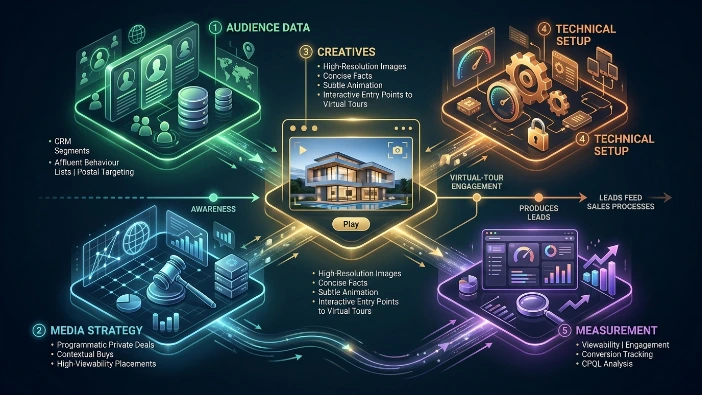
Effective campaigns combine audience data, premium placements, high-quality creatives, optimized landing experiences, and rigorous measurement to convert impressions into qualified leads.
Core components:
- Audience data: CRM segments, affluent behaviour lists, postal targeting
- Media strategy: programmatic private deals, contextual buys, high-viewability placements
- Creatives: high-resolution images, concise facts, subtle animation, interactive entry points to virtual tours
- Technical setup: fast landing pages, server-side tracking, consent management, cross-device stitching
- Measurement: viewability, engagement, conversion tracking, and CPQL analysis
Each component aligns to the property lifecycle: awareness feeds virtual-tour engagement; engagement produces leads; leads feed sales processes.
Explore More Expert Insights:
How Real Estate Companies Improve Conversions Using Retargeting Ads
How Property Portals Increase Traffic Using Banner Ads
What use cases show banner campaigns work for luxury properties?
Use cases include off-plan launches, show-suite promotions, international investor outreach, and time-limited release events where visual impact and targeted reach matter. Off-plan launches use teasers and hero imagery to build waitlists. Show-suite promotions drive bookings for physical viewings with calendar integration. International outreach targets expatriates and overseas investors via targeted publisher networks. Release events use countdown creatives and reserved-invite messaging to prioritise qualified registrants. Measured outcomes track registrations, deposits, and viewing attendance.
Example: A central London off-plan release used sequential banners showing site progress across four phases and logged a 38% higher reservation rate among users exposed to the sequence versus single-touch exposures.
How should developers start planning a banner campaign for a luxury property?
Plan with defined audience profiles, measurable objectives, a media mix that includes premium placements, creative assets aligned to property facts, and analytics setup before launch. Set KPIs: awareness (viewable CPM), engagement (CTR, virtual tour starts), and conversion (CPQL). Build audience lists and secure inventory via private marketplaces. Produce creative sets for desktop, tablet, and mobile, including virtual-tour entry points. Prepare landing pages with complete property data and tracking hooks. Run an initial test phase of 2–4 weeks to collect baseline metrics then scale toward conversion goals.
Banner campaigns enable developers to present luxury properties to targeted affluent audiences with visual fidelity and measurable outcomes. Campaigns require precise audience definition, premium media buys, factual creatives, linked virtual-tour experiences, and strict compliance with UK advertising and data rules. When executed with clear KPIs and robust measurement, banner campaigns produce qualified leads that support subsequent sales stages. Would you like a version tailored to agency planners or internal developer teams