High-intent banner campaigns target users who already show interest in a software solution through searches, website visits, pricing-page engagement, or feature research. These campaigns use display advertisements with relevant messaging to increase SaaS product signups through precise audience targeting, contextual relevance, and repeated visual exposure.
High-intent banner campaigns focus on users who already demonstrate buying-related behaviour. A high-intent user searches for software comparisons, visits pricing pages, reads integration documentation, or interacts with product-focused content. These actions indicate active interest in solving a specific operational problem.
A banner campaign is a digital advertising method that displays visual ads across websites, applications, and online platforms. SaaS companies use these campaigns to keep products visible during the evaluation stage. The campaigns rely on audience data, behavioural signals, and contextual targeting.
In SaaS marketing, signup growth depends on visibility during the decision-making process. High-intent banner campaigns maintain that visibility across multiple digital touchpoints. Users often compare several tools before selecting one platform. Repeated exposure increases familiarity and improves recall during comparison stages.
Banner campaigns differ from general awareness advertising because they focus on conversion-oriented audiences. Generic display advertising reaches broad internet users. High-intent campaigns reach users already connected to the software category.
For readers exploring middle-funnel engagement strategies, explains:
How Tech Companies Drive Trial Consideration Using Display Remarketing Ads
Readers researching conversion-stage optimisation can explore:
How Tech Companies Maximize Trial Conversions Using High-Performance Remarketing Ads
How do SaaS products identify high-intent audiences?
SaaS products identify high-intent audiences through behavioural signals, website interactions, keyword activity, content engagement, and conversion-focused browsing patterns. These indicators reveal active software evaluation behaviour and help marketers deliver banner campaigns to users with stronger signup probability and measurable purchase interest.
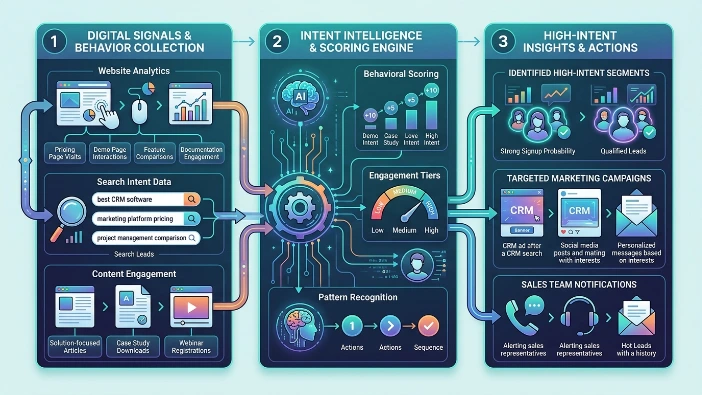
Behavioural tracking forms the foundation of high-intent audience identification. Website analytics systems record user activity such as pricing-page visits, demo-page interactions, feature comparisons, and product documentation engagement.
A user visiting a pricing page three times within seven days demonstrates stronger intent than a user reading a general blog article once. SaaS marketers classify these interactions into engagement tiers based on proximity to conversion.
Search intent also identifies high-intent users. Search queries containing terms such as “best CRM software,” “project management pricing,” or “team collaboration platform comparison” indicate active product research. These users frequently enter the consideration stage.
Content engagement provides another signal. Users downloading whitepapers, viewing integration guides, or reading implementation resources show operational interest. Technical content consumption often indicates internal evaluation within organisations.
Audience segmentation improves campaign efficiency. SaaS companies divide audiences into groups based on actions, industries, company size, and software requirements. For example, finance software campaigns target accounting professionals, while project management platforms focus on operations teams.
Cookie tracking, first-party data, and session analytics support audience refinement. These systems help marketers identify recurring visitors and engagement frequency without relying on broad demographic assumptions.
How do banner campaigns increase SaaS signups?
Banner campaigns increase SaaS signups by improving product visibility during software research, reinforcing brand recall, delivering targeted messaging, and directing qualified users toward signup pages. Consistent exposure across digital platforms strengthens recognition and increases return visits from interested software buyers.
Most SaaS users complete multiple research sessions before signup. Banner campaigns maintain product visibility between those sessions. A user researching automation software on Monday often continues evaluation later in the week. Display banners keep the product present during that process.
Repeated exposure improves familiarity. Familiarity influences user trust during software comparison stages. When users repeatedly encounter the same platform messaging across trusted websites, recognition increases.
Targeted messaging supports relevance. Banner campaigns display different messages based on audience behaviour. A user viewing integration documentation receives integration-focused banners. A user comparing pricing plans receives value-focused banners.
Landing-page alignment also affects signup performance. Banner messaging must match the destination page. If a banner promotes workflow automation, the linked page must explain workflow automation clearly. Consistency reduces friction during user navigation.
Visual clarity contributes to campaign performance. SaaS banner campaigns use concise headlines, product-focused visuals, and action-oriented layouts. Complex visual structures reduce message comprehension.
Time-based targeting improves efficiency. Many SaaS campaigns prioritise business hours because B2B software evaluation frequently occurs during operational work periods. This scheduling increases engagement quality.
Cross-device visibility also supports signups. Users often begin software research on mobile devices and complete signups on desktop systems. Banner campaigns maintain continuity across those environments.
What components make a high-intent banner campaign effective?
Effective high-intent banner campaigns combine audience segmentation, contextual targeting, clear messaging, visual consistency, conversion-focused landing pages, and performance tracking. Each component supports user relevance, engagement quality, and measurable signup growth across the SaaS customer acquisition process.
Audience segmentation determines message relevance. Campaigns targeting startup founders require different messaging than campaigns targeting enterprise procurement teams. Industry-specific targeting improves communication precision.
Contextual targeting places ads beside relevant online content. Project management software banners appearing on productivity websites achieve stronger contextual alignment than placements on unrelated entertainment pages.
Message clarity directly affects engagement. Effective SaaS banners communicate one central idea. Common examples include workflow automation, reporting efficiency, customer communication, or collaboration management.
Visual consistency strengthens recognition. Banner colours, typography, and layouts must align with landing-page design. Consistency improves user confidence and reduces confusion after ad clicks.
Call-to-action structure influences interaction rates. Clear phrases such as “Start Free Trial,” “View Features,” or “Compare Plans” help users understand the next action immediately.
Performance tracking measures campaign outcomes. SaaS marketers monitor click-through rates, signup rates, bounce rates, and assisted conversions. These metrics identify high-performing audiences and placements.
A/B testing improves campaign efficiency over time. Marketers test different headlines, visuals, and audience groups to identify stronger-performing combinations. Testing removes assumptions from campaign optimisation.
Frequency management also matters. Excessive banner repetition reduces effectiveness and increases ad fatigue. Controlled frequency maintains visibility without creating negative user experiences.
Why do high-intent campaigns perform better than broad display advertising?
High-intent campaigns perform better because they focus on users already researching software solutions. Broad display advertising targets general audiences with lower purchase relevance, while high-intent targeting concentrates budget, messaging, and visibility on users closer to signup decisions.
Broad advertising prioritises reach. High-intent campaigns prioritise relevance. Relevance produces stronger engagement because the audience already understands the operational problem.
For example, a visitor researching customer support platforms already recognises the need for ticket management software. A targeted banner supporting that need connects directly with existing interest.
Conversion efficiency improves through focused spending. SaaS companies avoid wasting impressions on unrelated audiences. Campaign budgets concentrate on users more likely to return, evaluate, and register.
Engagement quality also increases. High-intent audiences spend more time on landing pages, view additional product information, and interact with signup flows more frequently than low-intent audiences.
Data accuracy improves optimisation. Since campaigns focus on narrower audience groups, marketers identify meaningful behavioural patterns more quickly. This improves future targeting adjustments.
Broad campaigns generate awareness but often produce lower signup efficiency. High-intent campaigns generate measurable engagement connected directly to evaluation behaviour.
How do SaaS companies use remarketing with banner campaigns?
SaaS companies use remarketing to reconnect with users who previously visited websites, explored product pages, or interacted with software-related content. Remarketing banner campaigns increase repeat engagement by delivering personalised advertisements based on previous user behaviour and interest signals.
Remarketing works through audience tracking systems that record website interactions. After a user visits a SaaS website, advertising platforms display related banners across other websites and applications.
This process increases visibility after the initial visit. Most users do not register during their first session. SaaS buying journeys involve research, internal discussions, and product comparisons.
Different user actions trigger different remarketing sequences. A visitor viewing feature pages receives educational banners. A visitor abandoning signup forms receives completion-focused reminders.
Dynamic remarketing improves message relevance further. These campaigns automatically adjust banner content according to user behaviour. A user exploring analytics features sees analytics-focused banners instead of generic product messaging.
Remarketing also supports lead nurturing. Repeated educational exposure helps users understand functionality, integrations, and operational value over time.
Audience exclusion improves efficiency. Existing customers, inactive users, or converted trial accounts are removed from acquisition campaigns. This prevents wasted impressions and improves targeting accuracy.
Timing influences remarketing performance. Immediate follow-up banners maintain short-term recall, while long-duration sequences support extended evaluation cycles common in B2B SaaS environments.
Explore More Expert Insights:
How Tech Startups Increase Conversions Using Banner Retargeting Ads
How SaaS Brands Scale Growth Using Programmatic Banner Ads
What industries use high-intent SaaS banner campaigns most frequently?
Technology, finance, healthcare, cybersecurity, education, and productivity software industries use high-intent banner campaigns extensively. These industries involve long evaluation cycles, research-heavy buying behaviour, and digital-first product discovery processes that depend on repeated online visibility and audience targeting.
Cybersecurity software companies frequently use banner campaigns because buyers conduct extensive online research before selecting security solutions. Users compare compliance features, threat detection systems, and integration capabilities across multiple providers.
Finance software platforms also depend heavily on high-intent advertising. Accounting systems, payroll tools, and invoicing platforms target businesses researching operational efficiency solutions.
Healthcare SaaS products use targeted campaigns to reach administrators, clinics, and operational managers evaluating digital systems. These campaigns often focus on scheduling, records management, and compliance functionality.
Education technology platforms use banner campaigns during academic planning cycles. Learning management systems, online training tools, and classroom software platforms increase visibility during institutional evaluation periods.
Productivity software companies rely heavily on remarketing and behavioural targeting because collaboration tools involve competitive comparison environments. Buyers frequently compare communication features, integrations, and pricing structures before signup.
Human resources software platforms also benefit from high-intent targeting. Recruitment systems, onboarding tools, and workforce management platforms target operational decision-makers during active software evaluation phases.
How does campaign measurement improve signup performance?
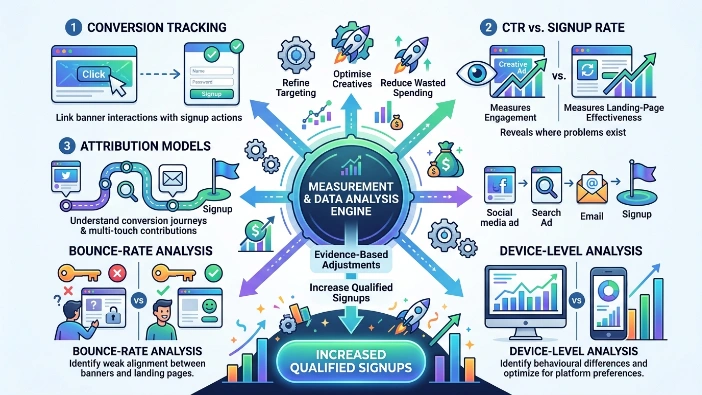
Campaign measurement improves signup performance by identifying successful audiences, effective messaging, high-performing placements, and conversion bottlenecks. Data analysis allows SaaS marketers to refine targeting, optimise creatives, reduce wasted spending, and increase qualified user signups through evidence-based campaign adjustments.
Measurement begins with conversion tracking. SaaS marketers connect banner interactions with signup actions to identify direct performance outcomes.
Click-through rate measures engagement with banner creatives. Signup rate measures landing-page effectiveness after clicks occur. Combined analysis reveals whether problems exist in the advertisement or post-click experience.
Attribution models help marketers understand conversion journeys. Many users interact with several ads before registering. Multi-touch attribution identifies which campaigns contribute most consistently to signup growth.
Bounce-rate analysis identifies weak alignment between banners and landing pages. High bounce rates often indicate mismatched messaging or unclear navigation structures.
Device-level analysis also improves optimisation. Some SaaS products generate stronger desktop conversions, while others attract mobile-first audiences. Measurement systems identify these behavioural differences.
Geographic analysis supports regional optimisation. UK-based SaaS campaigns often adjust messaging, scheduling, and terminology according to local business behaviour and working patterns.
Long-term measurement improves predictive targeting. Historical performance data helps marketers identify which audiences consistently generate higher signup quality and stronger retention rates.
High-intent banner campaigns support SaaS signup growth by combining audience relevance, repeated visibility, behavioural targeting, and conversion-focused messaging. These campaigns operate most effectively when aligned with user intent, landing-page consistency, and continuous performance analysis.