
Final stage display ads in SaaS conversion funnels are highly targeted advertisements shown to users who have demonstrated strong purchase intent, such as pricing page visits or demo requests. These ads focus on completing conversions by reinforcing decision-level information.
Final stage display ads operate at the bottom of the SaaS funnel. They target users already classified as sales-ready leads through prior engagement signals. These users have completed evaluation activities and are close to making a purchase decision.
These ads appear across display networks, remarketing platforms, and high-visibility placements. The messaging is direct, structured, and aligned with conversion completion rather than awareness or consideration.
In SaaS environments, final stage ads function as conversion triggers. They reduce hesitation by reinforcing product value, pricing clarity, and onboarding readiness.
These ads rely on behavioral segmentation. Users are grouped based on high-intent actions such as repeated product comparisons, demo interactions, or pricing engagement.
TOFU: Readers understand awareness-driven ad exposure and early engagement patterns.
MOFU: Readers explore structured lead qualification and evaluation readiness.
BOFU: Readers focus on conversion completion, decision finalization, and customer acquisition outcomes.
How do final stage display ads convert SaaS leads into customers?
Final stage display ads convert SaaS leads into customers by targeting high-intent users, reinforcing decision-level information, and eliminating last-stage hesitation through repeated exposure to structured conversion-focused messaging.
The conversion process begins when a user reaches the sales-ready stage. This stage is identified through behavioral indicators such as multiple pricing page visits, feature comparison activity, and demo engagement.
Final stage ads then deliver focused messaging aligned with decision completion. These ads emphasize product readiness, implementation clarity, and solution fit based on prior interactions.
Conversion efficiency increases because users already understand the product category. Final stage ads eliminate the need for additional education and focus solely on decision reinforcement.
Repeated exposure strengthens conversion confidence. Users encounter consistent messaging across multiple platforms, which reduces uncertainty and increases completion probability.
These ads function as final reminders. They align timing with user intent peaks, ensuring conversion opportunities are captured at maximum readiness.
What data drives final stage SaaS display ad targeting?
Final stage SaaS display ad targeting relies on high-intent behavioral data, including pricing page visits, repeated product engagement, demo requests, and advanced feature interactions that indicate strong purchase readiness.
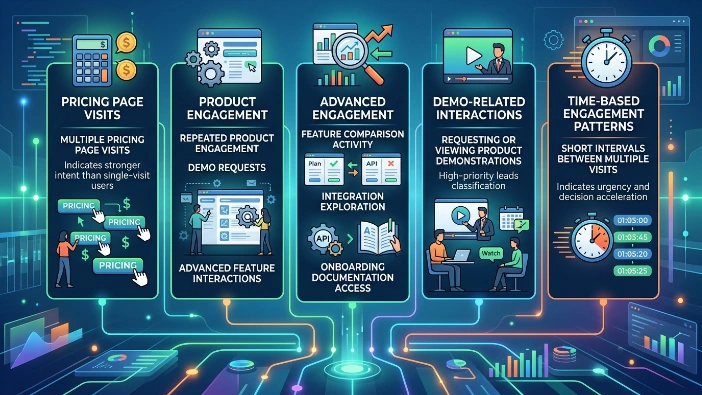
Behavioral signals define conversion readiness. Users interacting with pricing pages multiple times demonstrate stronger intent than single-visit users.
Advanced engagement data includes feature comparison activity, integration exploration, and onboarding documentation access. These signals indicate active evaluation completion.
Demo-related interactions are strong conversion indicators. Users requesting or viewing product demonstrations are classified as high-priority leads.
Time-based engagement patterns also contribute. Short intervals between multiple visits indicate urgency and decision acceleration.
These datasets are aggregated into conversion readiness scores. SaaS platforms use these scores to determine ad exposure frequency and messaging intensity.
Final stage targeting ensures that only qualified leads receive conversion-focused ads. This improves efficiency and reduces wasted impressions on low-intent users.
Why are final stage display ads critical in SaaS customer acquisition?
Final stage display ads are critical in SaaS customer acquisition because they directly influence decision completion, reduce abandonment at the final stage, and maximize conversion rates from already qualified leads.
SaaS acquisition funnels lose users at decision points due to hesitation, comparison delays, or timing issues. Final stage ads address these gaps directly.
These ads maintain visibility during critical decision windows. Users who are close to converting often require repeated confirmation before completing actions.
Conversion probability increases because messaging is aligned with final-stage intent. Ads focus on reinforcing confidence rather than introducing new information.
Cost efficiency improves because targeting is restricted to high-intent users. This reduces unnecessary ad spend on early-stage audiences.
How Tech Startups Increase Conversions Using Banner Retargeting Ads Readers explore how banner retargeting creates awareness and recall through repeated exposure.
Final stage ads ensure that previously qualified leads do not exit the funnel. They act as reinforcement mechanisms that sustain conversion momentum until completion.
What components define effective final stage SaaS display ads?
Effective final stage SaaS display ads consist of intent-based segmentation, conversion-focused messaging, behavioral retargeting systems, and structured creative formats that align with high-intent decision-making stages.
Intent-based segmentation separates users based on conversion readiness. Users with repeated pricing engagement are prioritized over general visitors.
Conversion-focused messaging highlights decision-critical information. This includes pricing clarity, feature completeness, and implementation readiness.
Behavioral retargeting ensures ads are displayed after key interactions. Timing aligns with user evaluation cycles to increase conversion probability.
Structured creative formats maintain consistency across placements. Ads use simplified layouts that emphasize clarity and decision support.
These components ensure that final stage ads function as conversion tools rather than informational assets. Each element supports decision completion.
How do final stage ads support SaaS conversion rate optimization?
Final stage ads support SaaS conversion rate optimization by increasing decision completion rates, reducing funnel abandonment, and improving return on investment from high-intent traffic segments.
Conversion rate optimization focuses on maximizing completed actions from existing traffic. Final stage ads target users already close to conversion thresholds.
These ads reduce drop-off rates. Users who leave at final stages often return after repeated exposure to conversion-focused messaging.
Return on investment increases because ad spend is concentrated on users with validated intent. This improves efficiency across acquisition funnels.
Final stage ads also shorten decision cycles. Users complete evaluations faster due to continuous reinforcement of product value and readiness.
How SaaS Platforms Improve Lead Qualification Using Mid-Funnel Ads Readers understand how retargeting supports consideration and comparison of solutions.
Optimization improves further when ad frequency is aligned with intent intensity. High-intent users receive higher exposure frequency, increasing conversion probability.
What use cases show final stage SaaS display ad effectiveness?
Final stage SaaS display ad effectiveness appears in use cases such as abandoned checkout recovery, demo-to-subscription conversion, pricing page re-engagement, and trial-to-paid upgrade acceleration scenarios.
Abandoned checkout recovery targets users who initiated purchase but did not complete payment. Ads reinforce completion urgency and reduce friction.
Demo-to-subscription conversion focuses on users who completed product demonstrations but did not proceed to purchase. Ads reinforce decision readiness.
Pricing page re-engagement targets users comparing plans. Ads clarify value alignment between features and pricing tiers.
Trial-to-paid upgrade acceleration focuses on users nearing trial expiration. Ads reinforce continuation benefits and feature retention value.
These use cases demonstrate structured conversion recovery. Each scenario targets a specific drop-off point in the final decision stage.
Explore More Expert Insights:
How Software Brands Convert Case Study Readers Into Customers Using Trust-Based Banner Ads
How SaaS Companies Increase Paid Conversions Using High-Intent Feature Retargeting Ads
How is final stage SaaS ad performance measured?
Final stage SaaS ad performance is measured using conversion rate, cost per acquisition, return on ad spend, conversion velocity, and last-touch attribution efficiency across high-intent user segments.
Conversion rate measures completed purchases or subscriptions after ad exposure. It is the primary success indicator for final stage campaigns.
Cost per acquisition evaluates efficiency. It compares total ad spend with the number of acquired customers.
Return on ad spend measures revenue generated from ad-driven conversions. Higher ratios indicate stronger campaign efficiency.
Conversion velocity tracks time between ad exposure and final action. Faster conversions indicate stronger decision readiness.
Last-touch attribution efficiency measures final stage ad influence in multi-touch journeys. It identifies how often these ads close conversion paths.
These metrics provide structured insight into performance effectiveness. SaaS platforms use them to refine targeting precision and improve revenue outcomes.
What is the overall role of final stage display ads in SaaS growth?
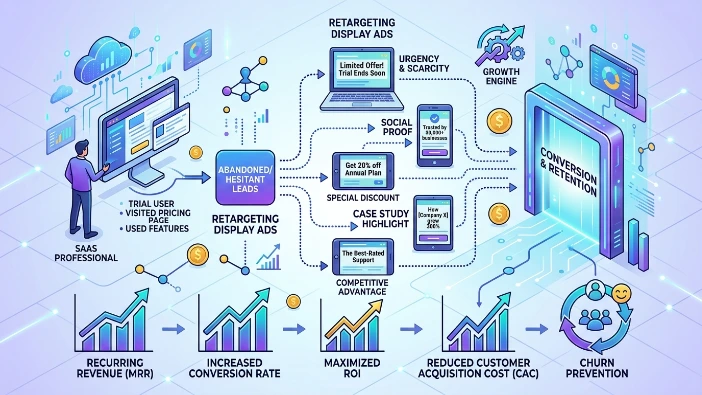
Final stage display ads play a decisive role in SaaS growth by converting high-intent leads into paying customers, stabilizing funnel efficiency, and ensuring maximum value extraction from qualified audiences.
Final stage ads operate at the conversion endpoint. They ensure that leads who have completed evaluation stages transition into paying customers.
These ads stabilize funnel performance by reducing abandonment at critical decision points. This improves overall conversion consistency.
Revenue efficiency increases because marketing efforts focus on users with confirmed intent. This reduces acquisition waste.
Final stage ads also strengthen lifecycle continuity. Converted users often enter onboarding systems with higher engagement readiness.
SaaS growth depends on converting qualified demand into completed transactions. Final stage display ads ensure this transition occurs with maximum efficiency and precision.