
Conversion ads in healthcare marketing are digital advertisements designed to turn informed healthcare audiences into booked appointments, consultation requests, or direct patient inquiries. These campaigns target users who already researched treatments, engaged with healthcare content, and demonstrated strong appointment intent during earlier funnel stages.
Conversion advertising represents the bottom-of-funnel stage in healthcare marketing. At this point, patients already understand their healthcare needs and actively search for appointment access, clinic availability, specialist consultations, or treatment scheduling.
Healthcare conversion ads focus on direct patient actions. These actions include appointment bookings, contact form submissions, telephone inquiries, online consultation requests, and treatment assessment registrations.
A patient reading educational physiotherapy content represents a mid-funnel user. A patient searching for “book physiotherapy consultation near me” represents a conversion-stage user. Conversion advertising targets this second behaviour pattern.
Clinics across the United Kingdom use search advertising, retargeting campaigns, appointment-focused landing pages, and healthcare display ads to increase patient scheduling activity. These campaigns prioritize accessibility, convenience, and direct response communication.
Healthcare conversion ads often include operational information such as same-week appointments, online booking systems, extended clinic hours, consultation availability, or specialist access. These details support immediate patient decision-making.
How do clinics use conversion ads to increase scheduled appointments?
Clinics use conversion ads to increase scheduled appointments by targeting high-intent healthcare audiences with action-focused messaging, streamlined booking systems, and appointment-ready healthcare communication. These campaigns reduce booking friction and guide patients directly from healthcare research into confirmed consultations and treatment scheduling.
Conversion advertising begins with audience identification. Clinics analyse users who previously interacted with treatment pages, healthcare videos, consultation guides, or symptom-related content. These audiences demonstrate measurable healthcare intent.
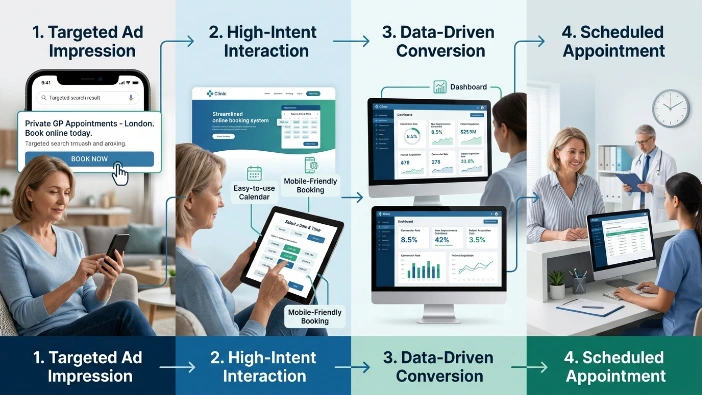
Search advertising plays a major role in appointment conversion campaigns. Patients searching terms such as “private GP appointment London,” “emergency dentist Birmingham,” or “sports injury consultation Manchester” often show immediate booking intent.
Clinics use landing pages designed specifically for conversion activity. These pages include appointment calendars, consultation forms, specialist details, opening hours, and patient contact methods. Simplified booking systems improve scheduling completion rates.
Retargeting campaigns also support healthcare conversions. Patients who previously visited clinic websites often receive follow-up advertisements promoting consultation availability, healthcare assessments, or online scheduling access.
Mobile optimization remains critical because many UK healthcare appointments now originate from smartphones. Clinics improve conversion performance through mobile-friendly booking forms, click-to-call systems, and simplified patient inquiry processes.
Conversion campaigns frequently include trust-building healthcare information. Clinics display practitioner expertise, treatment availability, consultation pathways, and verified patient processes to improve decision confidence.
Why are conversion ads important in healthcare advertising?
Conversion ads are important in healthcare advertising because healthcare decisions often require multiple research stages before patients schedule appointments. Conversion-focused campaigns help clinics transform healthcare interest into measurable patient actions through targeted communication, optimized booking pathways, and appointment-driven digital engagement systems.
Healthcare appointment decisions involve timing, accessibility, treatment understanding, and patient confidence. Conversion advertising addresses these factors directly during the final decision stage.
Many patients complete extensive online healthcare research before contacting clinics. They compare treatment options, evaluate specialist expertise, review consultation processes, and analyse clinic accessibility. Conversion advertising supports this final transition from research into action.
Appointment-focused advertising also improves operational efficiency. Clinics target audiences already demonstrating healthcare intent instead of broadly advertising to low-interest populations.
Conversion campaigns increase scheduling visibility during high-intent moments. Patients searching healthcare booking terms often respond quickly when advertisements align with immediate healthcare needs.
Healthcare conversion systems also improve patient journey continuity. Awareness advertising introduces healthcare topics, mid-funnel advertising educates audiences, and conversion advertising finalizes appointment decisions.
The United Kingdom healthcare sector increasingly depends on digital appointment systems. Online scheduling, mobile consultation forms, and digital healthcare inquiries continue expanding across private clinics, specialist centres, and independent healthcare providers.
Conversion advertising also improves measurement accuracy. Clinics track appointment submissions, consultation requests, booking completion rates, and patient acquisition performance through structured conversion analytics.
What types of conversion ads do clinics use?
Clinics use several types of conversion ads including healthcare search ads, retargeting campaigns, display advertisements, mobile appointment ads, lead generation campaigns, and local healthcare promotion systems. Each format supports patient scheduling by focusing on appointment accessibility and direct healthcare engagement actions.
Search ads remain one of the highest-converting healthcare advertising formats. These advertisements appear when patients search appointment-focused healthcare terms through search engines. High-intent keywords often generate stronger consultation activity because users already seek immediate healthcare access.
Retargeting advertisements reconnect with healthcare audiences who previously visited clinic websites or treatment pages. A patient reviewing dental implant information, for example, can later receive advertisements encouraging consultation scheduling.
Display advertising supports appointment reminders across healthcare websites, local news platforms, and mobile applications. Clinics frequently use visual healthcare messaging to maintain visibility during final decision stages.
Lead generation advertisements simplify patient inquiries by embedding forms directly into advertising platforms. These systems reduce friction because patients submit healthcare requests without leaving the advertisement environment.
Mobile conversion advertising supports smartphone-based healthcare behaviour. Many patients search and book appointments during commuting hours, lunch breaks, and evening browsing periods.
Local healthcare ads also improve regional appointment discovery. Clinics target nearby audiences using postcode-based advertising systems and geographic healthcare visibility campaigns.
Video conversion ads increasingly support healthcare consultation awareness. Short videos explaining appointment procedures, treatment timelines, or healthcare assessments improve patient readiness before scheduling.
How do healthcare landing pages improve patient conversions?
Healthcare landing pages improve patient conversions by providing focused appointment information, simplified booking systems, and direct healthcare communication. These pages remove unnecessary distractions and guide patients toward consultation scheduling through clear healthcare pathways and accessible patient inquiry processes.
A healthcare landing page differs from a standard clinic website homepage. Conversion-focused landing pages prioritize a single patient action such as appointment booking or consultation requests.
Effective healthcare landing pages include consultation forms, specialist information, treatment summaries, operating hours, and contact accessibility within visible page sections. Clear structure improves appointment completion efficiency.
Appointment scheduling systems also influence conversion performance. Clinics using simplified booking interfaces often reduce patient drop-off during form completion stages.
Mobile responsiveness remains essential because a large percentage of UK healthcare traffic now originates from smartphones. Healthcare landing pages optimized for mobile navigation improve patient accessibility.
Healthcare trust indicators strengthen conversion effectiveness further. Patients frequently evaluate practitioner expertise, treatment experience, clinic certifications, and healthcare processes before submitting inquiries.
Speed optimization also impacts appointment performance. Faster-loading healthcare pages improve engagement and reduce abandonment during scheduling activity.
Conversion-focused healthcare content maintains direct relevance. Pages discussing physiotherapy consultations focus specifically on rehabilitation access, treatment expectations, and appointment procedures instead of broad healthcare information.
Clinics also integrate call tracking, booking analytics, and patient inquiry measurement systems into landing pages to evaluate conversion performance accurately.
Explore More Expert Insights:
How Medical Centers Turn Condition Awareness Into Patient Consultations Using Banner Retargeting
How Healthcare Brands Convert Appointment Intent Into Final Bookings Using Banner Ads
What patient behaviours signal healthcare conversion intent?
Healthcare conversion intent appears when patients demonstrate appointment-focused behaviour such as booking searches, repeated clinic visits, consultation page engagement, contact form interaction, and treatment comparison activity. These behavioural signals help clinics identify audiences most likely to schedule healthcare consultations or medical appointments.
Search behaviour provides strong conversion indicators. Patients using phrases such as “book dentist appointment,” “same-day GP consultation,” or “private physiotherapy clinic near me” often show immediate scheduling intent.
Website interaction patterns also reveal healthcare readiness. Patients visiting appointment pages, pricing sections, practitioner profiles, and consultation information repeatedly demonstrate higher booking probability.
Mobile engagement strengthens healthcare intent signals further. Many appointment-focused searches occur on smartphones during urgent healthcare research periods.
Retargeting audiences often show stronger conversion behaviour because they already engaged with healthcare content previously. Repeat visits increase healthcare familiarity and improve appointment likelihood.
Patients also demonstrate conversion readiness through form interactions. Starting consultation forms, checking appointment calendars, and clicking contact buttons indicate active healthcare decision-making.
Video completion behaviour supports intent analysis as well. Patients watching full consultation explainers or treatment walkthroughs often progress further within healthcare decision stages.
Clinics increasingly use behavioural analytics systems to track healthcare conversion pathways across advertising campaigns, websites, and mobile interactions.
Readers wanting broader healthcare awareness insights can explore:
How Clinics Boost Patient Visits Using Geo-Targeted Banner Ads for early-stage healthcare visibility education.
How are clinics improving appointment conversion rates in the United Kingdom?
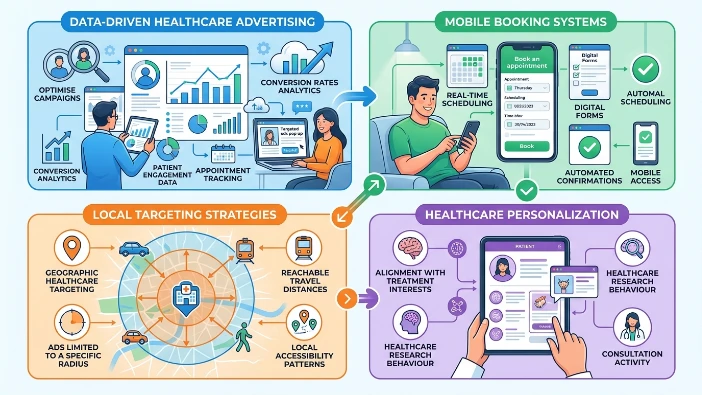
Clinics in the United Kingdom are improving appointment conversion rates through data-driven healthcare advertising, mobile booking systems, local targeting strategies, and patient-focused digital experiences. These improvements streamline healthcare scheduling processes and strengthen patient engagement during final appointment decision stages.
Healthcare advertising technology now allows clinics to optimise campaigns using conversion analytics, patient engagement data, and appointment tracking systems. These tools improve advertising precision and patient targeting.
Online booking systems continue expanding across UK healthcare providers. Clinics increasingly offer real-time scheduling, digital consultation forms, automated confirmations, and mobile appointment access.
Geographic healthcare targeting also improves appointment efficiency. Clinics focus advertising visibility within reachable travel distances to align with local healthcare accessibility patterns.
Healthcare personalization strengthens conversion performance further. Patients receive advertisements aligned with previous treatment interests, healthcare research behaviour, and consultation activity.
Artificial intelligence systems also support healthcare advertising optimization. Automated bidding systems improve advertisement delivery during high-conversion periods and high-intent search activity.
Clinics increasingly integrate educational healthcare content into conversion campaigns. Patients entering booking stages often respond more effectively when advertisements include consultation clarity and treatment transparency.
Healthcare conversion advertising continues evolving alongside digital patient behaviour. Clinics combining awareness campaigns, educational healthcare guidance, and conversion-focused advertising systems create stronger patient acquisition pathways across the healthcare funnel.
Readers exploring patient education strategies before conversion stages can read:
How Clinics Guide Patients Using Mid-Funnel Healthcare Advertising