
Geo-targeted banner ads help clinics display healthcare advertisements to people in specific locations. These ads appear on websites, mobile applications, and digital platforms within selected geographic areas. Clinics use location-based targeting to improve local visibility, increase patient awareness, and support healthcare discovery within nearby communities.
Geo-targeted banner ads are digital display advertisements configured to appear for users in defined locations. A clinic can target people within a 5-mile radius, a postcode district, a city borough, or a regional healthcare zone. The targeting process uses GPS signals, IP addresses, Wi-Fi data, and mobile location tracking systems.
Healthcare clinics in the United Kingdom use geo-targeted advertising to connect with local audiences searching for healthcare information. Dental clinics in Manchester, physiotherapy centres in Birmingham, and family clinics in London often focus advertising campaigns on nearby residential areas where patients actively search for healthcare services.
Banner advertisements include visual healthcare messages displayed across websites, healthcare blogs, weather platforms, news portals, and mobile apps. These ads contain clinic-related information such as healthcare specialties, operating hours, preventive care topics, or nearby availability.
Geo-targeting improves local relevance because healthcare access often depends on travel distance and regional convenience. Research from UK healthcare behaviour studies shows that many patients prefer clinics located within 15 to 20 minutes of travel time from home or work locations.
Readers exploring broader healthcare advertising education can read:
How Clinics Guide Patients Using Mid-Funnel Healthcare Advertising for mid-funnel healthcare communication strategies.
How do geo-targeted banner ads work for healthcare clinics?
Geo-targeted banner ads work by identifying a user’s physical location and delivering relevant healthcare advertisements within that area. Advertising systems analyse location signals, audience behaviour, device activity, and regional search patterns to display healthcare-related banners to nearby users across digital platforms.
The process starts with geographic targeting selection. Clinics define target areas based on patient travel behaviour, population density, healthcare demand, and local demographics. Urban clinics often select smaller radiuses because of high population concentration, while rural clinics use larger regional coverage.
Advertising platforms then identify users located within the chosen area. Mobile devices provide GPS data, while desktop systems often rely on IP-based location detection. Digital advertising systems combine this information with audience segmentation data.
A clinic in Glasgow targeting sports injury treatment, for example, can display advertisements to users visiting fitness websites, sports news platforms, or wellness applications within nearby districts. The healthcare message becomes geographically relevant because the audience lives or works close to the clinic location.
Banner ads appear through programmatic advertising systems. These automated systems purchase advertising space in milliseconds during webpage loading. The advertisement selected depends on geographic relevance, audience behaviour, and targeting settings.
Geo-targeted healthcare advertising also supports time-based delivery. Clinics often increase visibility during high healthcare search periods such as weekday mornings, lunch breaks, and evening hours when patients research appointments and symptoms online.
Healthcare awareness campaigns commonly use educational messaging instead of direct appointment-focused communication at the top-of-funnel stage. This approach helps audiences understand healthcare topics before considering treatment decisions.
To understand how healthcare advertising evolves after awareness stages, explore:
How Clinics Convert Educated Patients Into Scheduled Appointments Using Conversion Ads
Why do clinics use geo-targeted banner advertising?
Clinics use geo-targeted banner advertising to improve local healthcare awareness, increase visibility within nearby communities, and support patient discovery through location-specific messaging. Geographic targeting improves advertising relevance because healthcare services depend heavily on accessibility, travel distance, and regional trust factors.
Healthcare decisions often begin with local research. Patients search for nearby medical support, urgent care information, preventive healthcare services, and specialist availability within reachable areas. Geo-targeted banners position clinics inside these local digital journeys.
Local healthcare visibility supports patient familiarity. Repeated exposure to clinic messaging across websites and applications increases recognition within the surrounding community. Visibility becomes especially important for independent clinics competing within dense urban healthcare markets.
Geo-targeting also improves advertising efficiency. A clinic serving South London patients benefits more from reaching nearby residents than displaying advertisements nationwide. Concentrating impressions within local populations reduces irrelevant exposure and improves contextual alignment.
Seasonal healthcare patterns also influence geographic campaigns. Clinics frequently increase regional advertising during flu season, allergy periods, winter illness spikes, and back-to-school healthcare periods. Local messaging aligns with immediate healthcare concerns affecting nearby communities.
Healthcare accessibility remains another important factor. Many patients select clinics based on transport convenience, parking access, and commuting distance. Geo-targeted campaigns support these location-based healthcare preferences by focusing visibility within reachable zones.
Regional demographic differences also shape healthcare advertising strategies. Family clinics often target residential neighbourhoods with higher child population density, while physiotherapy clinics frequently target areas with active working professionals or fitness communities.
What types of clinics benefit from geo-targeted banner ads?
Many healthcare clinics benefit from geo-targeted banner advertising because healthcare demand is strongly connected to local accessibility. Dental clinics, physiotherapy centres, urgent care facilities, eye clinics, mental health clinics, and family practices frequently use geographic advertising for regional patient awareness campaigns.
Dental clinics use geo-targeted advertising to increase visibility among nearby residents searching for oral healthcare information. Educational campaigns often focus on preventive dentistry, hygiene awareness, and routine examination education within local areas.
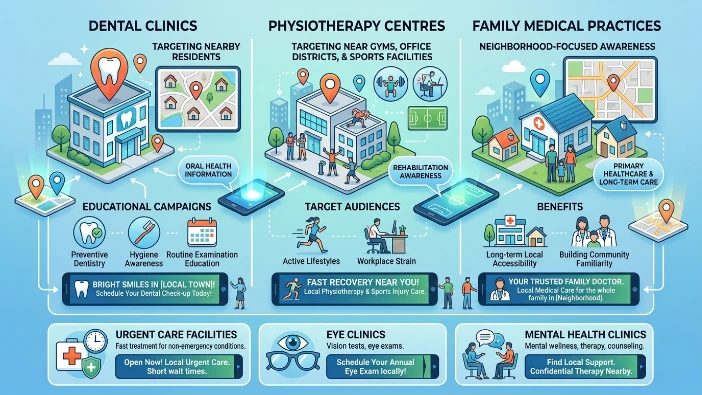
Physiotherapy clinics frequently target people located near gyms, office districts, and sports facilities. Geographic targeting aligns rehabilitation awareness campaigns with audiences exposed to physical activity and workplace strain environments.
Family medical practices benefit from neighbourhood-focused awareness campaigns because primary healthcare often depends on long-term local accessibility. Regional visibility supports familiarity within nearby residential communities.
Eye clinics and optical centres also rely heavily on local discovery. Many patients prefer nearby locations for vision tests, prescription follow-ups, and routine examinations. Geo-targeted awareness campaigns strengthen local healthcare recognition.
Mental health clinics increasingly use location-based awareness advertising to support regional accessibility and community education. Local visibility helps normalize healthcare access within surrounding populations.
Urgent care centres often depend on proximity-based discovery. Geographic advertising increases awareness among nearby users during healthcare-related searches, especially during high-demand seasonal periods.
Specialist healthcare clinics such as dermatology, women’s health, and paediatric centres also use geo-targeted awareness campaigns to improve visibility within defined healthcare catchment areas.
How does location targeting improve healthcare advertising relevance?
Location targeting improves healthcare advertising relevance by connecting healthcare messages with nearby audiences who can realistically access local clinics. Geographic relevance increases visibility efficiency, strengthens contextual alignment, and supports healthcare discovery based on proximity, convenience, and community accessibility patterns.
Healthcare differs from many industries because physical access directly affects decision-making. Patients rarely travel long distances for routine consultations, preventive care, or non-emergency services. Geographic targeting aligns advertising exposure with realistic healthcare travel behaviour.
Regional targeting also improves contextual understanding. A clinic located near university districts often focuses messaging on student healthcare topics, while suburban family clinics frequently highlight general wellness awareness for households and children.
Advertising relevance increases when healthcare messages reflect local conditions. Seasonal respiratory campaigns in colder UK regions, allergy awareness in high-pollen areas, and winter illness education in densely populated urban centres create stronger contextual alignment.
Mobile behaviour strengthens geographic relevance further. Many healthcare searches occur on smartphones during commuting, shopping, or workplace activity. Geo-targeted display advertising reaches audiences during these real-world location interactions.
Healthcare trust also develops through local familiarity. Repeated exposure to geographically relevant healthcare messaging increases recognition over time. Patients often feel more comfortable engaging with clinics perceived as established parts of their surrounding community.
Audience segmentation further improves campaign precision. Geographic targeting combines with demographic filters, healthcare interests, browsing behaviour, and device activity to refine healthcare awareness campaigns.
Explore More Expert Insights:
How Medical Centers Generate Leads Using Banner Ads
How Healthcare Brands Improve Awareness Using Display Advertising
What metrics measure the performance of geo-targeted clinic advertising?
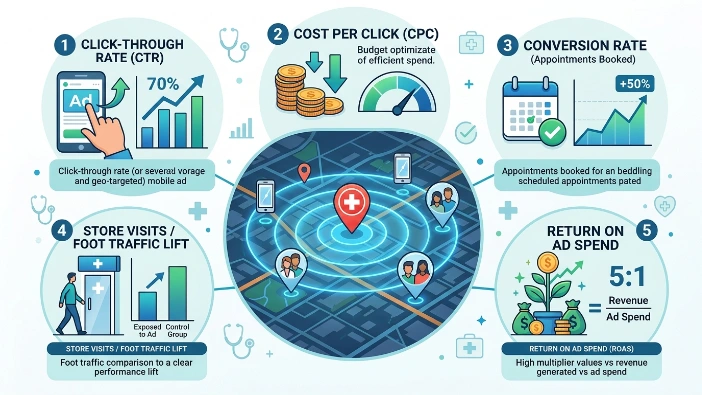
Clinics measure geo-targeted advertising performance using visibility, engagement, location reach, audience interaction, and patient discovery metrics. These measurements help healthcare advertisers evaluate local awareness growth, regional audience exposure, and digital engagement patterns within targeted geographic areas.
Impressions measure how often healthcare banner ads appear before users within selected locations. High impression volume indicates strong regional visibility across digital platforms.
Click-through rate measures how frequently users interact with banner advertisements after viewing them. Healthcare awareness campaigns often monitor engagement trends across different geographic regions and audience groups.
Geographic reach evaluates how effectively advertisements cover selected local areas. Clinics analyse postcode-level performance, district engagement, and regional visibility distribution.
Mobile interaction data provides insights into healthcare discovery behaviour. Many users interact with healthcare advertisements through smartphones during local searches and location-based browsing activity.
Viewability metrics assess whether advertisements remain visible on screen long enough for users to notice the healthcare message. Higher visibility often improves healthcare awareness retention.
Healthcare advertisers also analyse frequency exposure. Repeated local visibility supports familiarity, but excessive repetition reduces engagement efficiency. Balanced exposure improves awareness consistency within targeted communities.
Regional audience segmentation helps clinics identify which local populations interact most with educational healthcare content. These insights improve future campaign alignment and healthcare communication relevance.
How are geo-targeted banner ads changing healthcare marketing in the United Kingdom?
Geo-targeted banner ads are changing healthcare marketing in the United Kingdom by increasing local digital visibility, improving regional healthcare communication, and supporting data-driven audience targeting. Healthcare providers increasingly use geographic advertising systems to align patient awareness campaigns with local healthcare demand patterns.
Digital healthcare behaviour in the United Kingdom continues to expand across mobile devices, regional search activity, and online healthcare research platforms. Patients increasingly discover healthcare information through location-aware digital environments.
Geo-targeting supports this behavioural shift by delivering healthcare messaging directly within relevant communities. Local clinics no longer rely entirely on broad regional advertising methods with limited targeting precision.
Programmatic advertising systems also improve campaign automation. Clinics can adjust regional visibility, audience exposure, and geographic coverage using real-time performance insights.
Healthcare privacy standards remain important within UK healthcare advertising systems. Campaigns operate within digital advertising regulations and data protection frameworks, including regional privacy compliance requirements.
The growth of mobile healthcare discovery continues influencing advertising strategies. Smartphone-based location data allows healthcare advertisers to improve local relevance across urban centres, suburban communities, and regional healthcare zones.
Healthcare awareness campaigns increasingly combine geographic targeting with educational content strategies. Informative healthcare messaging improves public understanding while supporting local clinic visibility within digital environments.