
Mid-funnel healthcare advertising helps clinics engage people who already know about a healthcare service and want more information before making a decision. These campaigns focus on education, comparison, trust-building, and patient guidance through structured digital communication across healthcare advertising channels in the United Kingdom.
Mid-funnel healthcare advertising sits between awareness campaigns and appointment-focused campaigns. At this stage, patients already understand a healthcare need and actively evaluate treatment options, clinic types, healthcare providers, and service availability.
A person searching for physiotherapy exercises after a sports injury represents a top-of-funnel audience. A person comparing physiotherapy treatment methods, recovery timelines, and clinic expertise represents a mid-funnel audience. Mid-funnel advertising addresses this second stage.
Clinics use healthcare display ads, educational landing pages, video explainers, symptom-focused content, and retargeting campaigns to guide patients during the evaluation process. These campaigns increase familiarity and improve healthcare understanding before appointment decisions occur.
Mid-funnel healthcare advertising also supports patient education. UK healthcare audiences increasingly research healthcare conditions online before contacting clinics. Advertising campaigns provide structured information that helps patients understand treatments, consultation processes, and healthcare pathways.
How do clinics guide patients during the healthcare consideration stage?
Clinics guide patients during the healthcare consideration stage by providing educational information, treatment explanations, healthcare comparisons, and trust-focused messaging across digital advertising channels. Mid-funnel communication supports informed decision-making by helping patients understand healthcare services before scheduling consultations or appointments.
Healthcare consideration begins after initial awareness. Patients start researching symptoms, treatments, clinic accessibility, specialist qualifications, consultation procedures, and expected recovery processes. Mid-funnel advertising aligns with these research behaviours.
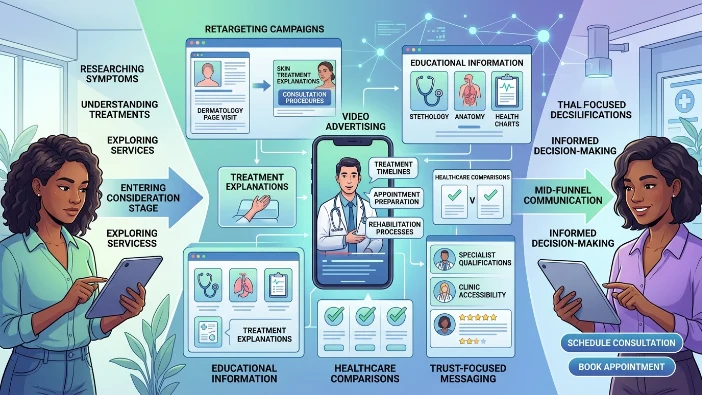
Clinics often use retargeting campaigns to reconnect with audiences who previously interacted with healthcare content. A patient who visited a dermatology information page, for example, can later receive educational banner advertisements explaining skin treatment categories or consultation procedures.
Video advertising also supports patient guidance during the mid-funnel stage. Educational healthcare videos explain treatment timelines, appointment preparation, rehabilitation processes, or preventive care methods. These formats improve healthcare clarity through visual communication.
Search-based healthcare content remains important during this stage. Patients frequently compare healthcare topics such as private versus community clinics, physiotherapy versus chiropractic support, or routine versus specialist consultations. Mid-funnel campaigns provide structured answers to these comparisons.
Email-based healthcare education also supports patient progression. Clinics often share informational content related to healthcare pathways, symptom understanding, and preventive care after users engage with educational healthcare resources.
To explore how patient guidance evolves into appointment-focused healthcare advertising, read:
How Clinics Convert Educated Patients Into Scheduled Appointments Using Conversion Ads
Why is mid-funnel healthcare advertising important for clinics?
Mid-funnel healthcare advertising is important because patients rarely book healthcare appointments immediately after discovering a clinic. Most patients spend time researching healthcare information, comparing providers, evaluating treatments, and understanding healthcare processes before making appointment-related decisions in the United Kingdom.
Healthcare decisions involve trust, accessibility, treatment understanding, and financial consideration. Mid-funnel communication helps patients gather the information required before progressing further in the healthcare journey.
Healthcare advertising data across the United Kingdom shows that patients often interact with multiple digital touchpoints before booking consultations. These touchpoints include healthcare websites, educational articles, symptom pages, social content, and video explanations.
Mid-funnel campaigns maintain clinic visibility during this evaluation period. Without structured follow-up communication, patients frequently disengage or continue researching competitors without progressing toward consultation intent.
Educational healthcare advertising also reduces uncertainty. Patients searching for dental implant procedures, physiotherapy rehabilitation, or mental health consultations often need additional information before taking action. Mid-funnel campaigns answer these informational gaps.
Healthcare communication consistency also improves recognition. Patients exposed to repeated educational healthcare messaging develop stronger familiarity with clinic services, treatment categories, and consultation pathways.
This stage also improves audience qualification. Mid-funnel engagement helps clinics identify patients showing active interest in healthcare information, treatment comparisons, and consultation research.
Readers exploring early-stage healthcare awareness strategies can read:
How Clinics Boost Patient Visits Using Geo-Targeted Banner Ads
What advertising channels support mid-funnel healthcare campaigns?
Mid-funnel healthcare campaigns use digital advertising channels that support patient education, repeat engagement, and healthcare comparison research. Clinics commonly use retargeting ads, healthcare display advertising, educational videos, email campaigns, search advertising, and informational content distribution during the consideration stage.
Retargeting advertising remains one of the most widely used mid-funnel healthcare channels. These campaigns reconnect with audiences who previously visited healthcare websites, viewed treatment pages, or interacted with educational content.
Healthcare display advertising also supports repeated visibility. Educational banners appear across healthcare blogs, wellness platforms, regional news websites, and mobile applications. These advertisements reinforce healthcare messaging during ongoing patient research activity.
Video-based healthcare advertising improves patient understanding. Clinics often use educational videos explaining consultation procedures, diagnostic processes, treatment sessions, and preventive healthcare methods. Visual communication simplifies complex healthcare topics.
Search advertising also supports healthcare consideration behaviour. Patients frequently search for healthcare comparisons, treatment explanations, recovery timelines, and specialist information during the evaluation stage.
Email communication provides structured healthcare nurturing. Informational newsletters, treatment guides, and appointment preparation content maintain patient engagement over longer research periods.
Healthcare content marketing strengthens mid-funnel education further. Clinics publish articles addressing healthcare conditions, symptom explanations, rehabilitation pathways, and preventive care topics to support informed patient research.
Social media advertising also contributes to mid-funnel engagement. Healthcare audiences interact with educational graphics, informational videos, and wellness-focused content while researching healthcare services online.
How does patient education improve healthcare advertising performance?
Patient education improves healthcare advertising performance by increasing healthcare understanding, reducing uncertainty, and supporting informed treatment research. Educational healthcare communication creates stronger engagement because patients actively search for reliable healthcare information before progressing toward consultation and appointment decisions.
Healthcare advertising performs more effectively when patients understand healthcare processes clearly. Educational content answers practical questions related to symptoms, treatment procedures, recovery timelines, consultation expectations, and healthcare outcomes.
Patients researching healthcare topics often compare multiple information sources before selecting a clinic. Educational advertising improves visibility during this research process by providing useful healthcare explanations instead of purely promotional messaging.
Healthcare education also improves engagement duration. Patients spend more time interacting with treatment guides, symptom explanations, and consultation information compared to general awareness advertisements alone.
Educational healthcare campaigns strengthen audience relevance. A patient researching knee rehabilitation exercises, for example, demonstrates higher healthcare intent than a user casually viewing general healthcare advertisements.
Healthcare literacy also influences patient confidence. Clear explanations of diagnostic procedures, therapy sessions, and preventive healthcare pathways help patients understand the next stages of care.
Educational advertising improves continuity across the healthcare funnel. Awareness campaigns introduce healthcare topics, mid-funnel campaigns expand patient understanding, and lower-funnel campaigns support appointment decisions.
Clinics increasingly combine educational articles, retargeting systems, video explainers, and healthcare landing pages to improve patient guidance across multiple research stages.
Explore More Expert Insights:
How Medical Centers Build Awareness Using Condition-Based Banner Ads
How Healthcare Brands Improve Appointment Intent Using Retargeting Ads
What patient behaviours define the mid-funnel healthcare stage?
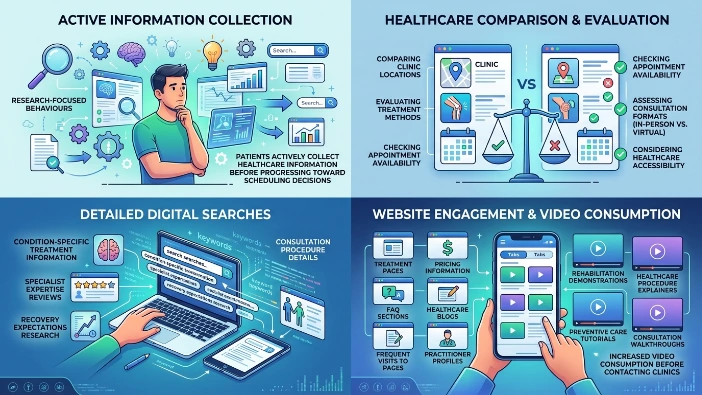
The mid-funnel healthcare stage is defined by research-focused patient behaviours including healthcare comparisons, treatment exploration, symptom investigation, provider evaluation, and consultation research. Patients actively collect healthcare information during this stage before progressing toward scheduling decisions or direct clinic engagement.
Patients at the consideration stage spend significant time evaluating healthcare options. They compare clinic locations, treatment methods, appointment availability, consultation formats, and healthcare accessibility.
Digital healthcare searches become more detailed during this phase. Instead of searching for broad healthcare topics, patients search for condition-specific treatment information, specialist expertise, recovery expectations, and consultation procedures.
Website engagement behaviour also changes. Mid-funnel audiences visit treatment pages, pricing information, FAQ sections, healthcare blogs, and practitioner profiles more frequently than awareness-stage audiences.
Video consumption increases during healthcare consideration. Patients watch rehabilitation demonstrations, healthcare procedure explainers, preventive care tutorials, and consultation walkthroughs before contacting clinics.
Repeat website visits also signal mid-funnel intent. Patients often return multiple times to review healthcare information before progressing toward consultation consideration.
Healthcare audiences also interact with educational advertising formats at higher rates during this stage. Informational display campaigns and healthcare retargeting ads support continued engagement throughout the evaluation process.
Clinics use behavioural data such as page visits, video views, content downloads, and advertisement engagement to better understand healthcare consideration activity.
How are clinics improving healthcare communication through mid-funnel advertising?
Clinics are improving healthcare communication through mid-funnel advertising by using structured educational messaging, behaviour-based targeting, and patient-focused digital content. These communication strategies help healthcare audiences understand treatment pathways, clinic processes, and healthcare options before making appointment-related decisions.
Healthcare communication increasingly focuses on clarity and accessibility. Clinics now provide more structured healthcare information through digital advertising campaigns designed for ongoing patient research behaviour.
Behaviour-based targeting improves message relevance. Patients interested in physiotherapy content receive rehabilitation-focused educational messaging, while patients researching dental procedures receive treatment-specific healthcare explanations.
Retargeting systems also improve communication continuity. Clinics maintain educational visibility across multiple digital platforms after initial patient engagement occurs.
Healthcare content formats continue expanding across digital channels. Clinics now use symptom-focused articles, healthcare infographics, educational videos, treatment explainers, and consultation guides within advertising campaigns.
Mobile healthcare engagement also shapes communication strategies. Many UK patients research healthcare topics through smartphones during commuting hours, evening browsing, and workplace breaks. Mid-funnel advertising adapts to these mobile research patterns.
Data-driven healthcare communication improves advertising efficiency further. Clinics analyse engagement behaviour, content interaction, and audience activity to refine educational messaging over time.