
The conference secured published coverage across 35 outlets that generated 2,000,000 estimated readers, produced 120 referral registrations, and created 18 qualified enterprise leads within 90 days through coordinated pitching and analytics-driven follow-up.
The outcome tied media placements to measurable commercial results. Coverage included national newspapers, trade publications, regional titles, and online aggregators. The organisers tracked referral traffic to the event landing page and attributed registrations using UTM tags. They connected media-driven contacts to the CRM and ran nurture sequences that converted media referrals into meetings. The combined output produced both immediate registration lift and downstream pipeline value tracked at 90 days.
How did the organisers define the media strategy?
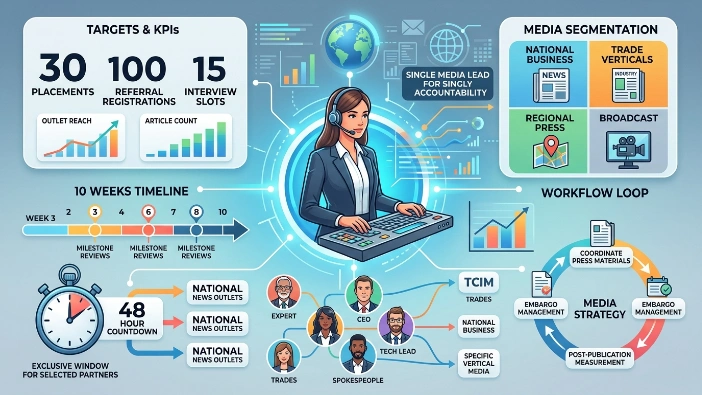
The organisers defined targets, segmented outlets, set KPIs, allocated exclusive windows, and mapped spokespeople to outlet types. They created a 10-week timeline with milestone reviews and assigned a single media lead for accountability.
Targets included outlet reach, article count, referral registrations, and interview volume. Segmentation separated national business, trade verticals, regional press, and broadcast outlets. KPIs used numeric targets: 30 placements, 100 referral registrations, and 15 interview slots. Exclusive windows ran 48 hours for select national partners. The single media lead coordinated press materials, embargo management, and post-publication measurement.
What process produced multi-site pickup?
The process combined a centralised press kit, tiered exclusives, staggered embargoes, targeted subject lines, and timed follow-ups. Each step used tracked links, personalised outreach, and rapid response for verification requests.
The team built one comprehensive press kit with downloadable assets and a short, shareable press release. They offered three 48-hour exclusives to top-tier outlets. After exclusives expired, they released embargoed material to the wider list. Outreach used segmented subject lines tuned for each outlet type. Follow-ups occurred 48 and 24 hours before embargo lift. Journalists received immediate access to spokespeople during UK business hours for fast verification.
What components did the press kit include?
The press kit included a 500-word release, speaker bios, 8 high-resolution images, 90-second B-roll, a one-page agenda, survey data with methodology, and secure download links. All assets had clear usage terms and photographer credits.
The 500-word release summarised event news and highlighted three measurable facts. Speaker bios listed roles and UK affiliations. Images included staged and on-stage shots with captions and credits. B-roll provided visual context for broadcast. The agenda listed session times, panels, and featured speakers. Survey data included sample size and margin of error. Secure links used password protection with access expiry dates.
How were spokespeople prepared and deployed?
The team designated two lead spokespeople, produced 10-minute briefing packs, scheduled 60-minute media rehearsals, and published a two-week interview calendar with fixed time slots for UK and European press.
Briefing packs contained messaging priorities, likely questions, and data points. Rehearsals covered concise quotes and on-camera presence. The interview calendar offered 15- and 30-minute slots across two weeks. Spokespeople limited interviews to booked slots to manage workload. The media lead confirmed interview logistics and provided follow-up material immediately after each conversation.
How did measurement and attribution work?
Measurement used UTM-tagged links, CRM source fields, article monitoring, and a dashboard tracking placements, referral registrations, social shares, and lead conversions at 30 and 90 days. The team used control cohorts to isolate media impact.
Each press link used unique UTM parameters per outlet. The CRM recorded the first-touch source and timestamps for registration and meeting requests. Article monitoring captured publication date, outlet category, and estimated audience. The dashboard reported referral registrations and qualified leads produced within 30 and 90 days. Control cohorts consisted of similar accounts reached via paid channels only to compare conversion differentials.
What role did exclusives and embargoes play?
Exclusives secured headline features in three national outlets. A coordinated embargo produced simultaneous broad coverage after exclusives ended. This approach maximised headline value while ensuring wide distribution on embargo lift.
Exclusives gave top-tier outlets a 48-hour window for in-depth treatment. After exclusives expired, embargoed materials released to the broader list at a set UK time. The embargo specified publication time with UTC offset and required written acceptance. The approach preserved strong initial placements and delivered a controlled second wave of coverage that aligned with the event’s marketing timeline.
What paid and organic amplification supported the media plan?
The team used targeted social promotion, sponsored content placements, and email blasts to amplify earned articles. Paid boosts targeted regions with low organic pickup and doubled referral traffic from 12,000 to 24,000 visits in two weeks.
Social promotion used short clips and article links timed to publication. Sponsored content ran on two industry portals to extend reach in verticals undercovered by earned media. Email blasts segmented by prior engagement status and included excerpts of published coverage. Paid amplification budgets focused on high-conversion regions identified in analytics. Amplification improved registration velocity and increased qualified leads in target sectors.
What risks occurred and how were they managed?
The main risks were an embargo breach and a last-minute speaker cancellation. The team had written embargo agreements and a standby speaker ready. They issued a corrected release and provided immediate additional interview windows to affected outlets.
They mitigated the embargo risk by confirming acceptance before sharing assets and using password-protected links. For the speaker cancellation, the team rerouted interviews to a deputy speaker and provided additional data to journalists. The media lead logged incidents and updated the messaging document to ensure consistent statements across outlets.
Explore More Expert Insights:
Managed Event Coverage vs In-House PR: UK Cost and Reach Analysis 2026
Charity Event Media Coverage Services in the UK
What commercial outcomes proved the model’s value?

The campaign produced 2,000,000 estimated readers, 120 referral registrations, 18 qualified enterprise leads, three partnership inquiries, and a 25% increase in paid delegate sales within 60 days attributed to media coverage.
Metrics linked placements to revenue by tracking registration sources and CRM conversions. Partnership inquiries resulted in two co-marketing agreements signed within 90 days. Paid delegate sales rose by 25% compared with the prior event cycle. The organisers used these outcomes to justify continued media investment and to refine their paid-amplification strategy.
How should teams replicate this model for UK conferences?
Replicate the model by defining numeric KPIs, building a full asset kit, segmenting outlets, offering tiered exclusives, using UTM tracking, preparing spokespeople, and allocating budgets for paid amplification and rapid response.
Click Here to Explore More:
Events Are B2B’s Second-Highest Investment Priority in 2026: What’s Missing?
Set KPIs: placement target, referral registrations, and qualified leads. Create assets: release, bios, images, B-roll, and data appendix. Segment outreach by outlet type and tailor subject lines. Provide written embargo or exclusive terms and confirm acceptance. Tag all links and record first-touch sources in CRM. Reserve a paid amplification budget for targeted boosts. Establish a single media lead and a post-campaign review process to iterate on results.
Learn Everything About It Here:
How to Pitch a UK Corporate Event to 10 News Sites Simultaneously



