
Retargeting ads are digital advertisements shown to users who previously interacted with healthcare websites, appointment pages, or medical service content. Clinics use retargeting campaigns to reconnect with interested patients and guide them toward confirmed consultations, treatment bookings, and in-person healthcare visits.
Healthcare retargeting focuses on patients who already demonstrated service interest online. These users visited healthcare pages, viewed treatment information, interacted with banner campaigns, or searched consultation details before leaving a website without booking an appointment.
Retargeting systems track these interactions through advertising technologies and display follow-up advertisements across websites, mobile applications, and online platforms. This repeated visibility keeps healthcare services present during patient decision-making stages.
For example, a patient reading physiotherapy rehabilitation information may later see follow-up ads promoting sports injury consultations. A dental patient reviewing orthodontic services may encounter reminder advertisements encouraging treatment assessments.
Healthcare retargeting differs from awareness advertising because the audience already understands the service category before the advertisement appears again. Retargeting therefore focuses on conversion activity instead of early-stage education.
Why do clinics use retargeting ads to increase patient visits?
Clinics use retargeting ads to reconnect with previously engaged users, strengthen healthcare recall, reduce appointment abandonment, and increase consultation confirmations. Retargeting campaigns focus on audiences already familiar with healthcare services, creating stronger conversion potential compared with general awareness advertising audiences online.
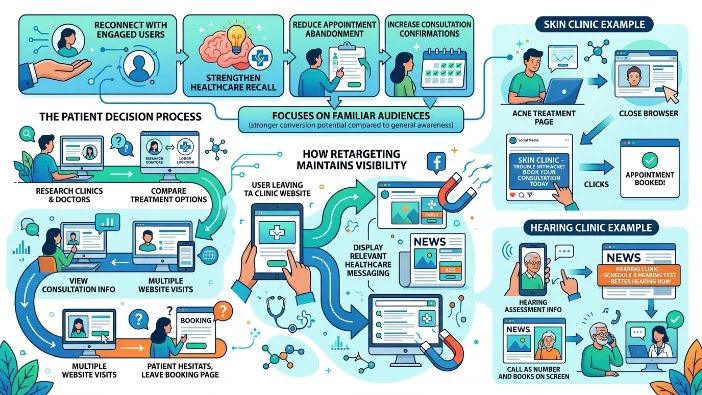
Healthcare decisions often involve multiple research sessions before appointment confirmation occurs. Patients compare clinics, review treatment options, examine consultation information, and revisit healthcare websites several times before taking action.
Retargeting campaigns maintain visibility during this decision period. Instead of losing patient attention after one website visit, clinics continue displaying relevant healthcare messaging across digital platforms.
For example, a skin clinic can retarget users who viewed acne treatment pages but left before booking. A hearing clinic can reconnect with visitors who explored hearing assessment information but did not complete an appointment request.
Repeated healthcare visibility improves patient familiarity and increases return visits to appointment booking systems. Patients already aware of healthcare services respond more effectively to reminder-focused advertising than first-time audiences.
Retargeting also supports appointment recovery. Many users leave booking forms incomplete due to scheduling interruptions, device switching, or additional research activity. Retargeting campaigns re-engage these users with follow-up healthcare messaging.
Clinics using retargeting strategies often experience stronger patient engagement because advertisements target audiences with demonstrated healthcare interest instead of broad untargeted traffic.
How do healthcare retargeting campaigns work?
Healthcare retargeting campaigns work by tracking website visitors and displaying follow-up advertisements based on previous online behaviour. Clinics use tracking technologies, audience segmentation, and targeted messaging to reconnect with patients across websites, mobile apps, and digital advertising networks consistently.
Retargeting begins when a patient visits a healthcare website. Tracking systems record page visits, treatment categories viewed, session duration, and interaction behaviour.
Audience segmentation then separates users based on healthcare interests. A patient viewing physiotherapy rehabilitation receives different advertisements than a patient researching cosmetic dentistry or allergy testing.
After segmentation, advertising platforms display relevant follow-up banners across connected digital networks. These banners appear during later browsing sessions on news websites, health blogs, mobile applications, and entertainment platforms.
For example, a fertility clinic can retarget users who spent more than three minutes reviewing IVF consultation pages. A physiotherapy clinic can reconnect with visitors who viewed sports recovery treatment information twice within seven days.
Healthcare retargeting campaigns also use frequency controls. Clinics limit advertisement repetition to maintain patient comfort and avoid excessive exposure.
Modern retargeting systems function across desktop devices, smartphones, and tablets. This cross-device visibility supports healthcare continuity throughout patient browsing behaviour.
What types of retargeting ads do clinics commonly use?
Clinics commonly use display retargeting ads, appointment reminder banners, dynamic healthcare ads, mobile retargeting campaigns, and consultation-focused advertisements. Each retargeting format supports different patient conversion objectives during healthcare research and appointment decision-making stages across digital channels.
Display retargeting banners are the most widely used format. These ads reappear across websites after users leave healthcare pages without booking consultations.
Appointment reminder banners focus on unfinished booking activity. A patient starting an online consultation request may later see reminder advertisements encouraging appointment completion.
Dynamic healthcare ads personalise content based on viewed services. A user researching dental implants receives dental implant advertisements instead of general dentistry promotions. A patient viewing physiotherapy rehabilitation receives mobility assessment messaging.
Mobile retargeting campaigns specifically target smartphone users. Healthcare browsing increasingly occurs through mobile devices, especially during commuting hours and evening browsing periods across the United Kingdom.
Consultation-focused advertisements emphasise scheduling convenience, specialist availability, and healthcare accessibility. Clinics often use these ads to increase appointment confirmation rates during later-stage decision processes.
Some healthcare providers also use sequential retargeting campaigns. These campaigns gradually change messaging depending on patient interaction history and previous website behaviour.
What information makes healthcare retargeting ads effective?
Effective healthcare retargeting ads include service-specific messaging, clear appointment pathways, concise healthcare communication, trust-focused information, and patient-relevant visuals. Strong retargeting campaigns align advertisement content directly with previous healthcare interests and browsing behaviour patterns of target audiences.
Relevance is the most important factor in healthcare retargeting effectiveness. Patients respond more positively when advertisements match previous healthcare interactions.
For example, a user researching physiotherapy services expects rehabilitation-related follow-up messaging instead of unrelated healthcare advertisements. Matching advertisement content improves engagement and increases return website visits.
Clear appointment messaging also improves campaign performance. Effective healthcare retargeting ads explain consultation availability, specialist categories, and booking accessibility without excessive wording.
Visual simplicity supports readability across mobile devices and smaller advertisement placements. Healthcare advertisements perform better when layouts remain uncluttered and medically relevant.
Trust-focused communication also influences patient response. Clinics often highlight consultation experience, regulated healthcare standards, patient safety protocols, and accessible appointment systems within retargeting campaigns.
Healthcare retargeting campaigns frequently include practical scheduling information such as evening consultations, weekend availability, same-week appointments, or online booking access.
United Kingdom healthcare advertising standards require factual communication and medically accurate messaging. Effective retargeting advertisements therefore avoid exaggerated treatment outcomes and unsupported claims.
How do clinics target high-intent patients with retargeting ads?
Clinics target high-intent patients by analysing website behaviour, identifying healthcare engagement patterns, and segmenting audiences based on appointment-focused actions. High-intent retargeting prioritises users demonstrating strong consultation interest through repeated healthcare interactions and service-specific browsing activity online.
High-intent healthcare audiences usually perform measurable actions before leaving a website. These actions include reviewing appointment pages, viewing consultation pricing, spending extended time on service pages, or returning multiple times within short periods.
Clinics use these signals to prioritise retargeting budgets toward stronger conversion opportunities. A patient revisiting fertility consultation pages three times within one week represents higher appointment intent than a user briefly visiting a general healthcare article.
Audience segmentation improves campaign efficiency because healthcare messaging becomes more personalised and behaviour-focused.
For example, dental clinics often separate users researching cosmetic dentistry from users exploring emergency dental care. Physiotherapy clinics distinguish sports injury audiences from workplace rehabilitation audiences.
Clinics also target patients based on booking-stage activity. Users abandoning online forms, cancelling incomplete scheduling processes, or exiting consultation pages during checkout frequently receive appointment-focused retargeting campaigns.
Geographic targeting further improves conversion relevance. Healthcare providers concentrate retargeting visibility within local service areas to support practical patient accessibility and clinic proximity.
Explore More Expert Insights:
How Healthcare Providers Convert Patient Interest Into Appointment Bookings Using Banner Ads
How EdTech Companies Turn Qualified Leads Into Enrolled Students Using Final Stage Display Ads
What benefits do retargeting ads provide for healthcare clinics?
Retargeting ads provide healthcare clinics with higher appointment conversion rates, improved patient engagement, reduced booking abandonment, stronger healthcare visibility, and increased return website traffic. These campaigns support efficient healthcare advertising by focusing budgets on previously engaged patient audiences online.
Healthcare retargeting campaigns improve advertising efficiency because clinics target users already familiar with healthcare services. This audience familiarity increases engagement quality compared with general awareness advertising.
Appointment recovery represents another major benefit. Many users begin healthcare booking processes but fail to complete consultations during their first visit. Retargeting campaigns encourage these patients to return and finalise appointments.
Repeated healthcare visibility also strengthens trust and familiarity. Patients encountering consistent healthcare messaging across multiple browsing sessions develop stronger provider recognition before appointment confirmation.
Retargeting campaigns additionally support specialist healthcare promotion. Clinics use audience segmentation to reconnect patients with highly relevant treatment categories including dermatology, physiotherapy, orthodontics, fertility consultations, and hearing assessments.
Digital performance measurement improves healthcare marketing analysis. Clinics monitor conversion rates, booking completions, advertisement engagement, return visits, and geographic interaction trends through advertising platforms.
Mobile retargeting further expands patient reach because healthcare browsing increasingly occurs across smartphones throughout the United Kingdom.
Clinics using structured retargeting campaigns often experience more stable appointment pipelines due to stronger patient re-engagement activity.
How do retargeting ads move patients from awareness to confirmed visits?
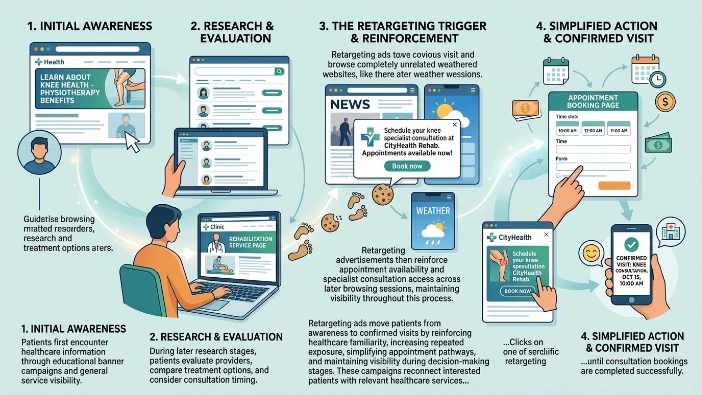
Retargeting ads move patients from awareness to confirmed visits by reinforcing healthcare familiarity, increasing repeated exposure, simplifying appointment pathways, and maintaining visibility during decision-making stages. These campaigns reconnect interested patients with relevant healthcare services until consultation bookings are completed successfully.
The healthcare journey often begins with awareness advertising. Patients first encounter healthcare information through educational banner campaigns and general service visibility.
During later research stages, patients evaluate providers, compare treatment options, and consider consultation timing. Retargeting campaigns maintain healthcare visibility throughout this process.
For example, a patient initially exposed to physiotherapy awareness banners later visits a rehabilitation service page. Retargeting advertisements then reinforce appointment availability and specialist consultation access across later browsing sessions.
This progression creates structured healthcare continuity between awareness and action. Educational campaigns introduce healthcare concepts. Retargeting campaigns encourage appointment completion from already informed audiences.
Healthcare providers also use retargeting to simplify scheduling pathways. Follow-up advertisements frequently direct users back to consultation booking systems, appointment request forms, and treatment information pages.
The combination of repeated visibility, relevant healthcare messaging, and appointment-focused communication improves conversion performance across digital healthcare marketing campaigns.
Readers seeking educational healthcare visibility strategies can explore:
How Clinics Increase Appointment Bookings Using Banner Ads
Readers interested in patient education campaigns can read:
How Clinics Educate Patients Using Service Awareness Banner Campaigns
Retargeting advertising therefore functions as the final conversion-focused stage connecting healthcare awareness with confirmed patient visits and completed consultation journeys.