
Service awareness banner campaigns are digital healthcare advertisements designed to educate patients about available medical services, treatment categories, consultation options, and preventive care information across websites, mobile applications, and online platforms frequently accessed by healthcare audiences in the United Kingdom.
Healthcare banner campaigns focus on patient education before direct appointment intent develops. Clinics use these campaigns to explain healthcare services clearly and improve patient understanding of treatment categories.
A physiotherapy clinic can use banner campaigns to explain sports rehabilitation support. A dermatology clinic can display banners about acne consultations, eczema assessments, and skin screening services. A dental clinic can educate users about oral hygiene treatments and preventative examinations.
These campaigns appear on healthcare websites, news platforms, parenting blogs, fitness portals, and lifestyle publications. Banner placements help clinics maintain visibility while patients research health-related topics online.
Educational banner campaigns differ from direct-response advertising because the objective focuses on awareness and understanding instead of immediate bookings. Patients learn about available healthcare services gradually through repeated exposure.
Why do clinics use banner campaigns to educate patients?
Clinics use banner campaigns to improve patient understanding, increase healthcare awareness, explain treatment categories, and strengthen recognition of available services. Educational campaigns help patients identify healthcare options before beginning active appointment research or provider comparisons online.
Healthcare decisions often begin with information gathering. Patients search symptoms, treatment explanations, preventive healthcare guidance, and consultation types before contacting medical providers.

Banner campaigns support this process by introducing clear healthcare information during online browsing sessions. Educational visibility improves familiarity with medical terminology, consultation categories, and healthcare access pathways.
For example, many patients do not initially understand the difference between physiotherapy rehabilitation, osteopathy treatment, and chiropractic support. Banner campaigns help simplify these distinctions using short educational messaging.
Clinics also use educational campaigns to explain preventive healthcare services. Vaccination clinics often provide awareness messaging during flu season. Eye clinics educate users about routine vision testing. Mental health clinics explain counselling support and wellbeing assessments.
Healthcare education campaigns strengthen patient confidence because individuals better understand available healthcare pathways before seeking consultations.
Digital healthcare communication also supports accessibility. Patients encounter educational information across smartphones, tablets, laptops, and desktop devices throughout daily online activity.
How do healthcare banner campaigns improve patient awareness?
Healthcare banner campaigns improve patient awareness through repeated digital visibility, service-focused education, medically relevant messaging, and contextual online placement. These campaigns expose patients to healthcare information consistently across websites and digital environments connected to health-related audience interests.
Repeated exposure improves healthcare recognition. Patients browsing multiple websites often encounter similar healthcare messages several times during one research cycle. This repetition strengthens memory and familiarity.
A private clinic promoting vaccination awareness can display educational banners across parenting websites, healthcare publications, and community information platforms. These repeated impressions reinforce healthcare visibility.
Contextual placement also improves educational effectiveness. Healthcare banners shown beside relevant medical content receive stronger attention because users already engage with related topics.
For example, banners explaining physiotherapy rehabilitation perform effectively on sports injury websites. Dermatology awareness campaigns align with skincare-related publications. Women’s health awareness banners fit naturally within wellness-focused online content.
Educational banner campaigns also simplify healthcare language. Many medical terms confuse patients during early research stages. Banner messaging reduces complexity by using short explanations and service-focused wording.
Mobile healthcare browsing further increases educational reach. Smartphone users regularly search healthcare topics during commuting, work breaks, and home activities. Mobile banner visibility ensures healthcare education remains accessible throughout these browsing sessions.
What information do effective healthcare awareness banners include?
Effective healthcare awareness banners include clear service explanations, concise educational messaging, accurate healthcare terminology, readable visual design, and patient-focused communication. Strong awareness campaigns prioritise understanding, accessibility, and healthcare clarity across different online audience segments and digital devices.
Healthcare banners work best when they focus on one educational message at a time. A vaccination campaign explains seasonal protection. A physiotherapy campaign highlights rehabilitation support. A dermatology campaign introduces skin assessment services.
Short headlines improve readability. Online users scan content quickly, especially on mobile devices. Healthcare banners therefore use direct language and concise educational structure.
Visual clarity also affects patient understanding. Clean layouts, medically relevant images, readable fonts, and organised spacing improve communication quality across digital environments.
Healthcare awareness campaigns frequently include educational statistics or procedural explanations. For example, hearing clinics often explain the importance of regular hearing assessments for adults over 50 years old. Eye care campaigns commonly promote routine vision examinations for children and older adults.
Accurate healthcare terminology is essential within the United Kingdom healthcare advertising environment. Clinics avoid exaggerated claims and unsupported medical promises. Educational banner messaging remains factual and medically compliant.
Clinics also adapt messaging based on audience behaviour. Younger audiences often respond to mobile-first healthcare communication, while older demographics engage more with clear informational wording and simplified layouts.
How do clinics target educational banner campaigns to the right audience?
Clinics target educational banner campaigns using geographic segmentation, contextual advertising, demographic targeting, healthcare interest categories, and behavioural audience data. These targeting methods align healthcare education campaigns with online users actively researching related medical information and wellness topics.
Geographic targeting focuses healthcare campaigns within relevant service areas. A clinic operating in Birmingham targets nearby users instead of national audiences. This improves local healthcare relevance and practical accessibility.
Contextual targeting places banners beside related content categories. Dental awareness banners appear on oral hygiene websites. Women’s health banners display on maternity and parenting platforms. Sports injury awareness campaigns appear on fitness websites.
Behavioural targeting uses browsing activity patterns. Users researching nutrition, physiotherapy exercises, or chronic pain management later encounter related healthcare awareness campaigns across advertising networks.
Demographic segmentation also improves campaign relevance. Paediatric awareness campaigns target parents with younger children. Menopause education campaigns focus on middle-aged women. Hearing care awareness campaigns often target adults over 50 years old.
Audience-specific educational messaging improves engagement because patients encounter healthcare information connected directly to their interests and healthcare concerns.
Clinics also adjust campaigns seasonally. Vaccination awareness campaigns increase visibility during autumn and winter periods. Allergy-related campaigns rise during spring months. Travel vaccination awareness campaigns expand during holiday travel seasons.
How do banner campaigns support patient education before appointments?
Banner campaigns support patient education before appointments by introducing healthcare concepts, explaining service categories, simplifying treatment information, and improving understanding during early-stage medical research. Educational visibility helps patients prepare for informed healthcare decisions before direct consultation activity begins.
Patients rarely book healthcare appointments immediately after one online interaction. Most individuals spend time researching symptoms, treatment pathways, and healthcare service categories first.
Educational banner campaigns support this journey by delivering simple informational content across multiple digital touchpoints. Repeated educational exposure strengthens familiarity with healthcare terminology and service options.
For example, a patient researching back pain may first encounter banners explaining physiotherapy rehabilitation. Later interactions may introduce posture assessments, mobility evaluations, or sports recovery support.
Healthcare awareness campaigns also reduce uncertainty. Patients unfamiliar with consultation types gain clearer understanding through educational messaging delivered in short digital formats.
Clinics frequently use awareness campaigns to explain preventive healthcare services. Screening programmes, vaccination services, mental health assessments, and routine wellness consultations often require patient education before appointment interest develops.
Educational campaigns therefore function as informational support systems throughout the healthcare research process. This gradual education improves patient readiness and healthcare understanding before consultation decisions occur.
Explore More Expert Insights:
How Healthcare Providers Build Patient Trust Using Informational Banner Ads
How EdTech Companies Nurture Leads Using Curriculum-Focused Display Ads
What benefits do service awareness banner campaigns provide for clinics?
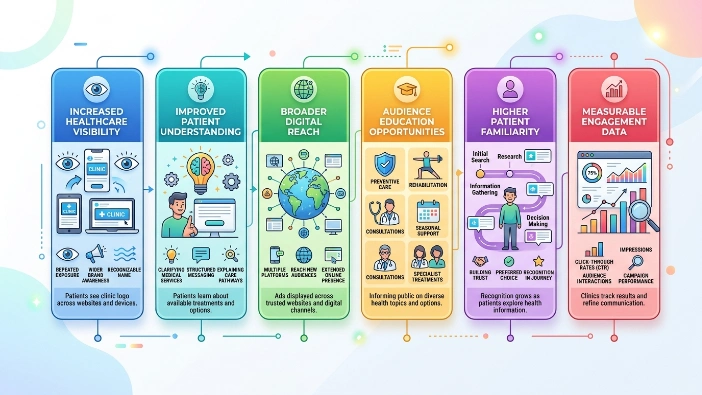
Service awareness banner campaigns provide clinics with stronger healthcare visibility, improved patient understanding, broader digital reach, audience education opportunities, and higher recognition across healthcare research journeys. These campaigns support long-term patient familiarity and strengthen communication across multiple healthcare categories.
Healthcare visibility increases significantly through repeated banner exposure. Patients often remember healthcare services encountered multiple times across trusted websites and digital platforms.
Educational campaigns also improve service understanding. Many patients remain unaware of available healthcare pathways until clinics explain them clearly through structured digital messaging.
Banner campaigns support multiple healthcare objectives simultaneously. Clinics educate audiences about preventive care, rehabilitation services, consultation categories, seasonal healthcare support, and specialist treatment areas through one coordinated awareness strategy.
Digital advertising systems also provide measurable engagement data. Clinics review impressions, click-through rates, geographic performance, and audience interaction behaviour to understand healthcare communication effectiveness more clearly.
Mobile optimisation further improves campaign performance because healthcare browsing increasingly happens through smartphones across the United Kingdom.
Educational campaigns additionally support healthcare accessibility by reaching patients during everyday online activity instead of relying entirely on active healthcare searches.
Healthcare organisations using awareness-focused banner campaigns create stronger informational presence across digital healthcare environments before patients begin direct provider comparisons or appointment selection.
The connection between these stages improves healthcare continuity because patients receive increasingly relevant information throughout their research journey.
Readers exploring early-stage educational visibility can read:
How Clinics Increase Appointment Bookings Using Banner Ads
Readers interested in appointment-focused healthcare retargeting strategies can explore:
How Clinics Turn Service Awareness Into Confirmed Patient Visits Using Retargeting Ads
Service awareness banner campaigns therefore act as the central educational layer connecting introductory healthcare awareness with later-stage patient conversion activity.