
Medical centers in the United Kingdom use condition-based banner ads to increase healthcare awareness among audiences researching symptoms, treatments, and preventive care. These digital campaigns connect healthcare information with relevant medical interests and help healthcare providers reach users during active online health research.
What are condition-based banner ads in healthcare marketing?
Condition-based banner ads are digital healthcare advertisements targeted around specific symptoms, medical conditions, treatments, or health concerns. Medical centers use these campaigns to increase awareness among audiences researching healthcare topics such as back pain, diabetes management, fertility support, or skin conditions online regularly.
Condition-based banner advertising focuses on healthcare relevance instead of broad visibility alone. These advertisements appear beside medical articles, health-related searches, wellness platforms, and healthcare information websites.
A medical center promoting physiotherapy services, for example, places banner ads around content discussing sports injuries, posture correction, and chronic back pain. A dermatology clinic targets users reading information about eczema, acne treatment, or skin irritation.
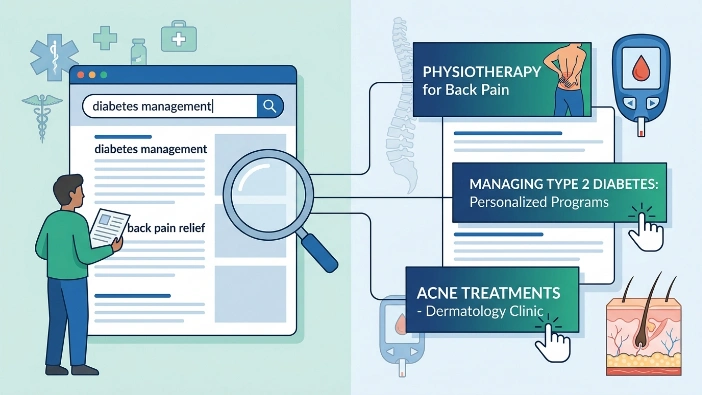
This advertising method improves message relevance because healthcare content matches audience interests directly. Users researching migraine symptoms see headache-related healthcare messaging. Patients exploring respiratory concerns encounter banner ads focused on asthma assessments or lung function testing.
Condition-based campaigns operate within the middle stage of the healthcare marketing funnel. They move beyond general awareness and focus on audiences already demonstrating healthcare interest.
How do medical centers use condition-based targeting in banner campaigns?
Medical centers use condition-based targeting by aligning banner advertisements with healthcare content categories, symptom research behavior, and treatment-related browsing activity. This targeting process increases healthcare relevance, improves audience engagement, and strengthens awareness among users actively researching medical conditions and treatment information online.
Healthcare advertising platforms categorize digital audiences according to browsing activity and content engagement. Medical centers use these audience segments to deliver healthcare messages related to specific conditions.
A cardiology clinic targets audiences researching blood pressure management, cholesterol control, and chest discomfort information. A fertility center focuses banner placements around ovulation tracking, IVF education, and reproductive health content.
Condition-based targeting also includes contextual placement. Banner ads appear beside healthcare-related articles, symptom checkers, and educational resources relevant to specific medical topics.
Geographic targeting strengthens healthcare relevance further. A private clinic in Birmingham targets nearby users searching for allergy assessments during peak pollen seasons. A Manchester physiotherapy center focuses campaigns around sports injury awareness during football league activity periods.
Healthcare campaigns also adapt according to seasonal health trends. Flu-related banner campaigns increase during autumn and winter months. Hay fever awareness advertising expands during spring and summer.
This approach improves healthcare message precision because audiences already demonstrate active medical interest before viewing the advertisement.
Why do condition-based banner ads improve healthcare awareness?
Condition-based banner ads improve healthcare awareness because they connect medical information with existing healthcare research behavior. Medical centers increase message relevance when healthcare advertisements align directly with symptoms, treatment interests, and condition-specific educational content already attracting audience attention online across digital platforms.
Healthcare awareness improves when audiences encounter relevant information during active research sessions. Users searching for arthritis management, for example, engage more consistently with healthcare messaging related to mobility assessments or physiotherapy services.
Condition relevance increases attention rates. Generic healthcare advertisements compete broadly across unrelated audiences. Condition-based campaigns focus only on users showing interest in specific medical categories.
Medical centers also benefit from repeated exposure within specialized healthcare topics. A patient researching migraine symptoms over several days repeatedly encounters neurological healthcare messaging connected to headache management.
Educational healthcare messaging performs strongly in condition-based advertising environments. Banner ads discussing diabetes screening, respiratory testing, or musculoskeletal assessments introduce medical centers as information sources instead of direct sales-focused advertisers.
Healthcare awareness campaigns also help normalize preventive healthcare engagement. Banner ads promoting blood pressure monitoring, cholesterol checks, or skin examinations increase familiarity around early-stage medical assessment practices.
What types of medical conditions work best in banner advertising?
Medical conditions work effectively in banner advertising when audiences actively research symptoms, preventive care, lifestyle management, or treatment education online. Medical centers commonly use banner campaigns for chronic conditions, musculoskeletal concerns, skin conditions, fertility topics, and preventive healthcare awareness initiatives across digital platforms.
Musculoskeletal conditions generate high engagement in banner advertising campaigns. Physiotherapy centers frequently promote awareness around neck pain, joint stiffness, sports injuries, and lower back discomfort.
Dermatology-related campaigns also perform consistently because skincare research activity remains high throughout digital platforms. Banner ads focus on acne treatment, psoriasis awareness, eczema management, and skin cancer screening information.
Cardiovascular healthcare campaigns target hypertension awareness, cholesterol management, and preventive heart health assessments. These campaigns often align with educational health content focused on lifestyle improvement and early detection.
Mental health awareness advertising also relies heavily on condition-based messaging. Counseling centers and psychological services focus on stress management, anxiety awareness, sleep disruption, and emotional wellbeing education.
Women’s healthcare campaigns commonly target fertility awareness, menopause support, pregnancy care, and hormonal health education.
Respiratory healthcare campaigns increase during seasonal illness periods. Medical centers promote asthma management, breathing assessments, and allergy-related healthcare awareness during peak respiratory concern periods in the United Kingdom.
Condition-based healthcare advertising works effectively because audiences actively search for symptom explanations and treatment-related education online before clinical consultation stages begin.
How do healthcare visuals improve condition-based banner performance?
Healthcare visuals improve condition-based banner performance by simplifying medical communication, increasing message clarity, and strengthening audience attention. Medical centers use healthcare-focused imagery, readable design structures, and condition-relevant visuals to improve healthcare recognition and support educational messaging across digital advertising environments consistently online.
Healthcare visuals help audiences understand medical relevance quickly. Banner advertisements receive limited viewing time during browsing sessions. Visual clarity increases healthcare comprehension within seconds.
Physiotherapy campaigns often use imagery showing posture correction exercises, rehabilitation activity, or mobility-focused consultations. Dermatology campaigns feature skin-focused educational visuals linked to treatment awareness.
Healthcare color consistency also supports recognition. Medical centers frequently use blue, green, and white visual palettes associated with healthcare professionalism and clinical environments.
Readable typography improves accessibility. Mobile healthcare browsing dominates digital traffic in the United Kingdom. Banner ads require large text sizes, simplified layouts, and responsive design structures for smartphone visibility.
Condition relevance strengthens visual performance. A respiratory healthcare campaign using lung-focused imagery creates stronger contextual alignment than generic hospital photography.
Healthcare banners also prioritize simplicity. Effective campaigns avoid excessive text, overcrowded layouts, and complex visual structures. Short healthcare-focused messaging improves audience understanding.
Landing page consistency remains important after the advertisement click. If a banner discusses arthritis assessments, the connected page must immediately continue arthritis-related healthcare information instead of redirecting users toward unrelated services.
Explore More Expert Insights:
How Healthcare Brands Improve Appointment Intent Using Retargeting Ads
How Hospitals Increase Treatment Consideration Using Display Advertising
How do medical centers measure awareness from condition-based banner ads?

Medical centers measure awareness from condition-based banner ads using visibility, engagement, website interaction, and audience behavior metrics. Healthcare organizations track digital performance indicators to evaluate healthcare exposure, educational engagement, and audience interest connected to specific medical condition advertising campaigns online accurately.
Impressions measure advertisement visibility volume. A banner campaign receiving 500,000 impressions demonstrates broad digital exposure among healthcare audiences.
Click-through rate measures audience interaction levels. A physiotherapy banner campaign attracting 2,500 clicks from 100,000 impressions generates a 2.5 percent engagement rate.
Website engagement metrics also support awareness analysis. Medical centers track page visits, average reading duration, repeat visits, and healthcare content exploration patterns after advertisement interaction.
Audience segmentation improves measurement accuracy. Healthcare organizations evaluate engagement according to age groups, locations, devices, and healthcare interests.
A fertility awareness campaign in London, for example, measures audience interaction differently from a physiotherapy campaign in Glasgow because healthcare demographics vary significantly between service categories.
Healthcare campaigns also monitor frequency exposure. Repeated advertisement visibility improves healthcare familiarity and increases recognition rates over time.
Search activity often increases after awareness campaigns launch. Medical centers observe higher branded healthcare searches, treatment-related website visits, and educational resource engagement following sustained condition-based advertising activity.
These metrics help healthcare organizations refine future campaigns and improve condition-focused audience targeting strategies.
How do condition-based banner ads support the healthcare patient journey?
Condition-based banner ads support the healthcare patient journey by increasing awareness during symptom research and healthcare education stages. Medical centers use these campaigns to introduce healthcare information before audiences compare providers, request appointments, or move toward treatment-focused consultation decisions online actively.
Healthcare journeys often begin with symptom-related searches. Users research headaches, fatigue, joint pain, fertility concerns, or respiratory symptoms before contacting healthcare providers.
Condition-based banner ads appear during these educational stages and reinforce healthcare awareness through repeated exposure.
As healthcare interest develops, audiences move toward more detailed research behavior. They compare treatment information, review healthcare resources, and evaluate specialist expertise.
Condition-focused banner advertising helps medical centers remain visible throughout this research progression. Educational visibility strengthens recognition before consultation intent emerges.
Retargeting strategies often follow condition-based awareness campaigns. A patient reading multiple arthritis-related healthcare pages later receives more focused banner messaging related to orthopedic consultations or physiotherapy assessments.
This transition connects middle-funnel awareness activity with lower-funnel consultation engagement.
Readers exploring consultation-focused healthcare advertising strategies can continue with:
How Medical Centers Turn Condition Awareness Into Patient Consultations Using Banner Retargeting
Readers looking for introductory awareness strategies can explore: