
Clinics use banner ads to improve patient awareness, increase visibility for healthcare services, and guide potential patients toward appointment-related actions. Banner ads support repeated exposure across websites, mobile applications, and digital platforms where healthcare audiences spend time online daily.
Banner ads are digital advertisements displayed on websites, mobile apps, news platforms, and online media networks. Healthcare providers use them to present information about services, treatment categories, clinic timings, and patient support options.
In the healthcare sector, patient decision-making often involves multiple online searches before booking an appointment. A person searching for physiotherapy, dental treatment, dermatology support, or vaccination information typically visits several healthcare-related websites before contacting a clinic. Banner ads maintain visibility during this research phase.
Clinics in the United Kingdom increasingly use digital advertising because healthcare searches continue to grow across search engines and mobile devices. Patients often look for nearby healthcare information, appointment availability, specialist categories, and treatment explanations online before taking action.
Banner advertisements support this process by keeping clinic-related information visible during patient research journeys. This repeated visibility increases familiarity with healthcare services and improves patient recall.
Readers interested in the educational stage of healthcare awareness campaigns can explore:
How Clinics Educate Patients Using Service Awareness Banner Campaigns for more information about service awareness banner strategies.
What are banner ads in healthcare marketing?
Banner ads in healthcare marketing are visual digital advertisements designed to display healthcare-related information across online platforms. These advertisements use text, images, headlines, and calls-to-action to improve patient awareness and support healthcare communication objectives.
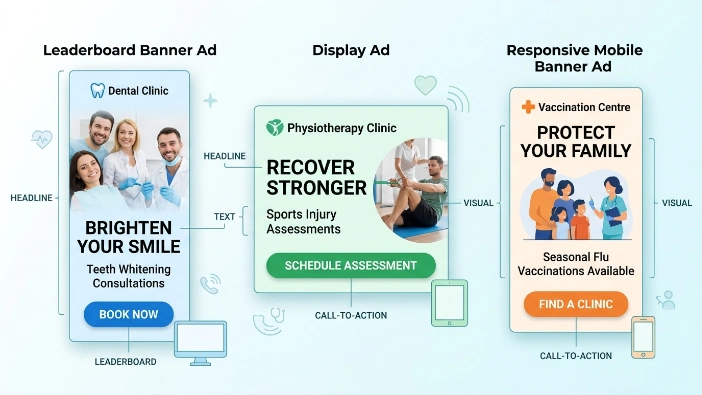
Healthcare banner ads appear in multiple formats. Common formats include leaderboard banners, square display ads, mobile banners, and responsive visual ads. These formats adapt to desktop devices, tablets, and smartphones.
A dental clinic may display banner ads explaining teeth whitening consultations. A physiotherapy clinic may promote sports injury assessments. A vaccination centre may display seasonal flu vaccination reminders. These examples show how clinics use banner advertising for healthcare visibility. Banner ads normally contain four core components:
A healthcare-focused headline explains the service category. Supporting text provides short informational context. Visual elements improve recognition and readability. A clickable section directs users toward additional information pages or appointment systems.
Healthcare advertising in the United Kingdom follows strict standards related to medical accuracy, patient safety, and advertising transparency. Clinics use factual wording, medically accurate descriptions, and compliant visuals to maintain healthcare advertising standards.
Banner advertising differs from search advertising because display banners appear while users browse websites rather than actively searching for treatment terms. This distinction makes banner ads useful for early-stage awareness and repeated exposure.
How do banner ads help clinics attract more patients?
Banner ads help clinics attract more patients by increasing healthcare visibility during online browsing activities. Digital exposure improves service recognition, strengthens patient familiarity, and encourages future appointment consideration across different healthcare categories and treatment needs.
Healthcare consumers regularly visit news websites, health blogs, fitness platforms, parenting forums, and lifestyle publications. Banner ads allow clinics to appear within these digital environments while patients consume related information.
For example, a dermatology clinic can display educational banners on skincare websites. A physiotherapy practice can appear on fitness-related platforms. A paediatric clinic can reach parents through family-focused websites. These placements align healthcare information with relevant audience interests.
Repeated visibility improves recognition. Research in digital advertising consistently shows that repeated exposure strengthens brand recall and user familiarity. In healthcare, familiarity plays an important role because patients prefer recognised providers during treatment selection.
Banner advertising also supports geographic targeting. Clinics operating in London, Manchester, Birmingham, Glasgow, and Bristol often focus campaigns within specific local areas. This targeting improves relevance for nearby patients seeking convenient healthcare access.
Mobile advertising further expands visibility because healthcare browsing increasingly happens on smartphones. Patients frequently research symptoms, healthcare categories, appointment schedules, and treatment information through mobile devices during daily activities.
Educational readers looking for later-stage appointment conversion strategies can read to understand: How Clinics Turn Service Awareness Into Confirmed Patient Visits Using Retargeting Ads
What types of banner ads do clinics commonly use?
Clinics commonly use static banner ads, animated banners, responsive display ads, mobile banners, and retargeting banners. Each format supports different healthcare communication objectives, including awareness, education, patient engagement, and appointment-related visibility across digital platforms.
Static banners use fixed images and text. These ads focus on simple healthcare messaging and fast readability. A static banner often highlights clinic categories, treatment areas, or healthcare availability.
Animated banners use motion-based visual transitions. These advertisements rotate multiple healthcare messages within one display area. For example, a private clinic may rotate information about general practice consultations, blood testing, and vaccination services.
Responsive display ads automatically adjust size and layout depending on screen dimensions. These ads improve compatibility across desktop websites, tablets, and smartphones.
Mobile banners specifically target smartphone users. Mobile healthcare browsing continues to increase across the United Kingdom because patients often search for healthcare information while travelling or during daily routines.
Retargeting banners display advertisements to users who previously visited a healthcare website. For example, a user viewing information about physiotherapy services may later see physiotherapy-related banners on other websites. This repeated visibility supports continued patient engagement.
Healthcare campaigns often combine several banner formats simultaneously to improve digital reach across different audience behaviours and device types.
What information do effective clinic banner ads include?
Effective clinic banner ads include clear healthcare messaging, accurate service descriptions, readable design elements, concise headlines, relevant visuals, and direct patient-focused information. Strong healthcare banners prioritise clarity, accuracy, and fast communication across digital environments.
Headline clarity is essential because users scan online content quickly. Effective healthcare headlines communicate one primary message. Examples include vaccination availability, same-day consultations, physiotherapy assessments, or dental hygiene services.
Visual simplicity improves readability. Healthcare banners normally use uncluttered layouts, readable typography, and medically relevant imagery. Clean layouts improve patient understanding across both desktop and mobile devices.
Service relevance also matters. Banner messaging aligns with patient interests and healthcare intent. A sports injury banner performs better on fitness platforms than on unrelated websites because audience context affects engagement levels.
Healthcare banners frequently include factual operational information such as clinic hours, appointment availability, or treatment categories. Accurate information improves patient trust and reduces confusion during the research process.
Mobile optimisation is another important component. Small-screen readability affects user interaction rates because a large percentage of healthcare browsing happens through smartphones.
Healthcare advertising regulations in the United Kingdom require medically accurate communication. Clinics therefore avoid misleading claims, exaggerated outcomes, and unsupported medical statements within banner content.
How do clinics target the right audience with banner ads?
Clinics target the right audience with banner ads using geographic targeting, behavioural targeting, contextual placement, demographic segmentation, and healthcare interest categories. These targeting systems improve relevance by matching healthcare advertisements with appropriate online audiences and browsing patterns.
Geographic targeting focuses advertisements within selected locations. A clinic in Leeds targets nearby residents rather than nationwide audiences. This improves local appointment relevance and increases practical accessibility for patients.
Behavioural targeting uses previous online activity patterns. Users researching orthopaedic treatment, physiotherapy exercises, or dental care topics may later see related healthcare advertisements across digital networks.
Contextual targeting places advertisements beside relevant content. A fertility clinic banner appearing beside reproductive health articles represents contextual healthcare advertising. This approach aligns banner visibility with active patient interests.
Demographic targeting focuses on age groups, parental status, or healthcare-related lifestyle segments. Paediatric clinics often target parents. Hearing clinics frequently target older adults. Sports rehabilitation centres commonly target fitness-focused audiences.
Audience segmentation improves campaign efficiency because healthcare advertisements appear before users more likely to engage with specific medical categories.
Healthcare targeting systems also support seasonal relevance. Clinics increase visibility for flu vaccination services during autumn and winter periods when vaccination demand rises across the United Kingdom.
Explore More Expert Insights:
How Healthcare Providers Gain Patients Using Banner Advertising
How Education Providers Improve Enrollments Using Retargeting Ads
What benefits do banner ads provide for healthcare clinics?
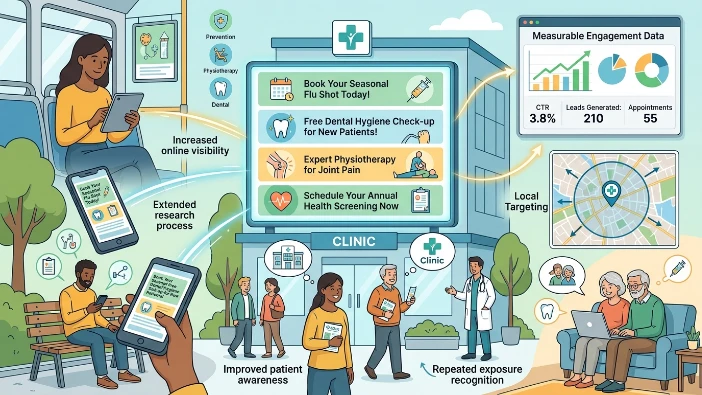
Banner ads provide healthcare clinics with increased online visibility, improved patient awareness, repeated audience exposure, local targeting opportunities, mobile reach, and measurable engagement data. These benefits support healthcare communication objectives throughout the patient research and appointment journey.
Online visibility is one of the largest benefits. Many healthcare searches involve multiple stages before appointment booking. Banner ads maintain clinic visibility throughout this extended research process.
Repeated exposure improves recognition. Patients who repeatedly encounter healthcare information develop stronger familiarity with treatment categories and provider names.
Local targeting improves efficiency because clinics focus advertising budgets within relevant service areas. This geographic precision supports healthcare accessibility and patient convenience.
Banner advertising also supports healthcare education. Clinics use banners to increase awareness about preventive healthcare, screening services, physiotherapy support, dental hygiene, and seasonal vaccination programmes.
Digital measurement systems provide performance data including impressions, click-through rates, engagement duration, and geographic activity trends. These insights help healthcare organisations understand patient interaction behaviour more clearly.
Mobile accessibility further increases campaign reach because smartphone usage continues to dominate digital healthcare browsing activity throughout the United Kingdom.
How do banner ads support the patient journey before appointments?
Banner ads support the patient journey before appointments by increasing awareness, reinforcing healthcare familiarity, improving service understanding, and maintaining digital visibility during healthcare research stages. These advertisements guide patients through information discovery before direct appointment consideration occurs.
The patient journey often begins with symptom research or healthcare education. A person experiencing back pain may first search for stretching advice, injury explanations, or physiotherapy information online.
During this early research phase, banner ads introduce relevant healthcare services without requiring immediate booking intent. Repeated exposure gradually strengthens service familiarity.
As patients continue researching, healthcare banners reinforce recognition across multiple websites and devices. This ongoing visibility helps patients remember healthcare providers during later decision stages.
Educational banner campaigns also improve treatment understanding. Clinics frequently explain healthcare categories through simplified messaging, including physiotherapy support, dermatology assessments, hearing evaluations, or vaccination access.
This informational role is especially important in marketing because patients are still learning about healthcare options rather than actively choosing providers.
Healthcare organisations use banner advertising to maintain consistent visibility throughout this research-focused patient journey, supporting awareness before appointment action occurs.