
Medical centers in the United Kingdom use banner retargeting to reconnect with audiences who previously researched healthcare conditions, visited medical websites, or interacted with healthcare content online. These campaigns help convert healthcare awareness into consultation activity through repeated condition-focused digital engagement and appointment-driven messaging.
Banner retargeting is a digital advertising method that reconnects healthcare audiences with condition-focused advertisements after previous website visits or healthcare interactions. Medical centers use retargeting campaigns to increase consultation interest, improve patient engagement, and reinforce healthcare messaging across digital platforms consistently online.
Retargeting works by tracking user interaction with healthcare websites and digital content. When a user visits a medical center website or reads healthcare-related information, advertising systems store anonymous browser identifiers. These identifiers allow healthcare advertisements to reappear later across websites and mobile applications.
A patient researching knee pain treatment, for example, later sees physiotherapy consultation banners while browsing news websites or health platforms. A fertility clinic visitor encounters appointment-focused messaging after reviewing IVF treatment information.
Healthcare retargeting differs from broad awareness advertising because it focuses only on users who already demonstrated healthcare interest. This increases relevance and improves consultation intent.
Medical centers commonly use retargeting after symptom-focused awareness campaigns. Readers exploring introductory healthcare visibility strategies can read [Insert Link to TOFU Article]. Readers interested in condition-focused awareness campaigns can continue with [Insert Link to MOFU Article].
How do medical centers move patients from awareness to consultation using retargeting?
Medical centers move patients from awareness to consultation by delivering repeated condition-focused messaging after healthcare research interactions. Banner retargeting reinforces medical relevance, increases healthcare familiarity, highlights consultation availability, and encourages appointment consideration during later stages of the digital healthcare journey online.
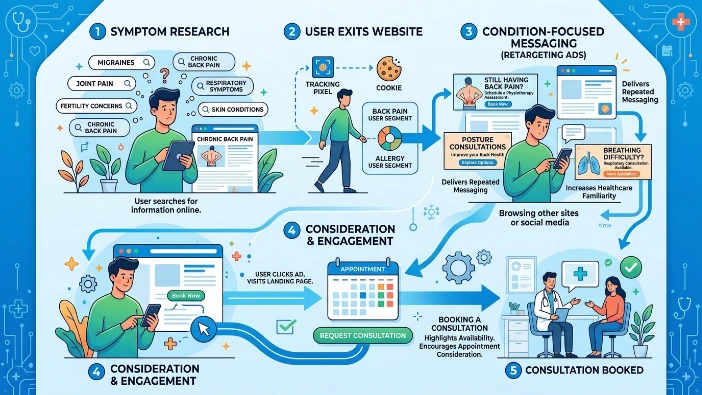
The healthcare journey often begins with symptom research. Patients search for information about migraines, joint pain, fertility concerns, respiratory symptoms, or skin conditions before considering appointments.
Condition-based awareness campaigns introduce healthcare information first. Retargeting campaigns follow after audiences interact with that content.
A user reading information about chronic back pain, for example, later receives banners promoting physiotherapy assessments, posture consultations, or musculoskeletal evaluations. A patient exploring allergy symptoms later sees respiratory consultation messaging.
This process increases familiarity because healthcare messaging remains visible throughout the decision phase.
Medical centers also personalize retargeting based on website behavior. Users visiting orthopedic treatment pages receive orthopedic-related banners. Visitors exploring cardiology content later see heart health consultation campaigns.
Consultation-focused retargeting often includes scheduling visibility, specialist information, clinic locations, and appointment availability details. This shifts healthcare messaging from education toward action-focused engagement.
Why does banner retargeting improve healthcare consultation rates?
Banner retargeting improves healthcare consultation rates because it reconnects with audiences already demonstrating medical interest. Medical centers increase patient engagement through repeated healthcare exposure, condition relevance, appointment-focused messaging, and continuous digital visibility during healthcare decision-making stages across multiple online platforms consistently.
Healthcare decisions rarely happen immediately after first exposure. Most patients research symptoms, compare treatment information, and revisit healthcare websites multiple times before requesting appointments.
Retargeting supports this delayed decision process through ongoing visibility. Repeated healthcare exposure increases recognition and strengthens patient recall.
A dermatology clinic promoting eczema consultations benefits when previous website visitors continue seeing skin-treatment advertisements during later browsing sessions. A diagnostic center improves appointment activity by reminding visitors about MRI scan availability after earlier research interactions.
Condition relevance also improves conversion quality. Retargeting focuses only on audiences already connected to specific healthcare interests instead of unrelated users.
Healthcare retargeting campaigns often produce higher click-through rates than standard display campaigns because the audience already recognizes the medical center or healthcare topic.
Local targeting further improves consultation performance. A medical center in London retargets nearby users researching orthopedic treatment options. A fertility clinic in Birmingham focuses campaigns within regional travel distance.
These combined factors strengthen healthcare engagement during later stages of patient decision-making.
What types of healthcare services benefit most from banner retargeting?
Healthcare services benefiting most from banner retargeting include physiotherapy clinics, fertility centers, dermatology practices, diagnostic providers, dental clinics, and private healthcare facilities. These healthcare categories involve extended research behavior, multiple information sessions, and consultation-based decision processes before treatment selection occurs.
Physiotherapy providers use retargeting after users research mobility improvement, sports injury recovery, or chronic pain management. These campaigns often promote assessment consultations and rehabilitation evaluations.
Fertility clinics rely heavily on retargeting because reproductive healthcare journeys involve detailed research and repeated information review. Banner campaigns reinforce consultation availability and specialist expertise.
Dermatology centers retarget users exploring acne treatment, eczema management, psoriasis support, or cosmetic skin procedures.
Diagnostic imaging providers also use consultation-focused retargeting. Patients researching MRI scans, CT imaging, ultrasound assessments, or preventive health screening later receive appointment-focused reminders.
Private dental clinics commonly retarget users interested in orthodontics, cosmetic dentistry, and restorative treatments.
Mental health services also benefit because users researching counseling or stress management often revisit healthcare information several times before booking appointments.
These healthcare sectors involve high-information decision processes, making retargeting highly relevant within the consultation journey.
How do healthcare audiences respond to condition-focused retargeting ads?
Healthcare audiences respond to condition-focused retargeting ads through increased website revisits, consultation inquiries, healthcare content engagement, and appointment scheduling activity. Medical centers improve patient response when advertisements match previously researched symptoms, treatment interests, and healthcare service categories consistently online.
Retargeted audiences already recognize the healthcare topic before seeing additional advertisements. This familiarity improves engagement rates.
A patient researching migraine symptoms responds more consistently to neurological consultation banners than to unrelated healthcare messaging. A user exploring physiotherapy exercises engages more frequently with mobility assessment advertisements.
Healthcare audiences also prefer message continuity. When retargeting reflects previous website behavior accurately, healthcare communication appears more relevant and organized.
Retargeting advertisements often include practical healthcare information such as specialist availability, consultation formats, clinic access details, or treatment timelines. These details support later-stage decision-making.
Mobile responsiveness also influences audience behavior. Healthcare users frequently switch between smartphones, tablets, and desktop devices during research activity. Responsive retargeting campaigns maintain visibility across all devices.
Healthcare audiences also respond positively to educational continuity. A respiratory healthcare campaign, for example, first introduces asthma awareness content and later retargets users with consultation-focused assessment information.
This progression supports a smoother transition from awareness into patient inquiry stages.
Explore More Expert Insights:
How Healthcare Brands Convert Appointment Intent Into Final Bookings Using Banner Ads
How Hospitals Drive Treatment Decisions Using High-Intent Display Campaigns
What elements make healthcare retargeting campaigns effective?
Effective healthcare retargeting campaigns combine condition relevance, consultation-focused messaging, geographic targeting, responsive design, and timing accuracy. Medical centers improve consultation engagement by maintaining healthcare consistency, simplifying appointment communication, and reinforcing patient trust across digital advertising environments online effectively.
Condition relevance remains the strongest performance factor. Healthcare retargeting campaigns must directly align with previous patient research activity.
A cardiology campaign focused on cholesterol management produces stronger engagement among users previously visiting heart-health pages compared with general healthcare audiences.
Timing also affects healthcare performance. Retargeting campaigns appearing within 7 to 14 days after website visits maintain stronger healthcare recall compared with delayed exposure periods.
Visual consistency improves healthcare recognition. Medical centers often repeat healthcare colors, typography, logos, and treatment imagery across awareness and retargeting campaigns.
Clear consultation messaging strengthens engagement further. Examples include “Book a Physiotherapy Assessment,” “Schedule a Skin Consultation,” and “Arrange a Fertility Evaluation.”
Landing page relevance remains essential. A banner promoting orthopedic consultations must direct users toward orthopedic appointment information rather than generic healthcare homepages.
Healthcare trust indicators also improve consultation response. Medical centers often include specialist credentials, regulated healthcare standards, patient review visibility, and clinic accreditation information within consultation-focused landing pages.
How do medical centers measure consultation success from banner retargeting?
Medical centers measure consultation success from banner retargeting using appointment requests, conversion rates, repeat website visits, engagement duration, and healthcare inquiry activity. These performance metrics help healthcare organizations evaluate campaign effectiveness and optimize consultation-focused advertising strategies across digital healthcare channels accurately.
Consultation conversion rate is one of the most important healthcare metrics. This measures how many retargeted users complete appointment inquiries after viewing advertisements.
A fertility clinic receiving 400 consultation requests from 8,000 retargeted visitors records a 5 percent conversion rate. A physiotherapy center generating 250 appointment forms from 5,000 retargeted users achieves a similar consultation performance level.
Medical centers also monitor engagement quality. Metrics include consultation page visits, average session duration, form completion activity, and specialist profile exploration.
Cross-device tracking improves measurement accuracy. A user initially researching healthcare information on mobile later completes an appointment inquiry through desktop browsing.
Healthcare organizations also analyze audience segmentation performance. Orthopedic consultation campaigns often perform differently from dermatology retargeting campaigns because patient decision timelines vary between specialties.
Repeat exposure analysis helps optimize campaign frequency. Excessive advertisement repetition reduces engagement quality, while controlled exposure improves consultation visibility.
Performance measurement allows healthcare organizations to refine consultation messaging, audience segmentation, and retargeting timing continuously.
How does banner retargeting support the final stage of the healthcare funnel?
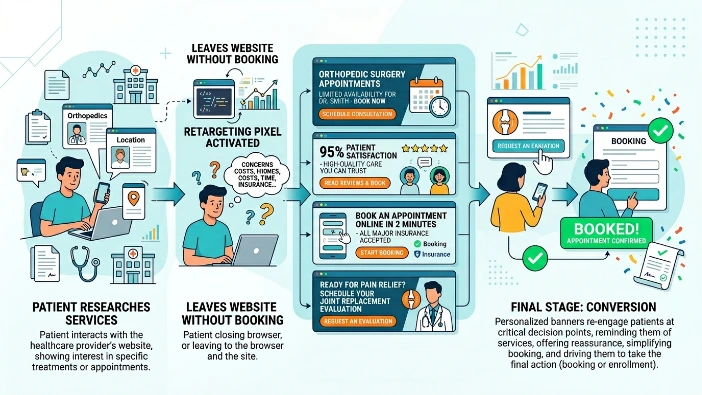
Banner retargeting supports the final healthcare funnel stage by reinforcing consultation intent after healthcare awareness and research activity. Medical centers use retargeting campaigns to maintain visibility, strengthen patient trust, and guide healthcare audiences toward appointment scheduling and specialist consultations online effectively.
The BOFU stage focuses on decision-making and appointment readiness. At this stage, patients already understand their healthcare concerns and actively compare providers, treatment options, and consultation availability.
Retargeting maintains healthcare visibility during this final evaluation process.
A patient researching orthopedic care over several weeks repeatedly encounters consultation-focused messaging from the same medical center. This repeated visibility increases familiarity and strengthens provider recognition.
Healthcare retargeting also reduces patient drop-off. Users leaving healthcare websites without completing appointment requests later reconnect with consultation messaging through banner campaigns.
This final-stage advertising approach supports healthcare continuity from awareness into direct patient engagement.
Readers interested in earlier healthcare journey stages can explore:
How Medical Centers Generate Leads Using Banner Ads for introductory visibility strategies
How Medical Centers Build Awareness Using Condition-Based Banner Ads for condition-focused awareness campaigns.