
Appointment conversion in healthcare banner advertising refers to the process where users who interact with digital banner ads complete a defined booking action such as scheduling a consultation or clinic visit. It connects online patient interest directly to measurable healthcare appointment outcomes within structured digital advertising systems.
Appointment conversion in healthcare banner advertising represents the final stage of digital patient acquisition systems. It begins when a user sees a healthcare banner and ends when that user completes an appointment booking action through a defined digital pathway.
In the United Kingdom, healthcare digital systems define conversion as a measurable action such as appointment scheduling, consultation request submission, or clinic registration. These actions are tracked through structured analytics frameworks.
Banner advertising systems distribute healthcare messages across websites, mobile applications, and search networks. Conversion occurs when a user transitions from passive exposure to active engagement with a healthcare scheduling system.
This process operates within regulated digital ecosystems where user interactions are recorded, analyzed, and optimized for efficiency. Each conversion is linked to a specific interaction pathway originating from banner engagement.
How do healthcare banner ads convert interest into appointment bookings?
Healthcare banner ads convert interest into appointment bookings through structured call-to-action pathways, landing page transitions, and integrated scheduling systems. Users move from ad exposure to booking interfaces using tracked digital journeys across healthcare communication platforms and online appointment systems.
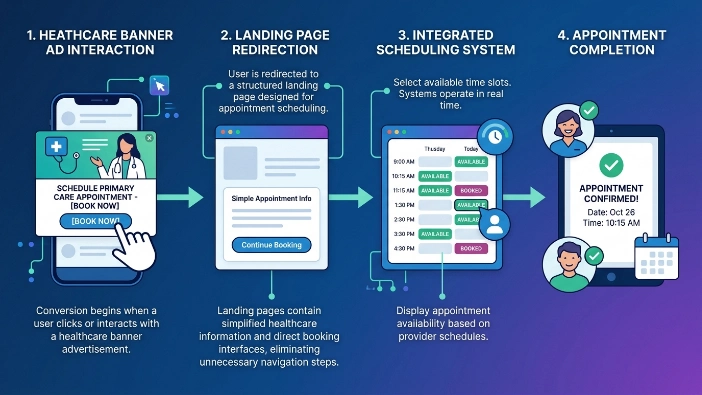
Conversion begins when a user clicks or interacts with a healthcare banner advertisement. This interaction redirects the user to a structured landing page designed for appointment scheduling or information completion.
Landing pages contain simplified healthcare information and direct booking interfaces. These pages eliminate unnecessary navigation steps and present a structured path toward appointment completion.
Scheduling systems integrated into healthcare platforms allow users to select available time slots. These systems operate in real time and display appointment availability based on provider schedules.
Digital tracking systems connect banner impressions with booking outcomes. This ensures that each appointment can be attributed to a specific banner interaction.
The conversion pathway remains linear. Banner exposure leads to landing page interaction. Landing page interaction leads to scheduling system engagement. Scheduling system engagement leads to appointment confirmation.
What digital elements influence healthcare appointment conversions?
Digital elements influencing healthcare appointment conversions include landing page structure, scheduling system integration, message clarity, and tracking systems. These components work together to reduce friction and guide users from informational engagement to confirmed healthcare appointments within structured online systems.
Landing page structure defines how healthcare information is organized after banner interaction. Pages with clear sections for services, timing, and booking options improve conversion efficiency.
Scheduling system integration allows users to select appointment times without external navigation. Integrated calendars display real-time availability across healthcare providers in structured formats.
Message clarity ensures that healthcare information is easy to understand. Short, structured messaging improves user comprehension during decision-making.
Tracking systems connect user actions across platforms. These systems record impressions, clicks, and booking completions to measure conversion performance accurately.
Each element contributes to reducing user effort. Lower effort results in higher completion rates within digital healthcare booking environments.
Why is user intent important in healthcare banner conversion systems?
User intent is important because it determines whether a user transitions from information engagement to appointment booking. High-intent users respond to structured healthcare banners by interacting with scheduling systems, while low-intent users remain in informational browsing stages within digital healthcare ecosystems.
User intent refers to the level of readiness a user has to take action after viewing healthcare content. High-intent users actively seek healthcare services or appointments.
Healthcare banner systems identify intent through behavioral signals such as repeated ad exposure, healthcare content interaction, and search activity patterns.
High-intent users are more likely to engage with scheduling interfaces. These users move quickly from banner interaction to booking completion.
Low-intent users interact with informational content without immediate action. These users require multiple exposure cycles before conversion occurs.
Digital systems segment users based on intent signals. This allows healthcare banners to be distributed across different stages of decision readiness.
Read:
How Healthcare Providers Gain Patients Using Banner Advertising
How do scheduling systems support banner-driven appointment bookings?
Scheduling systems support banner-driven appointment bookings by providing real-time availability, automated time slot selection, and confirmation processing. These systems connect directly with healthcare databases to ensure accurate appointment allocation within structured digital booking environments.
Scheduling systems operate as digital appointment management tools integrated into healthcare platforms. These systems display available time slots in real time.
Users interact with scheduling interfaces after clicking healthcare banners. The interface presents structured options for selecting appointment dates and times.
Once a selection is made, the system reserves the appointment slot. This prevents double booking and ensures accurate allocation of healthcare provider availability.
Confirmation systems send structured notifications to users. These confirmations include appointment time, date, and reference identifiers.
Scheduling systems reduce manual processing requirements. This ensures faster conversion from digital engagement to confirmed healthcare appointments.
What role does retargeting play in appointment conversion?
Retargeting plays a role by re-engaging users who previously interacted with healthcare banners but did not complete appointment bookings. It delivers repeated exposure across digital platforms, reinforcing scheduling actions and increasing conversion probability through structured follow-up advertising systems.
Retargeting systems identify users who interacted with healthcare banners but did not complete booking actions. These users are categorized for follow-up exposure.
Retargeted banners appear across different digital platforms. Users encounter repeated healthcare messaging in new online environments.
This repeated exposure increases recognition of healthcare services and scheduling options. Familiarity with messaging improves likelihood of conversion.
Retargeting campaigns use behavioral data such as page visits and banner interactions. These signals define the timing and frequency of follow-up ads.
Each retargeting cycle strengthens user engagement pathways toward appointment completion.
What data metrics measure healthcare banner conversion success?
Healthcare banner conversion success is measured using metrics such as click-through rate, conversion rate, cost per appointment, and booking completion time. These metrics evaluate how effectively digital banner interactions lead to confirmed healthcare appointments within structured analytics frameworks.
Click-through rate measures how many users interact with healthcare banners after viewing them. This metric reflects initial engagement levels.
Conversion rate measures the percentage of users who complete appointment bookings after clicking banners. This is the primary success indicator.
Cost per appointment measures the total digital advertising spend required to generate one confirmed booking. This provides efficiency evaluation.
Booking completion time measures the duration between banner interaction and final appointment confirmation. Shorter times indicate higher conversion efficiency.
Analytics systems aggregate these metrics across campaigns. This enables structured evaluation of banner performance in healthcare systems.
Explore More Expert Insights:
How EdTech Companies Turn Qualified Leads Into Enrolled Students Using Final Stage Display Ads
How Education Providers Convert Success Story Engagement Into Enrollments Using Banner Ads
What challenges affect appointment booking conversion through banner ads?
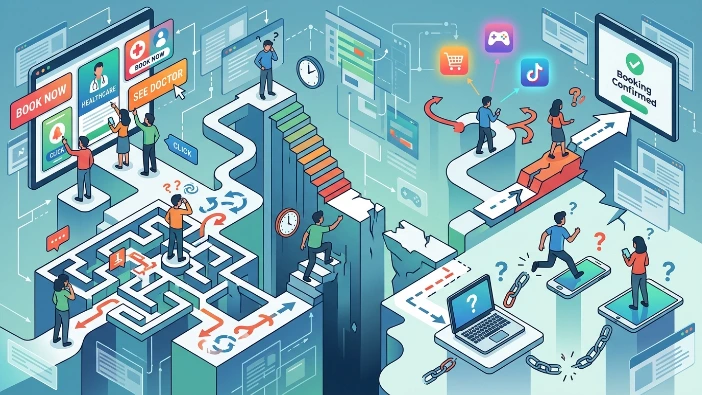
Challenges affecting appointment booking conversion include user drop-off during scheduling, complex navigation paths, low intent traffic, and fragmented digital journeys. These factors reduce the efficiency of converting healthcare banner engagement into confirmed appointments within structured online booking systems.
User drop-off occurs when users leave the booking process before completion. This typically happens during multi-step scheduling processes.
Complex navigation paths reduce conversion efficiency. Users require direct and simplified booking interfaces to complete appointments.
Low intent traffic refers to users who engage with banners without immediate interest in healthcare services. These users require multiple interactions before conversion.
Fragmented digital journeys occur when users move across multiple platforms before returning to booking systems. This reduces conversion consistency.
Each challenge impacts the efficiency of converting banner engagement into confirmed healthcare appointments.
How does banner strategy complete the patient journey?
Banner strategy completes the patient journey by converting high-intent users into confirmed appointment bookings through structured scheduling interfaces, retargeting systems, and direct conversion pathways. It represents the final stage of healthcare digital advertising funnels focused on measurable booking outcomes.
Banner strategy focuses on users who have already shown strong engagement with healthcare content. These users are close to making booking decisions.
Structured scheduling interfaces provide direct access to appointment booking systems. This eliminates intermediate navigation steps.
Retargeting systems ensure repeated exposure to booking-related banners. This reinforces user decision-making pathways.
Conversion pathways are simplified to reduce friction. Users move directly from banner interaction to booking confirmation.
Explore:
How Healthcare Providers Build Patient Trust Using Informational Banner Ads
Banner strategy ensures that healthcare digital advertising systems transition users from interest to confirmed appointment completion within structured and measurable frameworks.