

Video coverage uses recorded footage and edited clips; written coverage uses articles, summaries, and transcripts; social coverage uses short-format posts, images, and brief clips for platforms. Video recorded sessions, highlight reels, interviews, and b-roll. Written: news stories, blog posts, press releases, and detailed summaries. Social: platform-native posts with captions, short clips (under 60 seconds), and image cards. Each format delivers the same factual content differently for audience habits and distribution mechanics.
Which format generates the most shares in the UK?
Short-form social video and social posts generate the most shares for UK event coverage because they require under 15 seconds to consume and fit platform algorithms. Platform algorithms in the UK prioritise engagement signals: watch time, likes, comments, and reshares. Short social clips of 10–30 seconds that highlight a single claim or visual drive rapid sharing. Written articles perform well for in-depth audiences in trade media. Long-form video and full transcripts attract specialist viewers and generate fewer immediate shares but yield longer session times.

Short social posts generate median share rates 2–4 times higher than long-form articles for general audiences, according to platform engagement studies. Written coverage generates higher backlinks and search visibility over 30–90 days. Full-length videos secure higher completion rates when content length aligns with topic complexity and audience interest.
What audience segments prefer each format?
General consumers and social-first professionals prefer short social video; industry professionals and analysts prefer written coverage; broadcast and visual journalists prefer long-form video and b-roll. General consumers engage with snackable clips on social feeds. Marketing and comms professionals share visual quotes and short clips. Trade journalists and analysts read written summaries with data and citations. Broadcast journalists request high-quality video and b-roll for on-air segments.
Consumer tech events: short product demo clips get shares on social, long reviews appear in written tech outlets. Policy briefings: written summaries appear in trade press, short expert quotes circulate on social. Awards ceremonies: highlight reels drive social sharing; full speeches appear in long-form video repositories.
How does distribution affect shareability?
Distribution determines reach: platform-native uploads, timed posting, and targeted tagging increase shares more than cross-posting links. Upload video directly to social platforms rather than linking from external sites. Native content accesses platform algorithms fully. Post during peak UK engagement hours: 11:00–14:00 and 18:00–21:00 local time. Tag relevant journalists and organisations to increase visibility. Use concise captions with one clear hook and relevant hashtags for broader reach.
Twitter-style platforms favour concise text and short clips; image-led platforms favour high-quality stills and vertical video; professional networks value written summaries with a short video clip. Platform-native subtitles and captions increase completion and share rates by enabling silent consumption.
What components improve share rates across formats?
Clear headlines, quantifiable data, on-record quotes, and ready-to-share media assets increase shares across video, written, and social formats. Headlines must state the newsline in one sentence. Data must include sample size and timeframe. Quotes must be short and attributable. Media assets should include 10–30 second clips, a 100–200 word summary, and high-resolution images. These components allow journalists and social users to copy, repost, and cite quickly.
Prepare a one-paragraph summary for social, a 300–600 word written brief for trade outlets, and three short video clips optimised for landscape and vertical formats. Provide captions, image credits, and suggested social copy to reduce friction for sharers.
How should organisers choose format mixes for UK events?
Select a mix based on target outcomes: social reach requires short clips and images; search visibility requires written coverage and SEO-ready pages; broadcast pick-up requires high-quality long-form video and b-roll. Visibility, thought leadership, or stakeholder briefing. Allocate content resources accordingly. For visibility, allocate 50% of production to short social clips, 30% to written summaries, and 20% to long-form video. For thought leadership, allocate 40% written, 30% long-form video, and 30% short clips.
Visibility objective 15 short clips, one 500-word summary, two long-form videos. Thought leadership objective: one research-led whitepaper, three long-form interviews, five short clips for amplification.
What metrics should organisers use to compare formats?
Compare share counts, reach, referral traffic, average read/watch time, backlinks, and conversion events to assess format performance. Set 30-day measurement windows. Track share counts on native platforms, referral sessions to event pages, and backlinks from written coverage. Measure watch completion rates for videos and average read time for articles. Attribute leads or inquiries that follow coverage to evaluate business impact.
Set initial targets 500 social shares for short clips, 5 trade placements for written summaries, and 1 broadcast pick-up for long-form video for medium-sized events. Adjust targets based on past event baselines and audience size.
What production standards increase shareability for each format?
Use clear titles, subtitles, accurate captions, and verified data; ensure video quality meets 1080p, audio under -6dB, and images are 2,000+ pixels on the long edge. Written copy must include a one-sentence lead, bullet summary of three facts, and source links. Video must use 24–30 fps and include lower-third captions for names and roles. Social clips must include an opening hook within the first 3 seconds and branded-free visuals to allow editorial reuse.
Supply files in MP4 for video, JPG/PNG for images, and DOCX/PDF for copy. Include a usage licence stating editorial use and attribution requirements. Name files with date, event, and asset type to simplify journalist downloads.
Explore More Expert Insights:
How to Pitch a UK Corporate Event to 10 News Sites Simultaneously
Pre, During, Post: The 3-Phase Media Coverage Framework for UK Events
Which combination yields the best ROI for UK share goals?
A combination of short social clips, a concise written brief, and a single long-form interview yields the highest share-to-effort ratio for most UK events. Short clips drive initial spread. The written brief secures trade coverage and search visibility. A long-form interview supplies depth for broadcast and podcasts. This combination balances immediate social velocity with lasting discoverability.
Produce ten short clips (15–30 seconds), one 600-word summary with key data, and one 10–15 minute interview video. Publish clips natively across social platforms, host the written summary on an SEO-friendly page, and distribute the interview to trade journalists as embargoed material.
How do costs and resources influence format choice?
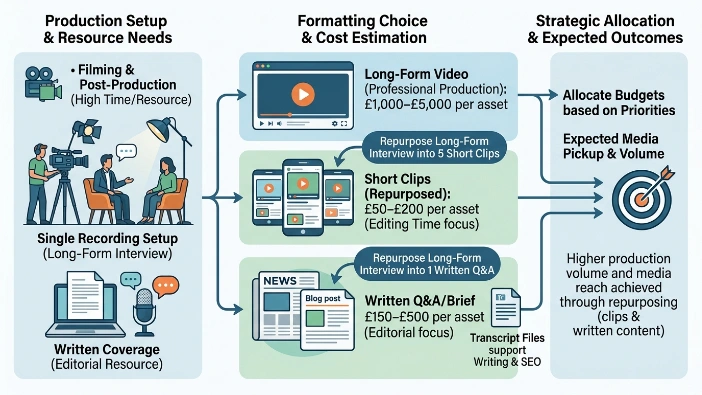
Costs scale with production quality and volume: short clips require editing time; written coverage requires editorial resource; long-form video requires filming and post-production. Estimate editorial costs per asset: short clip £50–£200, written brief £150–£500, long-form video £1,000–£5,000 for professional production. Allocate budgets based on priorities and expected media pickup.
Repurpose the long-form interview into five short clips and one written Q&A. Use a single recording setup to capture multiple segments. Prepare transcript files to support written content and SEO.
Dive Deeper Into This Topic:
Why 6 in 10 UK Corporate Events Generate Zero Earned Media Coverage
Short-form social video and native social posts generate the highest immediate share rates in the UK. Written coverage provides search visibility and trade authority over 30–90 days. Long-form video supplies material for broadcast and specialist audiences. A balanced mix—short clips, a concise written brief, and one long-form interview optimises shares, reach, and long-term discoverability while controlling production costs.
Read the Full Blog Here:
Events Media Coverage Packages: What to Expect, What to Demand



