

An event’s media coverage package bundles planning, content production, media outreach, and post-event measurement to secure earned and owned publicity for an event. An events media coverage package defines deliverables, timelines, and pricing. Typical deliverables include press strategy, press packs, short video clips, written summaries, journalist outreach, and post-event analytics. Packages standardise work for events of different sizes and set expectations for outcomes and responsibilities.
Which core components are included in a standard package?
Standard packages include a media strategy, pre-event press materials, onsite capture (audio/video/photos), spokesperson coordination, and post-event distribution and reporting. Media strategy defines news angles, target audiences, and media lists. Pre-event press materials include a one-page brief, speaker bios, and embargoed research summaries.
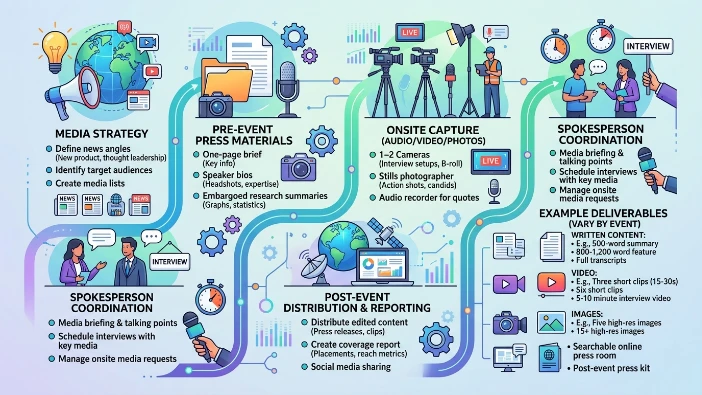
Onsite capture includes 1–2 cameras, a stills photographer, and a recorder for quotes. Post-event distribution includes edited clips, a written summary, and a coverage report with placements and reach numbers. 500-word summary, three short clips (15–30 seconds), and five high-resolution images. One 800–1,200 word feature, six short clips, one 5–10 minute interview video, and 15 images. Multiple long-form videos, 12+ clips, full transcripts, and a searchable online press room.
How do pricing tiers and inclusions vary?
Pricing varies by scope: basic packages range from £1,000–£3,000; mid-tier from £4,000–£12,000; premium from £15,000–£50,000 depending on production quality and distribution reach. Basic packages focus on essential materials for local and trade coverage. Mid-tier includes multi-camera capture, professional editing, and targeted national outreach. Premium includes broadcast-standard video, embargoed data releases, exclusives, and bespoke placement guarantees. Travel, venue fees, and third-party rights add separate charges.
Basic: £1,500 covers one camera operator, one editor (8 hours), and a written brief. Mid-tier: £7,500 covers two camera operators, a videographer, two editors (40 hours), and targeted national outreach. Premium: £25,000 covers a full production crew, a media relations lead, bespoke research, and a 90-day follow-up campaign.
What measurable outcomes should contracts specify?
Contracts must specify deliverables, timelines, reporting metrics (placements, reach, referrals), and terms for exclusives or embargoes. Specify number of clips, word counts, image quantities, delivery dates, and formats. Set reporting windows for analytics: 30 days for initial pickup, 90 days for long-tail coverage. Define KPIs such as minimum placements in trade outlets, target referral sessions, or a guaranteed number of outreach attempts. Include clauses for delays, cancellations, and extra hours.
Reports should include placement list, estimated audience reach, referral traffic, social shares, backlinks, and downloadable asset logs. Provide raw analytics exports where possible and a concise executive summary of outcomes with recommended next steps.
What rights and licensing should clients demand?
Clients must demand clear usage rights for photos, video, and written materials, including perpetual editorial use and defined commercial restrictions. Require delivery of original files and licence terms that allow reproduction across owned channels and media syndication. Specify attribution requirements and any third-party music or archival footage licensing. Clarify ownership of raw footage and edited assets, and include transfer of rights upon final payment where relevant.
Request perpetual, worldwide, non-exclusive editorial rights at minimum. For commercial use, negotiate explicit licences or additional fees. Require proof of music and third-party asset clearances and warranty that materials do not infringe third-party rights.
How do exclusives and embargoes alter package terms?
Exclusives and embargoes adjust outreach strategy, require precise timelines, and often include higher fees for bespoke journalist management. An exclusive limits initial coverage to one outlet for a defined period. Embargoed releases provide journalists with advance access under a legal agreement. Both require disciplined timing, secure press rooms, and a media list with agreed terms. Packages that offer exclusives include bespoke pitching, individual journalist briefings, and legal wording for embargo compliance.
Provide media with an embargoed press pack at least 48 hours before the embargo. Assign a single contact to manage embargo queries. Track journalist confirmations and prepare an immediate release at embargo lift, with follow-up personalised outreach.
What production standards should clients require?
Clients should require video in 1080p, audio recording levels peaking below -6dB, images at 2,000+ pixels on the long edge, and transcripts for all recorded interviews. Demand professional camera and lighting setups for keynote captures. Insist on microphone redundancy for sound reliability. Require captions and subtitles for social clips and accessible transcripts for SEO use. Confirm file formats: MP4 for video, WAV for audio, JPG/PNG for images, DOCX/PDF for copy.
Include acceptance testing: review of first rough edit within 5 working days and final delivery within agreed timeline. Specify revision rounds, typically two rounds included, with hourly rates for additional edits.
How should performance and ROI be measured for decisions?
Measure ROI by linking coverage to specific business outcomes: referral traffic, qualified leads, press-driven inquiries, and conversion events tracked within 30–90 days. Track referral sessions from media placements, lead source tagging, and conversion rates for event-driven landing pages. Calculate cost-per-lead from media-driven inquiries and compare against other marketing channels. Include qualitative outcomes, such as analyst mentions, board-level visibility, or policy influence, as secondary metrics.
Sum media package cost and production expenses, divide by the number of qualified leads attributed to media coverage within 90 days to produce cost-per-qualified-lead. Report media value as a secondary metric alongside direct lead attribution.
Explore More Expert Insights:
How One UK Conference Reached 2M Readers With Multi-Site Media Coverage
Managed Event Coverage vs In-House PR: UK Cost and Reach Analysis 2026
What contract terms protect clients and suppliers?
Contracts should include payment schedules, cancellation fees, delivery deadlines, revision limits, liability caps, and confidentiality clauses for embargoed materials. Set milestone payments tied to deliverables, such as 30% deposit, 40% on delivery of first drafts, and 30% on final delivery. Define cancellation windows with refundable portions. Cap liability to the value of the contract and include indemnity clauses for IP infringement. Include confidentiality terms for embargoed data and exclusives.
Include a change-order process with written approvals and cost estimates. Specify dispute resolution venues and timelines for escalation. Require signed acceptance of final assets to trigger final payment.
Which use cases benefit most from premium packages?
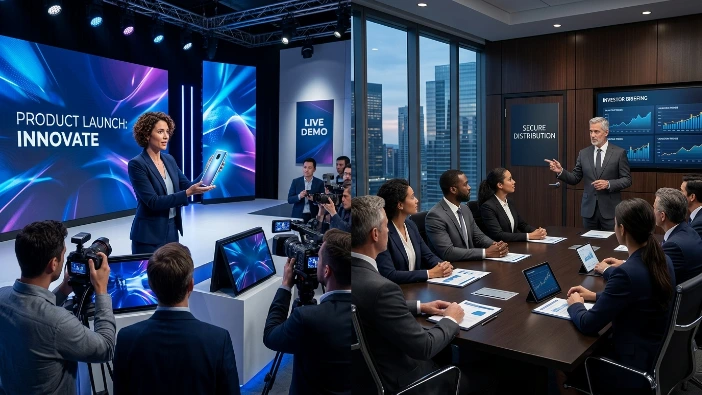
Premium packages benefit product launches with demonstrable impact, policy announcements with research releases, and investor or shareholder events where national coverage affects valuation. Product launches that require broadcast demonstration, research releases that need embargoed national coverage, and investor briefings that require polished assets for financial press justify premium spend. Premium packages deliver higher production values, bespoke media relations, and extended follow-up campaigns.
A national research launch requires professional filming, embargo management, and national outreach. A major product launch requires broadcast-quality video and live-demo capture for press. An investor day requires secure distribution, bespoke investor summaries, and post-event analyst briefings.
Discover More Insights:
Why 6 in 10 UK Corporate Events Generate Zero Earned Media Coverage
An events media coverage package for UK events defines deliverables, timelines, rights, and measurable KPIs. Expect standard components: media strategy, on-site capture, pre- and post-event materials, and analytics. Demand clear licensing, production standards, embargo management, and contract protections. Match package tier to event objectives and require ROI tracking within 30–90 days.
For More Details, Explore:
Video, Written, Social: Which Event Coverage Format Gets Most UK Shares?



