PR distribution packages differ by scope, channel reach, resource allocation, reporting depth, and pricing; SMEs get focused regional and niche outreach, enterprises get national scale, wire coverage, and advanced analytics.
Define SME as a business with fewer than 250 employees and annual turnover under £45 million. Define enterprise as an organisation with 250+ employees or turnover above £45 million. SME packages prioritise cost efficiency, local visibility, and targeted trade press. Enterprise packages prioritise nationwide reach, broadcast placements, and multi-channel amplification. Differences appear in outreach volume, number of targeted outlets, media relations time, and included measurement tools.
How do distribution objectives differ between SMEs and enterprises?
SME objectives focus on local customer acquisition, community reputation, and sector credibility; enterprise objectives focus on national brand positioning, investor relations, and policy influence.
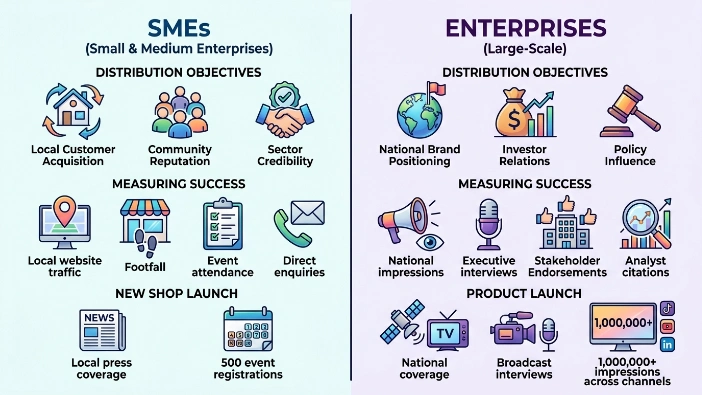
SMEs measure success with local website traffic, footfall, event attendance, and direct enquiries. Enterprises measure success with national impressions, executive interviews, stakeholder endorsements, and analyst citations. An SME launch of a new shop aims for local press coverage and 500 event registrations. An enterprise product launch aims for national coverage, broadcast interviews, and 1,000,000 impressions across channels.
What components should an SME PR distribution package include?
An SME package includes targeted regional outreach, trade vertical targeting, a single campaign release template, basic measurement, and limited media-list customisation.
Targeted regional outreach lists 10–30 local outlets. Trade vertical targeting addresses 5–15 industry titles. The release template standardises headline, lead, quotes, and contact details. Basic measurement reports placement count, referral traffic, and a simple reach estimate. Media-list customisation allows 20–40 personalised pitches. Budget allocation typically ranges from low to moderate, focused on earned media and owned-channel amplification.
What components should an enterprise PR distribution package include?
An enterprise package includes national wire distribution, broadcast liaison, dedicated account management, multi-format assets, advanced analytics, and crisis-preparedness planning.
National wire distribution covers major UK outlets and syndication partners. Broadcast liaison arranges radio and TV interview opportunities. Dedicated account management provides ongoing media strategy and C-suite preparation. Multi-format assets include multimedia packages, data appendices, and executive bios. Advanced analytics deliver exact impressions, audience demographics, and conversion attribution. Crisis-preparedness planning includes statements, approval workflows, and escalation contacts.
How does pricing compare between SME and enterprise packages?
SME packages generally cost from low hundreds to low thousands of pounds per campaign; enterprise packages range from several thousands to tens of thousands depending on scale and services.
SME pricing reflects limited outreach and simpler reporting. Typical SME campaign budgets start at £300 and scale to £3,000. Enterprise budgets start near £5,000 and scale to £50,000 or more for multi-channel campaigns with broadcast and analyst relations. Pricing correlates directly with outlet count, bespoke content creation, media training hours, and analytics depth.
What distribution channels suit SMEs versus enterprises?
SMEs use regional press, local radio, trade titles, industry blogs, and owned channels; enterprises use national newspapers, broadcast, trade press, syndicated wire services, and analyst briefings.
SME channels reach local customers and niche buyers. Examples: regional dailies, local lifestyle magazines, community radio stations, and sector trade websites. Enterprise channels reach national consumers, investors, and policymakers. Examples: national broadsheets, prime-time broadcast segments, national business websites, and sector-leading analyst reports.
How should SMEs measure ROI on PR distribution?
SMEs measure ROI with direct outcome metrics: number of enquiries, event registrations, local website traffic increases, and conversion rates attributed to placements.
Set specific numerical targets: a campaign aims for 250 enquiries, 500 website visits, and a 5% conversion rate from PR traffic in 30 days. Track referral URLs, UTM parameters, and direct contact mentions. Use placement counts and local reach estimates as supporting metrics. Report weekly to assess whether outreach requires follow-up or localised amplification.
How should enterprises measure ROI on PR distribution?
Enterprises measure ROI with cross-channel attribution, reach and sentiment analysis, media value estimates, and stakeholder outcomes such as investor interest or policy mentions.
Use exact impression counts, audience demographics, and conversion funnels linked to PR-driven landing pages. Include sentiment scoring for national coverage and quantify earned media value using standard CPM equivalents. Track stakeholder outcomes: analyst coverage, board inquiries, and legislative mentions. Provide detailed monthly dashboards with comparative benchmarks.
When does an SME need to upgrade from a basic to a premium package?
Upgrade when campaigns require national reach, when repeated local placements no longer drive growth, or when executive visibility and investor engagement become priorities.
If local coverage produces diminishing returns after two quarters, or if business goals expand to new regions, upgrade to a package with broader outlet lists and enhanced reporting. If leadership needs national interviews or sector analyst briefings, select a package that includes broadcast liaison and higher-level media relations hours.
When should an enterprise consider a simplified SME-style approach?
Enterprises should use a simplified approach for highly localised launches, pilot projects, or hyper-targeted sector outreach where national scale is unnecessary.
For a single-city pilot or local flagship store opening, enterprise teams can deploy a lean package focused on regional outlets and community events. Use local spokespeople and regionalised releases while keeping core national messaging intact. This reduces cost and prevents overexposure for events with limited geographic relevance.
What role does content production play in each package?
SMEs need concise, localised releases and basic visual assets; enterprises need multi-format content including press kits, datasets, and multimedia assets.
SME content focuses on a clear local lead, a short quote from a local leader, and 2–3 images. Enterprise content includes detailed press kits with statistics, executive bios, high-resolution imagery, infographics, and video clips. Enterprises often prepare data appendices and embargoed materials for in-depth stories.
How does media relations support differ between the two packages?
SME media relations focus on outreach volume to regional beats and relationship building with local reporters; enterprise media relations focus on strategic pitching to national desks and long-term analyst relationships.
SME outreach includes personalised emails to local editors and community journalists. Enterprise outreach involves tailored pitches to national columnists, broadcast producers, and industry analysts, plus scheduled briefings and exclusives. Enterprises invest more hours in media training for executives.
What are clear use cases for SME PR packages?
Use cases: local product launches, community initiatives, local hiring drives, and small funding announcements.
Example: a local café launching a second branch secures coverage in three regional outlets and increases footfall by 20% after a targeted regional campaign. Example: a local charity receives community radio coverage and doubles volunteer sign-ups after a focused outreach campaign.
What are clear use cases for enterprise PR packages?
Use cases: national product launches, M&A announcements, policy positions, investor updates, and crisis communications.
Example: a national product launch secures multiple national newspaper features, broadcast interviews, and 1,200,000 impressions across channels. Example: an enterprise crisis response includes immediate statements, coordinated briefings, and reputation monitoring with daily executive updates.
How do legal, compliance, and approval processes differ?
SME processes use streamlined approvals and basic legal checks; enterprise processes use multi-layer legal review, shareholder and regulatory compliance checks, and formal sign-off workflows.
SMEs typically require approval from one or two senior staff and a legal review for claims. Enterprises require legal, investor relations, and executive sign-off, often with documented approval steps and timestamped records. Regulatory-sensitive statements undergo extended review cycles.
Explore More Expert Insights:
How Times Intelligence Distributes to 10+ UK News Sites Simultaneously
PR Distribution Service Evaluation Checklist: 14 Questions to Ask Before Signing
How should pricing and value be communicated to decision-makers?
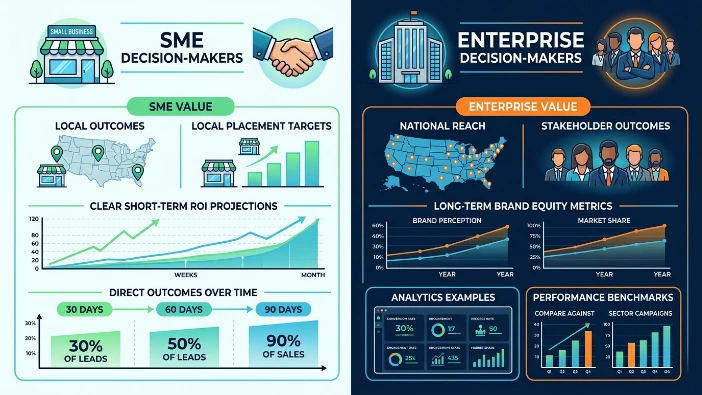
Communicate SME value with expected local outcomes, placement targets, and clear short-term ROI projections; communicate enterprise value with national reach, stakeholder outcomes, and long-term brand equity metrics.
Present numerical scenarios, expected placements, projected impressions, and direct outcomes over 30, 60, and 90 days. For enterprises, include analytics examples and performance benchmarks from comparable sector campaigns.
What final steps ensure a successful decision?
Match objectives to package features, review exact deliverables, confirm reporting cadence, and document approval and escalation contacts.
Ensure the selected package lists outlet counts, media relations hours, included assets, and the precise format of reports. Confirm delivery timelines and contact persons for approvals and crisis escalation. Secure written agreement on metric definitions and reporting frequency.
Find Out More:
Regional vs National UK Media: Which Press Release Distribution Actually Works?
SME PR packages prioritise targeted regional and trade outreach, cost efficiency, and direct outcome measurement. Enterprise packages prioritise national scale, broadcast access, advanced analytics, and formal compliance workflows. Choose a package by mapping specific numeric objectives to package components: outlet reach, media relations hours, asset production, and reporting depth.
For sequencing and calendar planning, see:
Building a 90-Day UK PR Distribution Calendar That Compounds Results