

Regional media targets local audiences with specific geographic relevance; national media targets a UK-wide audience with broader reach and influence.
Regional media includes local newspapers, regional online news sites, local radio stations, and community publications organised by city, county, or metro area. National media includes UK-wide newspapers, major broadcasters, national news websites, and national trade titles with audiences across England, Scotland, Wales, and Northern Ireland. Regional outlets publish locally relevant stories: council decisions, local business openings, and community events. National outlets publish stories with broad public interest national policy, major corporate announcements, and large-scale public health updates.
How do distribution goals differ from announcements versus national press release campaigns?
Regional campaigns aim for targeted engagement and local visibility; national campaigns aim for wide reach and national awareness.
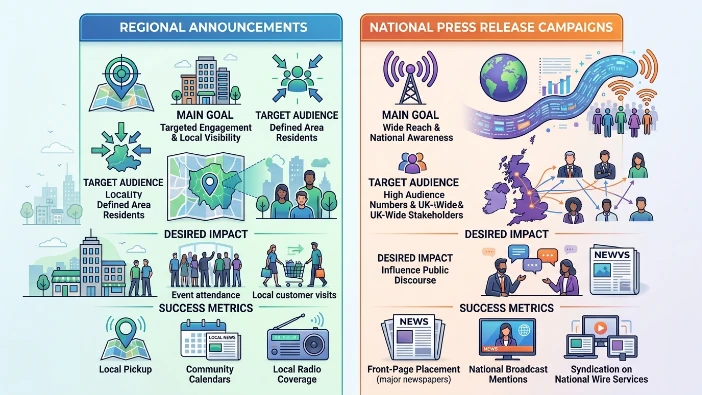
A regional distribution goal is to generate coverage that reaches residents in a defined area and drives local actions such as event attendance or regional customer visits. A national distribution goal is to achieve high audience numbers, influence public discourse, and reach stakeholders across the UK. Regional success metrics include local pickup, mentions in community calendars, and coverage in local radio; national success metrics include front-page placement, national broadcast mentions, and syndication across national wire services.
How should the content of a press release change for regional versus national outlets?
Regional releases emphasise local facts, geographic names, community impact, and local quotes; national releases emphasise national facts, broader implications, and sector-level data.
Regional press releases use precise local details: street names, council wards, regional statistics, and local spokespersons. National press releases include national statistics, comparisons across regions, expert commentary with national credentials, and data that supports a UK-level narrative. For regional outlets, the lead paragraph should explain why the story matters to local readers. For national outlets, the lead should connect the story to national trends or policy.
What distribution timing works best for regional and national media?
Regional distribution performs best with local news cycles and morning newsroom deadlines; national distribution performs best timed around national news windows and sector reporting schedules.
Regional outlets publish daily or weekly; local evening papers and radio follow community rhythms. Distribute regionally early in the morning on weekdays to match newsroom schedules and ahead of local events. National outlets follow national news calendars, parliamentary cycles, and scheduled industry reporting days. For national distribution, avoid competing with major national announcements; use preplanned embargoes or provide data to align with national reporting windows.
Which press release formats increase pickup for regional and national journalists?
Regional journalists prefer concise local leads, human-interest quotes, and clear contact details; national journalists prefer data-driven leads, expert validation, and source material for follow-up.
Regional-format releases start with the local impact and a short quote from a local stakeholder. Include a clear local contact and photos of local sites. National-format releases start with a data-led headline and supporting sector statistics. Include links to datasets, national spokespeople with titles, and high-resolution imagery that supports a UK-wide story.
How does distribution reach differ between regional and national channels?
Regional channels reach smaller, concentrated audiences with high local relevance; national channels reach larger, dispersed audiences with lower local specificity.
Regional distribution reaches community readers and local decision-makers. National distribution reaches broad demographic segments, national policymakers, and major industry stakeholders. Regional coverage can convert to community actions and footfall. National coverage can influence public opinion and sector-level stakeholders.
What are the cost and resource considerations for regional vs national distribution?
Regional distribution typically requires lower budget and less pitch effort per outlet; national distribution requires higher effort, expert sourcing, and potential paid wire services.
Regional campaigns involve outreach to multiple local editors and community journalists, often managed in-house or via small PR teams. National campaigns require targeted outreach to national editors, preparation of evidence-based materials, and possible use of national wire services or embargoed briefings. Regional work scales by number of local outlets. National work scales by depth of data and access to national spokespeople.
Which types of stories suit regional distribution best?
Local business openings, council decisions, community events, local funding awards, and regional public safety notices work best for regional distribution.
Stories with direct local impact generate higher placement probability in regional media. Examples include new store launches in a town, local charity fundraising results, council planning approvals, local hospital service changes, and community event announcements. Localised human-interest elements increase media uptake.
Which types of stories suit national distribution best?
Policy changes, national research findings, sectoral data, major corporate announcements, and national campaigns suit national distribution.
Stories that affect the UK population, demonstrate sector-wide trends, or connect to national debates fit national outlets. Examples include UK-wide survey results, national public health guidance, mergers with national impact, and policy briefing documents.
How do journalist relationships differ across regional and national outreach?
Regional outreach relies on sustained contact with local reporters and community editors; national outreach relies on building credibility with specialist national reporters and desk editors.
Regional relationships develop through repeated, relevant local pitches and timely follow-ups. National relationships require providing exclusive angles, verifiable data, and access to high-level spokespeople. Regional journalists expect fast local information; national journalists expect robust sourcing.
How does measurement of success differ between regional and national campaigns?
Regional success measures focus on local placements, community engagement metrics, and direct actions; national success measures focus on reach, audience size, and sector influence.
Regional metrics include number of local placements, local website traffic spikes, event attendance changes, and mentions in local social channels. National metrics include audience impressions, syndication count, national traffic increases, and citations in national debates or policy discussions.
When should organisations choose regional distribution over national distribution?
Choose regional distribution when the objective is local visibility, community engagement, and measurable local outcomes.
If the goal targets residents in specific UK localities, or the news relates only to a city or county, regional distribution produces better cost-efficiency and relevance. Use regional distribution to support local launches, recruit local staff, or notify communities of service changes.
When should organisations choose national distribution over regional distribution?
Choose national distribution when the objective is shaping UK-level awareness, influencing policy conversations, or reaching national stakeholders.
If the news affects audiences across the UK, connects to national trends, or requires sector attention, national distribution achieves broader visibility and potential policy influence.
How can organisations combine regional and national distribution effectively?
Combine by tailoring the core message for national outlets and producing localised variants for regional outlets, scheduled to match each outlet’s news cycle.
Create a UK-level narrative supported by national data. Produce localised versions that include regional statistics, local spokespeople, and images. Stagger distribution to regional outlets early for local coverage, and provide national outlets with the broader dataset and commentary. Ensure all versions maintain factual consistency and accurate sourcing.
What are clear examples of successful regional and national distribution outcomes?
Regional outcome: a town council announcement led to local front-page coverage and 25% uplift in event registration; national outcome: sector research placement led to mentions in three national outlets and 150,000 online impressions.
Regional success often shows measurable local engagement increases. National success often shows widespread online traffic and inclusion in national conversations. Use precise measurement to attribute outcomes accurately.
How should organisations prepare materials differently for each channel?
Regional materials include local context, local contacts, and community visuals; national materials include sector data, expert commentary, and evidence links.
Prepare a master release with core facts and then create regionalised versions with local leads and contacts. For national outreach, prepare a data appendix, expert bios, and potential interview availability to satisfy national journalists’ verification needs.
Explore More Expert Insights:
Why 6.67% Annual Growth in UK PR Demands a Smarter Distribution Strategy
5 Press Release Sins That Keep UK Startups Out of National Newspapers
What legal or compliance checks differ between regional and national distribution?
Both require factual accuracy and legal clearance; national distribution often requires stricter source validation and review for broad reputational risk.
Regional releases must meet local regulations and privacy rules. National releases must pass broader legal and regulatory review where false claims could trigger national scrutiny or regulatory action. Verify all statistics and secure permissions for images and quotes in both contexts.
How should success be summarised for leadership after a campaign?
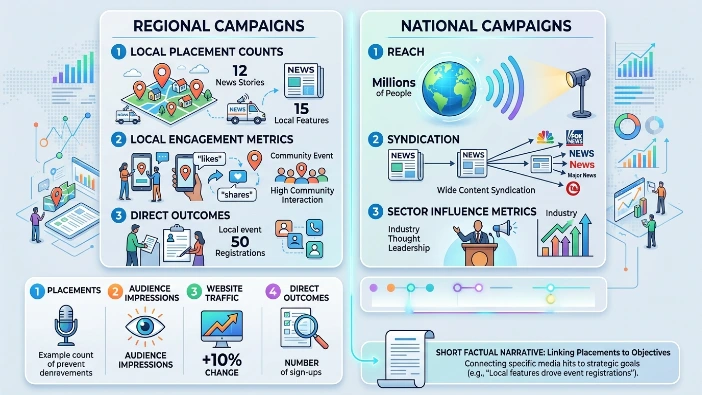
Report regional campaigns with local placement counts, local engagement metrics, and direct outcomes; report national campaigns with reach, syndication, and sector influence metrics.
Supply clear, numbered metrics: placements, audience impressions, website traffic change, and direct outcomes such as registrations or enquiries. Include a short factual narrative linking placements to objectives.
Discover the Full Information:
Building a 90-Day UK PR Distribution Calendar That Compounds Results
Regional distribution works best for geographically specific goals and measurable local outcomes. National distribution works best for UK-wide awareness, sector influence, and high audience reach. Choose distribution based on the target audience, the scope of impact, and the resources available. For combined impact, create a UK-level narrative and produce localised versions for regional outlets, schedule distribution to match news cycles, and measure outcomes with clear numerical metrics.
Click Here to Explore More:
PR Distribution for UK SMEs vs Enterprises: Which Package Fits Your Goals?



