
A 90-day PR distribution calendar is a three-month schedule that sequences press releases, outreach, and follow-ups to build momentum and measurable media coverage.
A 90-day calendar organizes PR activities into a repeatable cycle. It sets dates for releases, embargoes, briefings, and follow-ups. It assigns responsibilities and defines success metrics. A calendar reduces ad-hoc pitching and increases consistency. PR teams use it to align messaging with sector events, policy dates, and seasonal news cycles. The calendar supports both regional and national outreach by mapping when to localise messages and when to present UK-wide narratives.
How do you define objectives for a 90-day PR calendar?
Define three clear objectives with numeric targets: audience reach, media placements, and direct outcomes such as leads or event registrations.
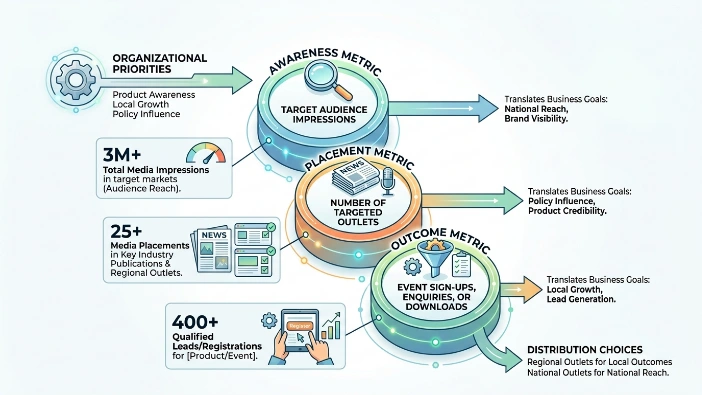
Objectives translate business goals into PR metrics. Define one awareness metric (target audience impressions), one placement metric (number of targeted outlets), and one outcome metric (event sign-ups, enquiries, or downloads). Use numeric targets: for example, inquiries, pressions, 15 media placements, and 250 event registrations in 90 days. Align objectives with organisational priorities: local growth, policy influence, or product awareness. Clear objectives determine distribution choices: regional outlets for local outcomes, national outlets for reach.
How should you segment the 90-day schedule?
Segment into three 30-day phases: plan and prepare, distribute and amplify, measure and optimise.
Phase 1 focuses on research, message development, and materials. Identify target outlets, compile data, and prepare spokespeople. Phase 2 executes distribution: send releases, conduct briefings, and perform follow-ups. Phase 3 measures results, reports metrics, and adjusts the next 90-day cycle. Each phase contains weekly milestones. Weekly milestones ensure steady activity and allow for rapid response to news events. Use a single master document to track tasks, dates, and contacts.
What components belong in the planning phase?
Include target outlet lists, key messages, data assets, spokesperson availability, and a risk review.
Target outlet lists identify regional and national contacts with reporter beats and deadlines. Key messages define the core narrative and three supporting facts. Data assets include statistics, charts, and source citations. Spokesperson availability specifies names, titles, and embargo preferences. The risk review checks legal, regulatory, and IP constraints. Create localised versions of the release for relevant regions. Confirm photo permissions and data licences before distribution.
How do you prioritise stories across 90 days?
Prioritise by audience impact, newsworthiness, and timing relative to sector events or policy calendars.
Assign priority levels to stories: high for national-impact items, medium for sector announcements, and low for routine updates. High-priority stories receive exclusive outreach windows and more supporting data. Medium-priority stories target specialist trade media and regional outlets. Low-priority stories use standard distribution channels on slower news days. Map each story to a specific week within the 90-day cycle and avoid placing more than two high-priority distributions in the same week.
How should distribution be sequenced for regional and national outlets?
Sequence by preparing national materials first and producing regionalised variants before contacting regional outlets.
Create a master release with core facts and national context. Then create regionalised versions that include local statistics and local spokespeople. For timing, distribute regional versions early in the week to fit local newsroom schedules. Offer national outlets embargoed material when the story requires coordinated coverage across the UK. Use early exclusive briefings for specialist national reporters to secure in-depth coverage.
What outreach tactics integrate into the 90-day calendar?
Combine email pitches, embargoed briefings, targeted follow-ups, and scheduled social amplification.
Email pitches present the local or national angle and offer interview access. Embargoed briefings allow journalists to prepare in advance and provide coordinated publication. Targeted follow-ups occur 24 to 48 hours after the initial pitch. Schedule social amplification aligned with publication timing to increase visibility. Track which tactics produce placements and adjust the calendar accordingly.
How should measurement and reporting be scheduled?
Set weekly monitoring, mid-cycle reporting at 45 days, and a comprehensive 90-day performance report with numerical metrics.
Weekly monitoring captures placements, traffic spikes, and social mentions. The 45-day report assesses whether the campaign meets halfway targets and recommends adjustments. The final report lists placements, impressions, website traffic change, and direct outcomes such as enquiries or registrations. Use numeric results: placement count, exact impression figures, percentage traffic increase, and number of leads attributed to PR.
What tools and templates support a 90-day calendar?
Use a calendar spreadsheet, media contact database, release template, and measurement dashboard.
The calendar spreadsheet holds dates, story titles, target outlets, and responsible staff. The media contact database stores reporter names, beats, emails, and deadlines. The release template standardises headlines, leads, and data sections. The measurement dashboard collects placement URLs, audience figures, and conversion data. Synchronise the calendar with shared team software for task assignment and progress tracking.
How do you allocate resources across 90 days?
Allocate staff hours by week, reserve budget for paid wire services if needed, and assign one lead for editorial approvals.
Calculate staff time per distribution task: 4 hours for preparing a release, 3 hours for outreach, and 2 hours for follow-ups. Reserve a budget line for any paid distribution services or data purchases. Designate an approval lead who signs off on legal and factual checks. Keep contingency time for reactive stories and breaking news alignment.
What are the benefits of running a 90-day PR calendar?
A structured 90-day calendar delivers consistent media presence, cumulative audience growth, and clearer attribution of outcomes.
Regular distribution builds recognition with targeted reporters and audiences. Repeated coverage increases cumulative impressions and website traffic. A calendar enables precise measurement of which stories and tactics drive placements. Teams gain predictable workloads and clearer timelines for approvals and interviews.
What quality controls ensure factual accuracy and compliance?
Implement a two-person fact-check, legal sign-off for claims, and documented source citations for all data.
Require one team member to verify numbers against original sources and another to confirm quotes and permissions. Legal sign-off occurs for releases that include regulatory statements or financial figures. Include source links or appendices with datasets where appropriate. Maintain a record of photo permissions and consent for named individuals.
How should teams respond to coverage once it appears?
Monitor placement performance, log journalist feedback, and schedule amplified follow-up posts timed to publication.
Log each placement URL and the date of publication. Record any journalist requests for additional information. Amplify coverage on owned channels within 24 hours of publication to increase reach. Link back to the published article in subsequent outreach to other outlets as social proof.
Explore More Expert Insights:
How to Use Data Quotes in Press Releases to Win 3× More Earned Coverage
The Anatomy of a UK Press Release That Gets Picked Up by BBC and The Guardian
Which use cases benefit most from a 90-day calendar?
Product launches, policy advocacy, funding rounds, and community engagement programmes benefit from a 90-day cadence.
Product launches require timed pre-release briefings, launch-day coverage, and post-launch analysis. Policy advocacy needs coordinated briefings, expert commentary, and follow-up placement targeting. Funding announcements need investor-focused trade outlets and national business coverage. Community engagement programmes need repeated local outreach and event promotion.
How do you transition from one 90-day cycle to the next?

Use the final 90-day report to set updated objectives, retain successful tactics, and replace low-performing items.
Review numerical outcomes and mark tactics that produced the highest placements and direct outcomes. Update target outlet lists with new contacts and remove outlets that did not engage. Set the next cycle’s objectives using improved targets based on prior performance.
Click Here to Explore More:
Regional vs National UK Media: Which Press Release Distribution Actually Works?
A 90-day UK PR distribution calendar provides a structured approach to build media momentum across regional and national outlets. Define three numeric objectives, segment activities into three 30-day phases, and produce a master release with regional variants. Schedule weekly monitoring, a mid-cycle review at 45 days, and a final 90-day report with exact metrics. Use standardised templates, a media database, and a measurement dashboard to increase efficiency and attribution.
For detailed sequencing and an example calendar, see:
PR Distribution for UK SMEs vs Enterprises: Which Package Fits Your Goals?