Banner advertising for schools is a digital marketing method that uses visual ads across websites, apps, and online platforms to increase awareness, attract prospective students, and support enrollment growth. Schools use banner campaigns to display programs, admissions information, campus highlights, and enrollment deadlines to targeted audiences in the United Kingdom.
Banner advertisements appear in fixed visual spaces on websites and mobile applications. These ads include images, headlines, enrollment dates, and educational messages. Schools use them to reach parents, students, and local communities during the research stage of the admissions journey.
A school banner campaign focuses on visibility. It introduces the institution to users who search for education-related content, browse parenting websites, read local news, or explore academic resources online.
In the United Kingdom, independent schools, grammar schools, sixth form colleges, and international schools use banner advertising to increase digital reach. Campaigns often promote open days, scholarship opportunities, curriculum strengths, and extracurricular activities.
Banner advertising supports early-stage enrollment awareness. It places school information in front of audiences before direct inquiries or application submissions occur.
Readers who want to explore:
How EdTech Platforms Build Course Interest Using Banner Advertising
Readers seeking enrollment-focused advertising strategies can explore the following:
How EdTech Platforms Turn Course Browsers Into Enrolled Students Using High-Intent Display Ads
How do schools use banner advertising campaigns to increase enrollment?
Schools increase enrollment through banner advertising by targeting relevant audiences, promoting educational value clearly, and maintaining repeated visibility during the student decision-making process. Effective campaigns combine audience targeting, strong messaging, visual consistency, and enrollment-focused timing.
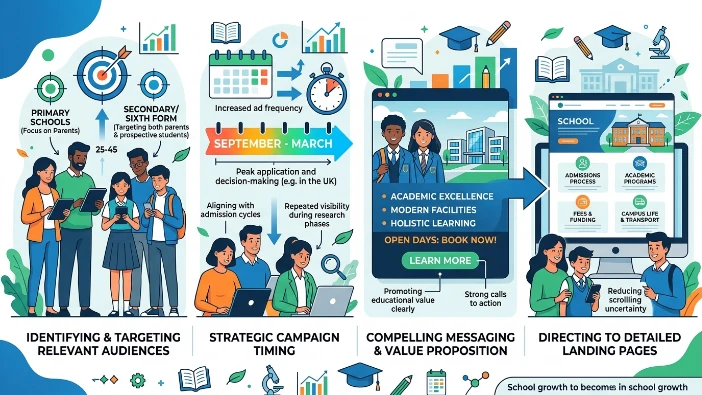
Schools begin with audience identification. Primary schools often target parents between ages 25 and 45. Secondary schools target both parents and prospective students. Sixth form institutions focus on students preparing for higher education pathways.
Campaign timing aligns with admission cycles. In the United Kingdom, schools commonly increase campaign activity between September and March because parents research educational options before application deadlines.
Banner advertisements direct users toward informational pages. These pages include admissions details, academic programs, fee structures, transport options, and campus activities. Clear information reduces uncertainty during the research process.
Enrollment-focused messaging improves campaign performance. Examples include:
“Applications Open for September Intake”
“Attend Our School Open Day”
“STEM and Arts Programmes Available”
“Scholarship Applications Close 15 January”
Repeated ad exposure improves recall. A parent who sees the same school advertisement across multiple websites remembers the institution more easily during school comparisons.
Geographic targeting also supports enrollment growth. Schools in London, Manchester, Birmingham, and Bristol often target nearby postcodes to attract local applicants and reduce transport concerns for families.
Why do banner advertisements attract prospective students and parents?
Banner advertisements attract prospective students and parents because they provide fast visual information, repeated exposure, and clear educational messaging during online research activities. Consistent visibility increases recognition and supports trust during the school selection process.
Parents research schools through search engines, local publications, educational blogs, and parenting websites. Banner ads appear during this browsing process and introduce schools before direct contact occurs.
Visual communication increases attention. A banner displaying classroom environments, science laboratories, libraries, or student activities gives immediate educational context. Users understand the school’s environment within seconds.
Simple headlines improve comprehension. Statements such as “Rated Excellent in Student Support” or “Admissions Open for 2027 Intake” communicate value quickly.
Banner advertising also supports familiarity. Research in digital advertising consistently shows that repeated exposure improves brand recognition. In education, familiarity influences school shortlist creation.
Mobile usage further increases banner visibility. Parents frequently browse educational information on smartphones during commuting hours, lunch breaks, and evenings. Responsive banner designs ensure ads remain readable on smaller screens.
Educational institutions also benefit from seasonal relevance. Campaigns connected to open houses, exam preparation support, scholarship announcements, or new academic programs receive stronger engagement because they match current parent concerns.
What types of banner ads do schools use?
Schools use multiple banner advertisement formats including static banners, animated banners, responsive display ads, retargeting ads, and mobile banners. Each format supports different enrollment goals, audience behaviours, and digital platforms.
Static banner advertisements contain a single image and message. These ads load quickly and perform well on educational blogs, news websites, and local media platforms. Schools often use static banners for admissions announcements and event promotions.
Animated banners include moving elements or changing text. These advertisements attract higher visual attention because motion increases engagement. Schools commonly use animation to showcase facilities, academic achievements, or extracurricular activities.
Responsive display ads automatically adjust size and format based on screen dimensions and website layouts. This flexibility improves visibility across desktops, tablets, and smartphones.
Retargeting advertisements focus on users who previously visited a school website. For example, a parent who viewed the admissions page may later see banner ads promoting an upcoming open day. Retargeting increases recall and encourages return visits.
Mobile banner advertisements support smartphone browsing behaviour. These ads prioritize concise text, readable typography, and fast loading speeds.
Explore More Expert Insights:
How Educational Institutes Use Banner Ads to Increase Admissions
How SaaS Products Increase Signups Using High-Intent Banner Campaigns
How does banner advertising support school awareness in the United Kingdom?
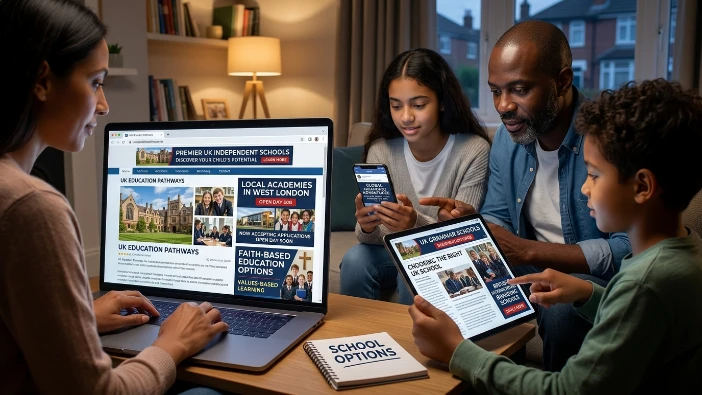
Banner advertising supports school awareness in the United Kingdom by increasing digital visibility across local and national online platforms. Schools use display campaigns to reach families researching education options, relocation opportunities, and academic pathways.
The UK education market includes independent schools, academies, boarding schools, grammar schools, faith schools, and international institutions. Competition for visibility remains high, particularly in urban regions.
Banner advertising helps schools appear during educational research activities. Parents comparing local institutions often encounter advertisements while reading school rankings, inspection reports, or parenting resources.
Regional targeting strengthens local awareness. A school in Leeds can focus advertisements on nearby families, while an international boarding school can target audiences across multiple UK regions.
Campaigns also support reputation visibility. Schools promote academic achievements, inspection ratings, university progression statistics, and specialist programs through banner messaging.
Digital advertising complements traditional outreach methods. Print brochures and local events continue to exist, but online visibility now plays a central role in parent research behaviour.
Awareness campaigns frequently increase direct website traffic. Families who repeatedly view school banners often later search the institution directly through search engines.
How do schools measure the success of banner advertising campaigns?
Schools measure banner advertising success through impressions, click-through rates, website traffic, inquiry submissions, open day registrations, and enrollment-related engagement metrics. Performance analysis helps institutions improve targeting, messaging, and campaign timing.
Impressions measure how often advertisements appear online. High impression counts indicate strong visibility across targeted platforms.
Click-through rate measures the percentage of users who click the advertisement after viewing it. Higher click-through rates often indicate stronger message relevance.
Website analytics provide additional insights. Schools track page visits, session duration, and admissions page engagement after banner campaigns launch.
Geographic performance data also supports optimization. Schools identify which local areas generate the highest engagement and adjust targeting accordingly.
Device analysis reveals browsing behaviour differences. Mobile traffic frequently dominates educational browsing activity, especially during evening hours.
Campaign testing improves results over time. Schools compare different headlines, visuals, and banner sizes to determine which combinations produce stronger engagement.
Successful campaigns support broader enrollment objectives by increasing awareness, improving website engagement, and generating qualified admissions interest throughout the academic recruitment cycle.