
Banner advertising has become a structured component of digital education marketing. It connects educational institutes with prospective students through visual placements across online environments. In the United Kingdom, these ads operate within regulated advertising ecosystems and student recruitment pathways.
They function at the awareness stage, where students begin exploring academic options. Banner ads present concise course information, institutional identity signals, and programme visibility. They create repeated exposure across websites, applications, and digital platforms where students spend time during research phases.
Educational institutes use banner ads to establish early recognition of courses and qualifications. This process supports large-scale visibility before students enter deeper decision stages. The system depends on audience targeting, structured messaging, and measurable engagement indicators.
Read further to explore the following:
How Educational Institutes Nurture Students Using Informational Banner Ads
Explore:
How Educational Institutes Convert Interested Students Into Paid Enrollments Using Banner Ads
What are banner ads in educational marketing?
Banner ads in educational marketing are digital visual advertisements placed on websites, apps, and search platforms that promote academic programmes, courses, and institutions. They use images, text, and calls to action to generate awareness and attract prospective student interest online.
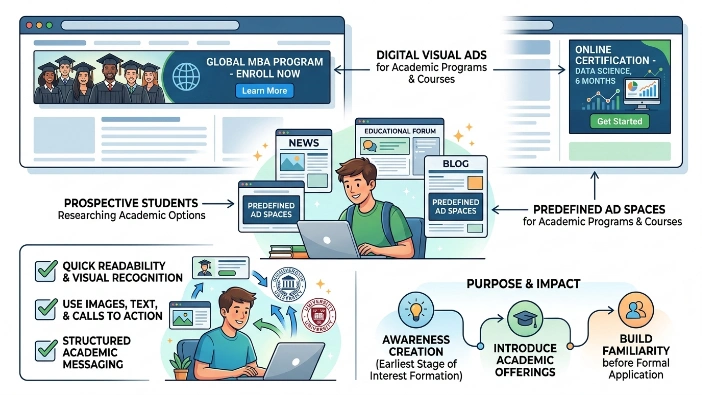
Banner ads represent a display-based communication method within digital education systems. They appear in predefined ad spaces across content platforms visited by students researching academic options. These ads combine graphical design with structured academic messaging.
Educational institutes use banner ads to communicate course availability, programme duration, and academic pathways. The format prioritises quick readability and visual recognition rather than long-form information. Students encounter these ads during browsing sessions across educational resources, forums, and general content websites.
The role of banner ads in this context is awareness creation. They introduce academic offerings at the earliest stage of student interest formation. This exposure contributes to familiarity with institutions before formal application processes begin.
How do banner ads attract prospective students in the United Kingdom?
Banner ads attract prospective students in the United Kingdom through targeted placement on education portals, search networks, and social platforms. They present course relevance, institution credibility, and programme details that align with student academic goals and career expectations online effectively.
In the UK education environment, banner ads function within structured digital ecosystems. They are displayed on platforms that host academic content, student guidance material, and career information resources. This ensures exposure to individuals already engaged in learning research behaviour.
Attraction occurs through alignment between ad messaging and student intent. Students searching for courses, qualifications, or career pathways encounter relevant academic banners during browsing activity. This relevance increases attention and engagement with displayed information.
Educational institutes structure banner content around clarity and academic value. They highlight programme titles, subject areas, and learning outcomes. This structured presentation supports recognition and interest formation among students evaluating educational options in digital spaces.
What role does targeting play in educational banner advertising?
Targeting in educational banner advertising defines audience segments based on age, location, academic interest, and behavioural data. It ensures ads reach relevant students, increases engagement rates, and improves efficiency of admission marketing campaigns across digital platforms with measurable precision results.
Targeting determines which student groups view educational banner ads. It relies on segmentation data such as geographic region, academic preferences, and online browsing patterns. This ensures that advertisements appear only to relevant audiences.
In education marketing, targeting improves relevance between content and viewer intent. Students interested in specific subjects receive ads aligned with those academic fields. This increases interaction probability and reduces irrelevant exposure.
Institutes apply targeting to control distribution efficiency across digital channels. This system ensures that advertising budgets focus on high-potential student groups. It strengthens overall campaign precision by matching programme offerings with user profiles derived from digital behaviour patterns.
How do banner ads influence student decision making?
Banner ads influence student decision making by presenting structured information about courses, fees, and career pathways at repeated touchpoints. Continuous exposure builds familiarity, strengthens perceived value of institutions, and guides students toward considering enrolment options during research phases online journeys.
Influence occurs through repeated exposure to consistent academic messaging. Students encounter banner ads multiple times while browsing different digital platforms. This repetition strengthens memory formation related to specific courses or institutions.
Decision shaping happens when students compare academic options. Banner ads provide simplified information that supports early-stage evaluation. This includes course structure, subject focus, and qualification relevance.
Over time, familiarity increases trust in displayed academic options. Students begin associating repeated visual messages with credible learning pathways. This process contributes to gradual movement from awareness to consideration within educational decision cycles.
What elements make educational banner ads effective?
Effective educational banner ads include clear messaging, concise course information, strong visual hierarchy, and relevance to student intent. They prioritise readability, consistent branding elements, and structured presentation of academic benefits to improve engagement across digital environments used across platforms globally.
Effectiveness depends on clarity of academic communication. Banner ads must present information in a structured and readable format. This includes course titles, qualification levels, and subject areas.
Visual hierarchy determines how information is processed. Important details such as programme names appear prominently. Supporting details follow in a structured layout that improves comprehension speed.
Relevance ensures alignment between ad content and student interests. When students view ads related to their academic goals, engagement increases. This alignment strengthens interaction quality and supports awareness development across digital platforms used for education research.
Explore More Expert Insights:
How SaaS Products Increase Signups Using High-Intent Banner Campaigns
How Tech Startups Increase Conversions Using Banner Retargeting Ads
How are banner ads integrated into admission strategies?
Banner ads integrate into admission strategies by supporting awareness, engagement, and enquiry stages across digital marketing funnels. They reinforce messaging consistency, align with recruitment timelines, and ensure students receive repeated exposure to course offerings throughout decision making cycles efficiently structured.
Integration occurs when banner ads function as part of a broader student recruitment system. They operate at the awareness stage, introducing academic programmes to potential applicants. This supports early visibility before formal enquiry or application.
During recruitment cycles, banner ads maintain consistent messaging across multiple platforms. This ensures that students receive repeated academic exposure while researching different institutions or courses.
They also align with admission timelines such as intake periods. This timing ensures that students encounter relevant programme information during key decision windows, supporting structured progression through awareness and consideration stages.
What metrics measure banner ad effectiveness in education?
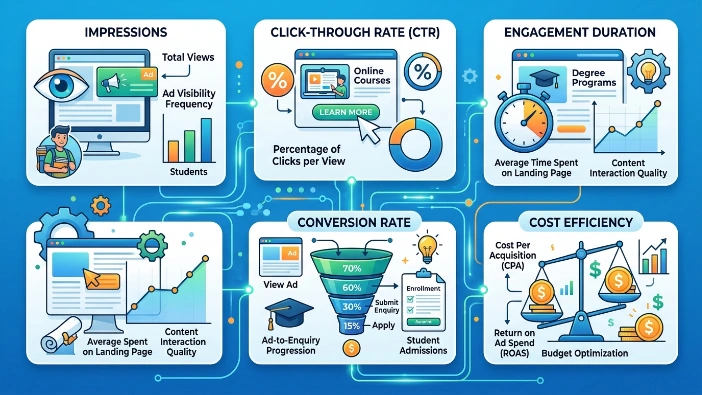
Metrics that measure banner ad effectiveness in education include impressions, click-through rates, engagement duration, conversion rates, and cost efficiency indicators. These metrics assess visibility, interaction quality, and progression of prospective students through digital admission pathways with performance tracking systems enabled.
Measurement relies on quantitative indicators collected from digital advertising platforms. Impressions track how often ads appear to users. Click-through rates measure interaction frequency with displayed content.
Engagement duration evaluates how long users interact with linked educational pages. Conversion rates track progression from viewing ads to completing enquiry actions. Cost efficiency measures the financial performance of advertising campaigns.
These metrics provide structured insight into how banner ads perform within admission strategies. They help assess whether awareness campaigns successfully move students toward further engagement stages in the educational decision process.