

Eighty percent of attendee- or organiser-generated corporate event stories fail to appear in any UK news outlet because they lack news value, verified sources, or distribution reach.
Corporate event stories refer to summaries, announcements, or narratives created by event organisers, sponsors, or attendees. ‘News outlet’ means recognised UK media publications with editorial oversight and public distribution (national papers, trade press, regional papers, and broadcast websites). Measurement uses published-item counts across editorial databases, press-monitoring services, and direct newsroom checks. This 80% figure describes the proportion of such authored pieces that receive zero placements in these editorial channels.
Why do most corporate event stories lack news value?
Most stories present routine information, internal achievements, or promotional content without new facts, independent verification, or public impact.
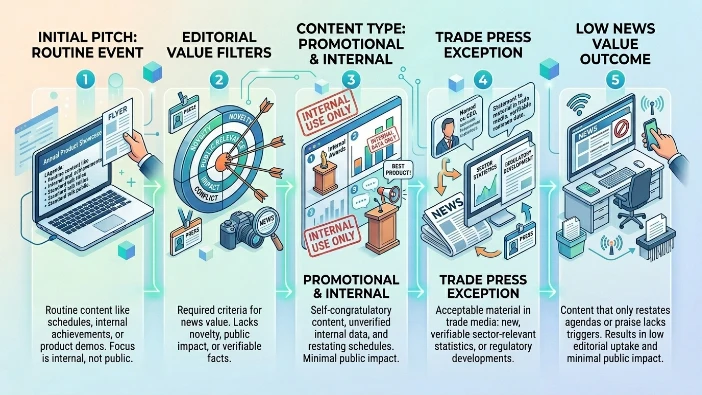
News value requires novelty, public relevance, impact, conflict, or notable spokespeople. Typical corporate event content lists agendas, participant names, or product demos. Editors prioritise material that affects readers’ decisions, public policy, local economies, or industry trends. Content that only restates event schedules or praise lacks those editorial triggers. In trade press, editors accept sector-relevant statistics, regulatory developments, or independent research. Corporate summaries rarely include independent data or statements from named, newsworthy figures, reducing editorial uptake.
How do newsroom workflows filter corporate event submissions?
Editorial teams use incoming tips, press releases, and monitoring tools, and they prioritise content with verifiable claims, sources, and clear public interest.
Newsrooms receive hundreds of submissions weekly. Editors triage by checking: is there a named spokesperson with quote and title; are there verifiable facts or exclusive data; does the story affect a region, sector, or policy; is there original reporting potential. Submissions without these elements enter a low-priority queue. Automated feeds and press-release services increase volume; editorial time constraints force selection of 10–20% of items that meet strict criteria. Stories lacking third-party corroboration or exclusive material rarely progress.
Which structural features make a corporate event story newsworthy?
The most decisive features: original data, a clear public impact, named expert quotes, time-sensitive developments, and independent corroboration.
Original data can be survey results released at the event or new market forecasts. Public impact covers job announcements, regulatory changes, or large investment figures. Named expert quotes require identifiable spokespersons with institutional credibility. Time-sensitive developments include launches, acquisitions, or policy decisions made during the event. Independent corroboration may be from academics, official bodies, or third-party research cited by the organiser. When these features exist, editorial acceptance rates rise significantly.
What common mistakes reduce editorial pickup?
Common mistakes include issuing generic releases, omitting contact details, using jargon without context, and failing to provide verifiable evidence or multimedia assets.
Generic releases read like marketing copy. Editors discard them for lacking angle or data. Missing contact details prevent quick verification. Jargon prevents readers outside the sector from understanding relevance. Absence of evidence means claims cannot be substantiated. Lack of high-quality images, audio, or video reduces usability for digital outlets. These mistakes shrink the story’s practical value for an editor working to publish verified, engaging content quickly.
How does timing influence the chance of publication?
Timing matters: stories issued during slow news hours or aligned with breaking industry events have higher publication chances.
Editors react to the news cycle. Releases sent during major news events receive less attention. Conversely, stories timed to coincide with sector conferences, regulator announcements, or scheduled briefing slots gain traction. Local outlets favour stories tied to community calendars or council meetings. Time-sensitive embargoes help when paired with exclusive data, because multiple outlets can prepare coverage before public release. Poorly timed distribution reduces visibility and lowers the chance of editorial action.
What distribution practices increase editorial pickup?
Direct outreach to relevant journalists, tailored subject lines, concise lead paragraphs, and supplying verification materials raise pickup rates.
Targeted outreach means sending a tailored note to a journalist who covers that beat rather than mass-blasting all editors. Subject lines that state the core news and a unique angle increase open rates. A concise lead paragraph that answers who, what, when, where, why, and how helps editors decide quickly. Providing data tables, transcripts, or raw files enables verification. Including localised relevance or exclusive access points increases editorial interest.
How does content format affect newsroom decisions?
Formats with clear, verifiable facts and ready-to-publish assets perform best; plain recaps and promotional articles perform worst.
Fact-led formats include research releases, executive interviews with verifiable claims, policy position statements, and official statistics. Ready-to-publish assets include high-resolution images with captions, editable quotes, and embargoed data. Formats that underperform include promotional recaps, generic event itineraries, and sales-oriented narratives. Newsrooms prefer formats that reduce their reporting load while offering independent value to readers.
What role do third-party sources and independent research play?
Third-party sources and independent research convert promotional content into publishable journalism by validating claims and adding context.
When organisers cite academic studies, regulator reports, or independent consultants, the story gains credibility. Independent research conducted or commissioned for an event provides unique data that editors can cite. Quotes from neutral experts reduce perceived bias. These elements change a narrative from an internal update to a piece with public interest and verifiability.
How do regional and trade outlets differ in acceptance criteria?
Regional outlets prioritise local economic effects and named local figures; trade outlets prioritise sector-specific data and regulatory implications.
Regional newspapers and local broadcast outlets look for job announcements, local investment, or community impact. They accept stories with local spokespeople and clear community relevance. Trade publications evaluate implications for industry standards, supply chains, or regulation. They accept technical data, sector surveys, and statements from recognised industry bodies. A story that fits one category may not fit the other without tailored framing and evidence.
What measurable steps do organisers use to increase coverage rates?
Organisers increase coverage by issuing exclusive data, arranging named interviews, timing releases to the news cycle, and distributing verified assets.
Exclusive data must be original and documented. Named interviews require confirming availability and titles of spokespeople. Timing aligns with quieter news windows or sector calendars. Verified assets include speaker headshots, statistics with methodology, and contactable sources. These steps increase the probability of editorial action and raise the share of stories that move from internal summaries to published items.
Explore More Expert Insights:
Events Are B2B’s Second-Highest Marketing Investment in 2026: Is Coverage Keeping Up?
Why 6 in 10 UK Corporate Events Generate Zero Earned Media Coverage
What are practical use cases where improving story pickup matters?
Improved pickup matters for public policy briefings, local job announcements, industry research launches, and crisis communications.
Public policy briefings require visibility to influence decision-making. Local job announcements affect regional communities and housing markets. Industry research launches aim to shift market and purchasing decisions. Crisis communications require rapid, verifiable distribution to correct misinformation. In each case, editorial pickup amplifies reach and ensures facts enter the public record.
How should readers evaluate claims about coverage statistics?
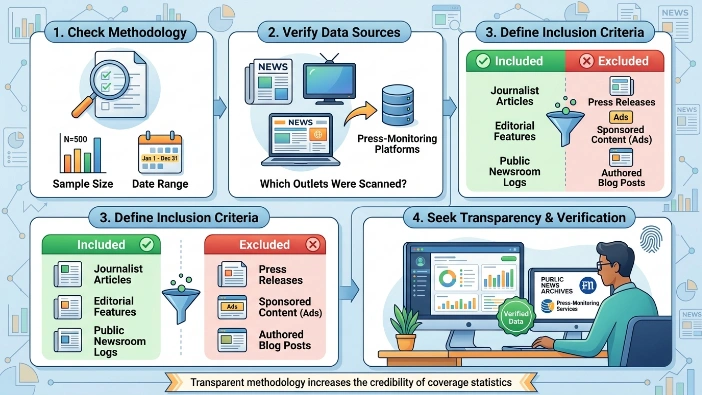
Evaluate claims by checking methodology: sample size, data sources (press-monitoring services, newsroom logs), date range, and inclusion criteria for what counts as a ‘story’.
Reliable claims state how many items were measured, which outlets were scanned, and the timeframe. They define inclusion criteria: press releases versus authored blog posts, editorial placements versus sponsored content. Verify with press-monitoring platforms or public newsroom archives where possible. Transparent methodology increases the credibility of coverage statistics.
For deeper comparisons of live coverage formats, see:
Live Event Coverage Formats: Which Gets the Most UK Shares — Video, Live Blog or Recap?
Eighty percent of UK corporate event stories fail to reach news outlets because they lack news value, verifiable data, named credible sources, and targeted distribution. Editors prioritise novelty, public impact, independent corroboration, and ready-to-publish assets. Organisers can increase pickup by providing original research, clear spokespeople, timed releases, and verified multimedia.
For case-level analysis on high pickup events, see the following:
How One UK Industry Summit Secured 38 Published News Articles in 5 Days



