
It means 78 out of every 100 UK B2B marketing teams allocate a dedicated budget line for events in their annual marketing plans. This reflects a measurable shift toward live and virtual events as core marketing channels.
This statistic quantifies event investment across UK B2B organisations. It covers budgets for physical conferences, trade shows, webinars, roundtables, and hybrid formats. The figure signals broad prioritisation of events for lead generation, customer engagement, and product promotion. Data sources typically derive from industry surveys of marketing decision-makers conducted in the UK within a 12-month window.
Why does event coverage become a problem when more marketers budget for events?
Coverage becomes a problem because increased event frequency raises demand for consistent media and social coverage that many teams cannot sustain with existing resources.
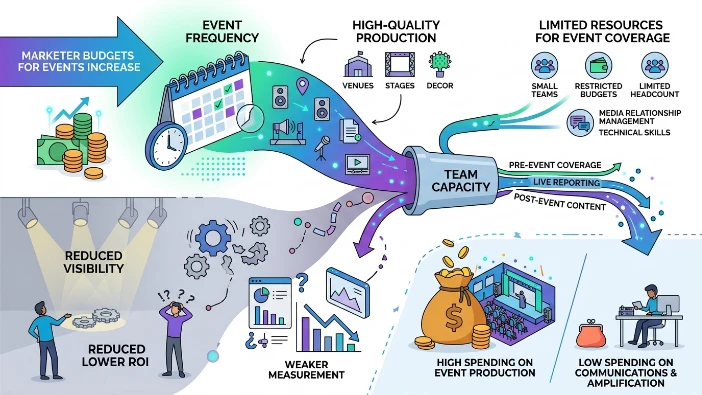
Higher event investment increases expectations for pre-event publicity, live reporting, and post-event coverage. Teams face limits in headcount, technical skills, media relationships, and budget for press distribution. Without planned coverage strategies, events achieve lower visibility, reduced return on investment, and weaker measurement. The mismatch exists between spending on event production and spending on communications that amplify event outcomes.
What is “event coverage” in a UK B2B marketing context?
Event coverage is the set of activities that produce and distribute content about an event before, during, and after it to target audiences and media channels.
Event coverage includes media outreach, speaker briefings, press releases, social posts, live blogs, recorded sessions, photo and video capture, executive interviews, and measurement reports. Coverage targets journalists, industry analysts, customers, prospects, and internal stakeholders. The goal is to increase attendance, extend reach beyond attendees, and generate measurable leads or awareness.
What are the core components of effective event coverage?
Core components are pre-event narratives, live capture systems, media relations, content assets, distribution channels, and analytics.
Pre-event narratives set the news angle and target audiences. Live capture uses dedicated audio, video, and photography resources. Media relations engage journalists and analysts with embargoed materials and interview slots. Content assets include bylined articles, snippets, quotes, and session recordings. Distribution channels cover email, owned social, press wire, and partner channels. Analytics measure reach, engagement, and conversion to determine coverage ROI.
How should UK B2B teams structure pre-event coverage?
Pre-event coverage requires a declared narrative, target outlet list, asset creation schedule, and speaker preparation.
Define a clear news hook linked to product updates, research, customer wins, or policy implications. Identify 10–20 priority outlets and 50–100 target journalists or analysts. Produce assets: short press release, one-page brief, three key messages, speaker bios, and two multimedia elements (photo and teaser video). Schedule distribution 7–21 days before the event with follow-up pitches 3–5 days prior. Prepare spokespeople with 30–60 minute media briefing sessions and FAQ documents.
What activities comprise during-event coverage?
During-event coverage consists of live updates, rapid content capture, on-site interviews, and immediate distribution.
Assign roles: live social operator, photographer/videographer, media liaison, and content editor. Capture 20–30 high-quality photos, 2–4 short videos per session, and verbatim quotes from speakers. Publish minute-by-minute highlights on primary social channels and send an hourly briefing to priority journalists when news breaks. Record full sessions for on-demand publishing. Archive assets with clear filenames and metadata for rapid post-event use.
How should teams plan post-event coverage?
Post-event coverage must convert captured assets into repurposed content, distribute to wider channels, and measure outcomes.
Produce: a 500–800-word event summary, five short social clips, three quote cards, and a highlights reel. Send a post-event press note within 24–48 hours to journalists and analysts, including links to recordings and downloadable assets. Publish session transcripts and gated materials for lead capture. Run a 30–60 day measurement cycle to track reach, downloads, leads, and any media mentions.
What technical and staffing resources are necessary for consistent coverage?
Resources include dedicated capture equipment, a trained editorial team, media contacts, content management systems, and analytics tools.
Equipment list: one DSLR or mirrorless camera, two wireless microphones, one field mixer or recorder, a laptop with editing software, and streaming encoder. Staff roles: one event producer, one content editor, one social operator, one photographer/videographer, and one media liaison. Systems: cloud storage for assets, a simple content calendar, and an analytics dashboard tracking impressions, engagement, and conversions.
What are common failures that reduce coverage effectiveness?
Failures include unclear news angles, lack of media outreach, poor asset quality, slow distribution, and missing measurement.
When teams do not define a news hook, journalists ignore pitches. Low-quality photos and videos reduce shareability. Delays in publishing recordings lose momentum. Absence of analytics prevents learning and optimisation. Repeated failures cause diminishing returns on event budgets.
How do UK-specific factors affect event coverage strategies?
UK-specific factors include high journalist workload, regional media fragmentation, time-zone alignment with European partners, and strong regulatory attention in sectors such as finance and healthcare.
Journalists in the UK handle many beats; personalised and concise pitches increase pickup rates. Targeting regional outlets in England, Scotland, Wales, and Northern Ireland supports local reach. For events addressing EU or global audiences, schedule live sessions to fit GMT and CET windows. For regulated industries, include compliance-reviewed statements and verify spokespeople clearance before outreach.
What metrics measure event coverage success?
Key metrics are media mentions, total reach, social engagement, content views, lead conversions, and coverage sentiment.
Count media mentions in tiered outlets: national, trade, regional. Measure total audience reach using circulation and follower data. Track social metrics: impressions, shares, comments, and click-through rates. Record content views for videos and session recordings. Attribute leads to content via UTMs and landing pages. Monitor sentiment for balanced reporting assessment.
What are typical use cases showing coverage impact?
Use cases include product launches, thought leadership campaigns, customer case study amplification, and regulatory announcements.
Product launches use pre-event exclusives with key trade editors, live demos, and post-event technical briefs. Thought leadership events place research findings into briefing documents and secure analyst commentary. Customer case study sessions produce video testimonials and detailed whitepapers. Regulatory announcements require timed press releases and prepared spokesperson statements.
Explore More Expert Insights:
Why Media Coverage Is Important for Charity Events
What Is Live Media Reporting for Conferences?
How should budgets change to close the coverage gap?
Budgets must allocate 15–25% of total event spend to coverage activities when aiming for measurable amplification.
If an event budget equals £100,000, set aside £15,000–£25,000 for coverage: media relations, capture crew, editing, distribution services, and analytics subscriptions. Allocate funds across pre-event asset creation (30%), live capture and staffing (40%), and post-event production and distribution (30%).
What is a practical 3-phase workflow teams can adopt?
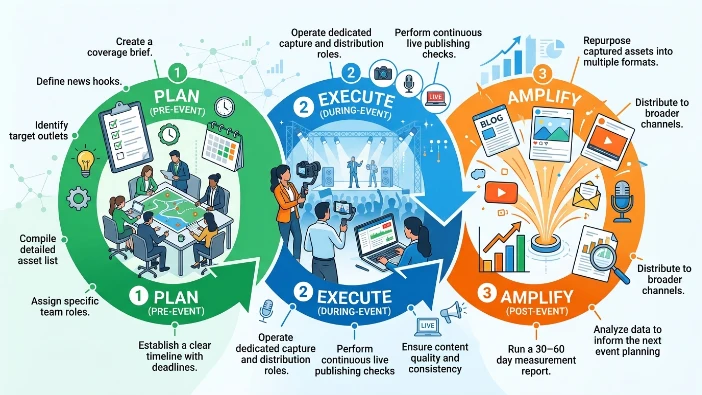
Adopt a three-phase workflow: plan (pre-event), execute (during-event), and amplify (post-event). Create a coverage brief with news hooks, outlets, asset list, roles, and timeline. Operate capture and distribution roles with live publishing checks. Amplify: repurpose assets into multiple formats, distribute them to broader channels, and run a 30–60 day measurement report to inform the next event.
Read More to Understand Better:
Pre, During, Post: The 3-Phase Media Coverage Framework for UK Events
This shift to event-centric budgets creates a coverage problem: more events require more consistent, higher-quality media and content output. Effective coverage defines the news, assigns clear roles, equips teams technically, and measures outcomes. UK B2B teams that budget 15–25% of event spend for coverage and follow a three-phase workflow increase visibility and accountability while ensuring event investments generate measurable results.
Get the Full Insights Here:
Managed Event Coverage vs In-House PR: UK Cost and Reach Analysis 2026



