Travel brands drive seasonal bookings using banner campaigns by launching targeted ads 3–4 months before peak travel periods, using season-specific visuals, and retargeting users who visited booking pages. These campaigns capture early researchers 70% of travelers start planning at least three months ahead and convert last-minute bookers, who represent 25 to 30% of all reservations.
A seasonal booking banner campaign is a paid advertising effort that uses static or animated banner ads to promote travel offers tied to a specific time of year, such as summer holidays, winter breaks, or spring trips. These ads appear on websites, apps, and media platforms to reach travellers during their research phase.
Seasonal booking banner campaigns focus on timing, relevance, and intent. They target users when they begin planning trips, not just when they are ready to book. In the United Kingdom, summer attention shifts to outdoor events and travel, making early spring the ideal launch window for summer trip banners. These campaigns use clear entities: the travel brand (advertiser), the destination or package (offer), the banner ad (format), and the booking engine (conversion point).
Banner formats include static images, animated GIFs, and HTML5 interactive ads. Sizes follow industry standards like 300×250 (medium rectangle), 728×90 (leaderboard), and 160×600 (wide sidebar). Travel brands select sizes based on where their audience spends time—news sites, travel blogs, or social media platforms.
How do travel brands timing their banner campaigns for seasonal peaks?
Travel brands launch banner campaigns 3–4 months before peak seasons, late winter or early spring for summer trips, early fall for holiday travel, and after New Year’s for spring break. This timing aligns with when 70% of travelers begin researching trips, ensuring ads reach users during high-intent research windows.
Timing follows booking windows. Peak booking times occur in months leading up to summer or winter holidays. Brands identify these windows to create timely ads that capture interest during high-demand moments. For example, a UK travel brand promoting Greek island holidays launches banners in March, reaching users planning June–August trips.
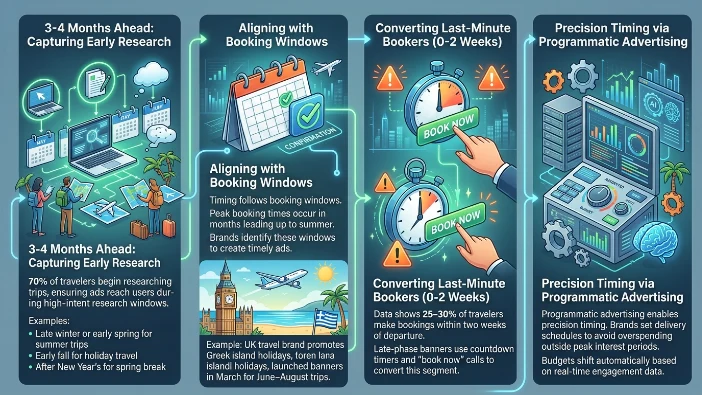
Data shows 25–30% of travelers make bookings within two weeks of departure. Late-phase banners use countdown timers and “book now” calls to convert this segment.
Programmatic advertising enables precision timing. Brands set delivery schedules to avoid overspending outside peak interest periods. Budgets shift automatically based on real-time engagement data.
What components make banner campaigns effective for seasonal travel bookings?
Effective seasonal travel banner campaigns include four components: geo-targeted audience segments, season-specific creative visuals, clear offer messaging with specific numbers, and retargeting logic for website visitors. These elements ensure ads reach high-intent travelers with relevant, timely content.
How does geo-targeting improve banner campaign reach for travelers?
Geo-targeting reaches people in specific departure regions or users interested in similar destinations. A UK travel brand targeting Scottish exporters for a Madrid package uses geo-fencing to show banners only to users in Scotland. Behavioral targeting adds users who recently engaged with travel content or used booking platforms.
Custom audiences retarget website visitors who browsed seasonal offers but didn’t book. For example, a ski resort targets users within a five-hour drive radius who follow winter sports brands. This precision reduces wasted ad spend and increases conversion rates.
What creative elements drive engagement in seasonal travel banners?
Creative visuals reflect the specific season. Summer banners use sun-soaked beach images; winter banners show cozy cabins; spring banners feature vibrant festivals. Promotions tie to the season, like “Early Bird Discounts for Summer 2025”.
Animated banners and carousel formats drive higher engagement. Studies show carousel ads drive up to 30% more clicks than single-image ads when promoting seasonal offers. UK brands using omnichannel campaigns—combining banners with SMS, email, and social—see up to 90% better customer retention.
How do specific numbers in banner messaging improve booking conversion?
Specific numbers replace vague terms. Banners use “Save £150 on Summer 2025,” “Only 12 rooms left,” or “Book by March 31 for 20% off.” These concrete figures create clarity and urgency. Travel guides and inspiration lists in banners help users compare options.
Data-driven targeting offers travel-size products to holidaymakers. Tailored bundles and loyalty deals grab both locals and tourists. Experian insights show personalized messaging increases booking intent.
Why is retargeting essential for completing seasonal travel bookings?
Retargeting captures spontaneous travelers who browse but don’t book. Dynamic ads show users the exact package or destination they viewed, reinforcing familiarity. This reduces friction and increases final conversion.
Last-minute travelers represent 25–30% of bookings. Retargeting campaigns remind them of offers when ready to commit. UK brands tracking QR scans, social likes, and footfall data pivot quickly to ride momentum.
Explore More Expert Insights:
How Tourism Services Increase Engagement Using Banner Ads
How Travel Companies Promote Deals Using Display Advertising
What benefits do seasonal banner campaigns deliver for travel brands in the UK?
Increased early booking volume, higher click-through rates from relevant creative, and improved return on ad spend through precise targeting. UK brands using these campaigns see booking rates rise significantly during peak seasons.
Early booking volume increases because campaigns launch before peak demand. When 70% of travelers research three months ahead, early banners capture this audience. Brands launching in late winter for summer trips fill inventory faster.
Click-through rates improve with season-specific visuals. Beach images for summer, cabin shots for winter, and festival photos for spring match user intent. Carousel formats boost clicks by 30%.
Return on ad spend improves through geo-targeting and behavioral filtering. Brands avoid spending on low-intent users. Custom audiences retarget high-value visitors, increasing conversion per pound spent.
UK brands rolling out campaigns across social, SMS, email, and in-store displays see retention up to 90% better. Omnichannel presence makes every touchpoint count.
How do real travel brands use banner campaigns for seasonal bookings in practice?
Real travel brands use banner campaigns by launching early-bird summer ads in March, winter holiday promotions in September, and spring break offers in January. They pair geo-targeted audiences with season-specific visuals, retarget website visitors, and use carousel formats to boost clicks by 30%.
British Airways Holidays, Virgin Holidays, and Expedia saw Ad Awareness gains of 4.8–6.5 percentage points in UK winter campaigns. These brands used timing, relevant creative, and retargeting to drive visibility and bookings.
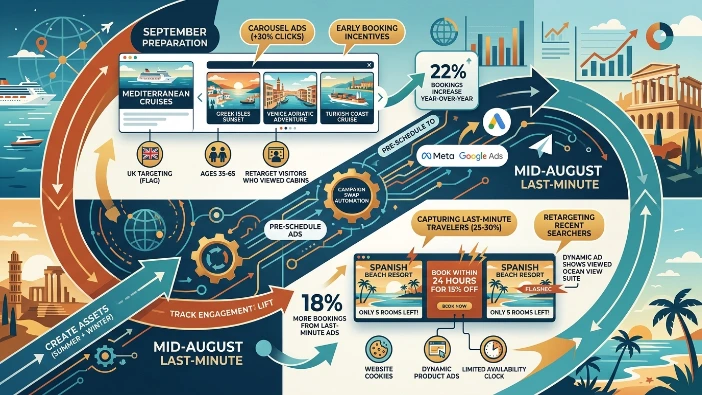
The brand creates two ad asset sets (summer + winter) and swaps campaigns seasonally. It pre-schedules Meta and Google ad swaps, tracks engagement lift by seasonality, and achieves higher click-through rates and return on ad spend by aligning visuals with seasonal demand drivers.
A Mediterranean tour operator launches banners in early fall for Christmas and New Year cruises. The campaign targets UK users aged 35–65, uses carousel ads showing different cruise packages, and retargets visitors who viewed cabin options. Bookings increase 22% compared to the previous year.
A beach resort in Spain runs banners in mid-August for September stays. The ad shows “Only 5 rooms left” and “Book within 24 hours for 15% off.” Dynamic ads display the exact room type the user viewed. This captures the 25–30% of last-minute travelers, adding 18% more bookings.
Readers interested in the educational stage of travel awareness campaigns can explore the keyword for the article to understand:
How Travel Brands Increase Holiday Consideration Using Banner Campaigns
For those ready to finalise decisions, the keyword for this article covers ads that turn seasonal interest into final bookings.