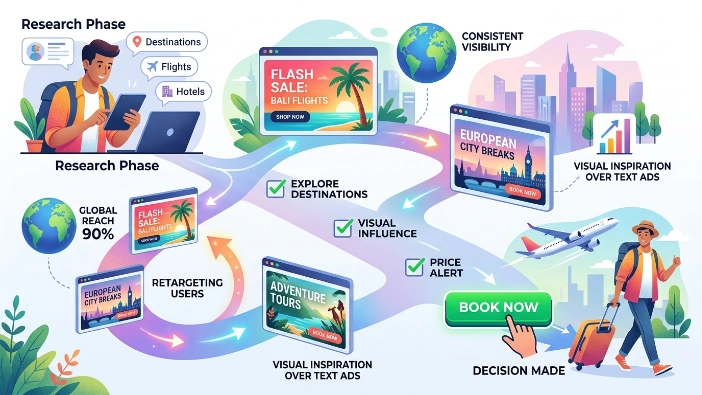
Holiday consideration is the stage when travellers actively evaluate specific destinations, brands, or trips before booking. Travel brands use banner campaigns to stay visible during this evaluation phase, keeping their offers top-of-mind when consumers compare options. UK travellers typically spend 6-8 weeks researching holidays before making final decisions, creating a critical window for banner advertising impact.
How Do Banner Campaigns Influence Travel Decision-Making?
Banner campaigns influence travel decisions by maintaining consistent brand visibility during the research phase. These ads appear on websites, apps, and social platforms that travellers visit while planning trips. Display advertising reaches 90% of internet users globally and retargets users who previously visited travel sites. The visual format showcases destinations, prices, and promotions in ways text ads cannot match.
What Mechanisms Make Banner Ads Effective for Travel?
Banner ads work through three core mechanisms: awareness reinforcement, retargeting, and contextual placement. Awareness reinforcement occurs when users see the same brand multiple times across different sites. This repetition builds trust and familiarity. Retargeting shows ads to users who previously visited a travel brand’s website but did not book. Contextual placement ensures banners appear on travel-related content where users already have purchase intent.
Programmatic advertising automates this process using real-time data. Brands serve ads at optimal times based on when audiences engage with travel content. For example, a user who searches for “Spain holidays” receives banner ads from Spanish tour operators for the next 30 days. This keeps the brand visible throughout their decision journey.
Which Banner Formats Work Best for Holiday Promotion?
Standard banner sizes include 300×250 pixels (medium rectangle), 728×90 pixels (leaderboard), and 160×600 pixels (skyscraper). The 300×250 format performs best for mobile devices since it fits naturally within content feeds. Animated banners increase click-through rates by 26% compared to static images. Rich media banners with interactive elements like destination carousels or price calculators generate higher engagement.
Dynamic creative optimisation customises banner content based on user data. A traveller who viewed London hotels sees banners featuring London deals, not beach resorts. This personalisation increases relevance and conversion probability. Travel brands using dynamic banners report 2-3 times higher return on ad spend than those using static creatives.
Why Do Travel Brands Time Banner Campaigns Around Seasons?
Travel brands time banner campaigns around seasonal booking windows to capture demand when it peaks. UK travellers book summer holidays between March and May, winter breaks between September and November, and last-minute trips 2-4 weeks before departure. Banner campaigns align with these windows to maximise relevance and budget efficiency.
When Do Peak Booking Windows Occur for UK Travellers?
Summer holiday bookings peak in April and May, with 60% of UK families securing trips by late spring. Winter sun bookings surge in October as temperatures drop in the UK. Christmas and New Year travel plans are finalised by early November. Understanding these patterns allows brands to increase ad spend during high-intent periods and reduce spend during low-activity months.
Last-minute travel campaigns target travellers who decide quickly. These campaigns use urgency tactics like “48-hour sale” or “departing tomorrow” messaging. Post-Christmas January represents a unique opportunity when Brits experience seasonal fatigue and seek escape. EasyJet’s “Big Orange Sale” and TUI’s “Live Happy Sale” repeat annually during this period, building brand recognition through consistency.
How Does Seasonal Targeting Improve Campaign Performance?
Seasonal targeting increases performance by matching ad messaging to current traveller needs. Winter banners showcase warm destinations with temperatures above 25°C. Summer banners highlight beach resorts and outdoor activities. Spring campaigns promote European city breaks as weather improves. This alignment reduces friction between ad message and consumer intent.
Location-specific targeting refines seasonal campaigns further. Brands serve winter sun ads to UK users while showing ski resort promotions to users in colder European markets. UK travellers prefer destinations within a 4-hour flight for short breaks and 6+ hours for extended holidays. Banner campaigns reflect these preferences through destination selection and messaging.
What Components Build Successful Holiday Banner Campaigns?
Successful holiday banner campaigns combine compelling visuals, clear value propositions, precise targeting, and measurable objectives. Each component must work together to guide users from awareness to consideration. Visuals showcase destinations using high-quality imagery that evokes emotion. Value propositions communicate unique selling points like price, flexibility, or exclusive deals.
Which Visual Elements Drive Engagement in Travel Banners?
High-resolution destination photos increase engagement by 40% compared to stock imagery. Authentic user-generated content from real travellers builds trust more effectively than professional photography. Images showing families, couples, or solo travellers matching the target audience create stronger connections. Faces in images increase attention by 30% since humans naturally focus on other faces.
Colour psychology influences banner performance. Warm colours like orange and red create urgency for sales. Blue and green evoke trust and relaxation for luxury destinations. Brands maintain consistent colour schemes across all banners to reinforce brand identity. The call-to-action button must contrast sharply with the background for visibility.
How Do Targeting Parameters Define Campaign Reach?
Demographic targeting segments audiences by age, income, and family status. UK families with children target different destinations than solo travellers or retirees. Age groups 25-34 prefer adventure travel and budget options. Age groups 45-54 favor luxury experiences and all-inclusive packages. Income levels determine price point messaging and destination recommendations.
Behavioural targeting uses browsing history and purchase data. Users who visited hotel booking sites receive hotel banners. Users who searched for flights receive airline or package deal banners. Interest-based targeting reaches users who follow travel influencers or engage with travel content. Combined targeting parameters create highly specific audience segments that improve conversion rates.
What Value Propositions Convert Holiday Shoppers?
Price transparency converts better than vague messaging. “£299 per person, all-inclusive” outperforms “Great deals available. ” Flexible booking terms address post-pandemic concerns. “Free cancellation up to 14 days before departure” reduces purchase anxiety. Exclusive offers create urgency: “Book today, get free airport transfers worth £80.”
Timing-based value propositions leverage scarcity. “Only 5 rooms left at this price” or “Sale ends midnight Sunday” drives immediate action. Loyalty rewards appeal to repeat customers: “Earn double points on bookings this month.” Bundle deals provide perceived value: “Flight + hotel + transfers from £450.” These specific, measurable claims build credibility and motivate action.
What Benefits Do Travel Brands Gain From Banner Advertising?
Travel brands gain increased brand awareness, higher consideration rates, improved return on investment, and measurable campaign performance from banner advertising. Display advertising generates 18% of all digital ad revenue in the travel sector. Brands that maintain consistent banner presence see 2-3 times higher recall rates than those using sporadic campaigns.
How Does Banner Advertising Improve Brand Recall?
Consistent banner exposure builds memory structures in consumers’ minds. When travellers start planning holidays, brands they remember repeatedly appear in their consideration set. Study data shows users need 7-12 exposures to a brand before taking action. Banner campaigns deliver these exposures efficiently across multiple websites and devices.
Brand lift studies measure awareness increases directly. British Airways Holidays, Virgin Holidays, and Expedia saw ad awareness gains of 4.8 to 6.5 percentage points during winter campaigns in the UK. These gains translate to higher market share during peak booking periods. Brands investing in year-round banner presence maintain top-of-mind status continuously.
What ROI Metrics Demonstrate Banner Campaign Success?
Travel advertising through TV and digital combined delivers £5.94 ROI per pound spent. Banner campaigns specifically generate return on ad spend ratios of 3:1 to 5:1 for optimised accounts. Cost per acquisition ranges from £15-45 depending on destination and competition. Mediterranean beach packages cost less to acquire than long-haul luxury trips.
Click-through rates for travel banners average 0.35-0.50%, higher than the 0.06% cross-industry average. Conversion rates from banner clicks reach 2-4% for well-targeted campaigns. Retargeting campaigns achieve 10x higher conversion rates than prospecting campaigns since they target warm audiences. These metrics justify continued investment in banner advertising for travel brands.
How Do Real Travel Brands Apply Banner Campaign Strategies?
Real travel brands apply banner campaign strategies by combining data insights, creative excellence, and strategic timing to reach UK travellers effectively. Successful campaigns integrate multiple channels while maintaining consistent messaging. Brands test variations continuously to optimise performance and reduce costs.
Explore More Expert Insights:
How Tourism Services Build Excitement Using Destination Ads
How Travel Companies Inspire Planning Using Mid-Funnel Advertising
Which UK Travel Brands Lead Winter Campaign Performance?
British Airways Holidays runs the “Take Your Holiday Seriously” campaign annually, using satirical messaging that resonates with UK audiences returning to work after Christmas. The campaign pairs TV for reach with banner ads for intent capture, following the principle that effective campaigns combine mass media with targeted digital.
TUI’s “Live Happy Sale” repeats each January, building recognition through consistency. The campaign targets post-Christmas fatigue with sunny destination imagery and guaranteed price drops. EasyJet’s “Big Orange Sale” uses bold orange branding across all banners, creating instant visual recognition. These brands invest in year-over-year campaign continuity rather than reinventing messaging annually.
Expedia targets comparison shoppers with meta-search integration. Their banners appear on travel comparison sites showing price guarantees and flexible booking options. Virgin Holidays focuses on luxury segments with premium imagery and exclusive package deals. Each brand targets specific audience segments rather than competing broadly.
What Lessons Do Successful Campaigns Teach Marketers?
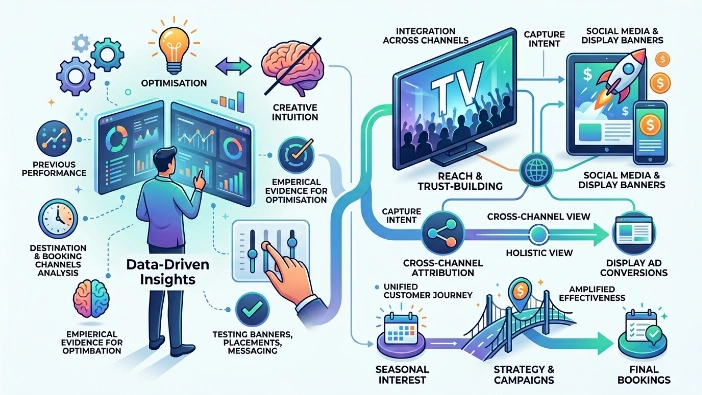
Successful campaigns prioritise data-driven insights over creative intuition. Brands analyse previous campaign performance to identify peak engagement times, preferred destinations, and popular booking channels. This data informs future targeting and creative decisions. Testing different banner sizes, placements, and messaging provides empirical evidence for optimisation.
Integration across channels amplifies banner effectiveness. The most effective travel campaigns pair TV for reach and trust-building with banner ads and social to capture intent TV generates. Cross-channel attribution measures how banners contribute to conversions even when users see TV ads first. This holistic view prevents undervaluing display advertising’s role in the customer journey.
For brands seeking to understand how seasonal interest converts to final bookings, exploring holiday travel ads that turn seasonal interest into final bookings provides actionable insights for the decision stage.
Those interested in the foundational strategies travel brands use to drive seasonal bookings can explore:
How travel brands drive seasonal bookings using banner campaigns for level education.
For those ready to finalise decisions, the keyword for this article covers ads that turn seasonal interest into final bookings. Banner campaigns remain essential for travel brands increasing holiday consideration. They provide measurable visibility during the critical evaluation phase, connect brands with travellers actively researching trips, and deliver proven return on investment. UK travellers expect to see relevant travel offers throughout their planning journey. Brands that deliver consistent, well-targeted banner presence capture consideration share and drive bookings.