
Mid-funnel advertising in university marketing is a structured communication stage between awareness and enrollment where universities present detailed program information to prospective students who have already shown initial interest through digital interactions, searches, or previous educational content engagement signals channels.
Mid-funnel advertising operates after initial exposure and before final decision-making. It focuses on structured educational clarity. Universities use this stage to provide program depth rather than general awareness messaging.
This stage appears when students already know subject areas such as business, engineering, or healthcare but require additional program details. The communication includes curriculum structure, entry requirements, and learning pathways.
Universities in the United Kingdom use mid-funnel systems to organize digital touchpoints across search engines, social platforms, and educational portals. Each interaction strengthens program familiarity.
The purpose of this stage is to move learners from curiosity to structured evaluation. It reduces uncertainty by delivering consistent academic information across multiple digital environments.
What is program awareness in MOFU stage?
Program awareness in the MOFU stage refers to the level of recognition and understanding prospective students have about academic programs after initial exposure, including knowledge of course structure, outcomes, and relevance to their educational and career objectives framework stage context.
Program awareness in MOFU represents structured knowledge formation. Students understand not only that a program exists but also what it contains and how it functions academically.
This awareness develops after repeated exposure to educational content. A student may first see general information about data science and later view detailed course modules and career pathways.
Universities define program awareness using clarity indicators such as subject comprehension, course familiarity, and perceived academic value.
In the United Kingdom, program awareness supports informed decision-making for undergraduate and postgraduate pathways. Students compare subject structure, qualification types, and duration formats.
This stage forms a critical bridge between discovery and evaluation. It ensures learners understand academic relevance before entering enrollment consideration stages.
Which digital channels support mid-funnel educational campaigns?
Mid-funnel educational campaigns use search engines, social media platforms, email communication systems, display advertising networks, and university websites to deliver structured program information to students who have already engaged with educational content or demonstrated academic interest online channel integration layer.
Search engines support intent-based discovery. Students searching for specific programs receive structured academic content results that explain course details and requirements.
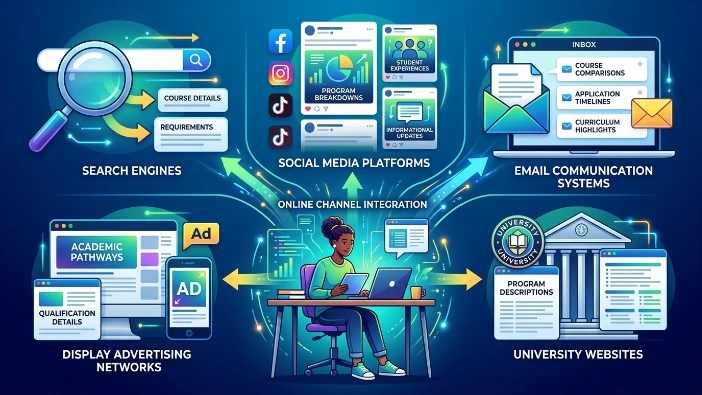
Social media platforms distribute educational content through targeted feeds. Universities share program breakdowns, student experiences, and informational updates to maintain engagement.
Email systems deliver structured academic updates. These include course comparisons, application timelines, and curriculum highlights for interested learners.
Display advertising networks show program-related information across educational websites, news platforms, and digital learning environments.
University websites act as centralised information hubs. They contain structured program descriptions, academic pathways, and qualification details.
Each channel operates together to maintain consistent program messaging. This integration ensures learners receive repeated and structured exposure to academic content.
Explore:
How Universities Convert Program Awareness Into Final Enrollments Using Display Retargeting Ads
How does audience segmentation improve program awareness campaigns?
Audience segmentation improves program awareness campaigns by dividing prospective students into defined groups based on demographics, academic interests, online behavior, and engagement history, enabling universities to deliver relevant educational content aligned with specific learning goals and program expectations precision targeting.
Segmentation organizes students into structured categories. These categories reflect academic readiness, subject interest, and engagement level.
Universities segment audiences based on field interest such as science, humanities, technology, or business. Each group receives tailored program information.
Demographic segmentation includes age, education level, and location. In the United Kingdom, segmentation often differentiates between domestic and international students.
Behavioral segmentation analyzes online activity. Students who visit engineering pages receive related program content across multiple platforms.
Engagement-based segmentation tracks interaction levels. Students who frequently view program pages receive more detailed academic materials.
This structured segmentation ensures communication accuracy. It reduces irrelevant exposure and increases alignment between student interest and program offerings.
What types of content are used in mid-funnel advertising?
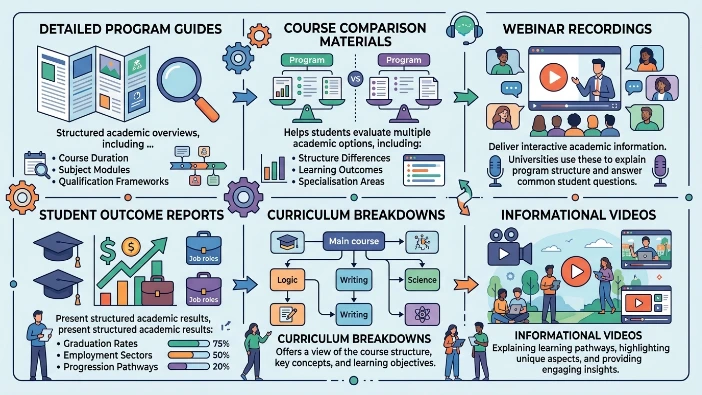
Mid-funnel advertising uses detailed program guides, course comparison materials, webinar recordings, student outcome reports, curriculum breakdowns, and informational videos to help prospective students evaluate academic programs and understand learning pathways in structured educational formats content mapping decision support layer system.
Program guides provide structured academic overviews. These include course duration, subject modules, and qualification frameworks.
Course comparison materials help students evaluate multiple academic options. These comparisons include structure differences, learning outcomes, and specialisation areas.
Webinar recordings deliver interactive academic information. Universities use these sessions to explain program structure and answer common student questions.
Student outcome reports present structured academic results. These include graduation rates, employment sectors, and progression pathways.
Curriculum breakdowns explain subject-level details. Each module is described with learning objectives and assessment formats.
Informational videos visually present academic environments and program flow. These resources support structured understanding of educational pathways.
Together, these content types build clarity and support structured academic evaluation.
Explore More Expert Insights:
How Coaching Centers Build Exam Preparation Interest Using Banner Ads
How Education Brands Guide Students Using Program Awareness Banner Campaigns
How do universities measure awareness performance in MOFU campaigns?
Universities measure awareness performance in MOFU campaigns using engagement metrics, click-through rates, content interaction levels, session duration, program page visits, and inquiry submissions that indicate increased understanding of academic offerings among prospective students data tracking conversion intent scoring framework model.
Engagement metrics measure interaction with educational content. Higher engagement indicates stronger program interest.
Click-through rates measure the number of users who access program pages after viewing campaign content.
Content interaction levels track how users engage with academic materials such as guides, videos, and course descriptions.
Session duration measures time spent on program pages. Longer durations indicate deeper academic evaluation.
Program page visits show interest in specific courses or degrees. Repeated visits indicate structured consideration.
Inquiry submissions represent active interest in academic programs. These include form completions and information requests.
These metrics together provide structured insight into awareness effectiveness.
Read:
How Online Learning Platforms Drive Signups Using Banner Ads
What role does student behavior data play in MOFU targeting?
Student behavior data plays a central role in MOFU targeting by analyzing search activity, content engagement patterns, website visits, and interaction history to identify academic interests and refine program messaging for improved relevance and awareness accuracy signal weighting model layer.
Student behavior data identifies academic intent. It tracks how users interact with educational content online.
Search activity reveals subject interest. Queries about courses, qualifications, or careers indicate academic focus areas.
Content engagement patterns show interaction with program materials. Students viewing engineering content receive related academic messaging.
Website visit data tracks program exploration behavior. Multiple visits indicate strong academic interest.
Interaction history connects past behavior with future targeting decisions. This improves message alignment.
Universities use this structured data to refine awareness campaigns. It ensures program messaging matches student academic interests accurately.