
Banner ads are visual digital advertisements used by coaching centers to promote exam preparation programs across websites, mobile applications, educational platforms, and video networks. In the United Kingdom, coaching institutes use banner advertising to increase student interest, strengthen course awareness, and improve engagement with preparation-related educational content.
Banner ads include headlines, educational graphics, subject references, and preparation-focused messaging. These advertisements appear on platforms visited by students researching revision support, entrance exams, academic tutoring, and competitive examination guidance.
Coaching centers in the United Kingdom use banner ads for GCSE preparation, A-Level revision, IELTS coaching, 11 Plus tutoring, SAT preparation, and professional certification training. Educational advertisements help students recognize available preparation options before comparing institutes or selecting classes.
Banner advertising supports middle-stage engagement. Students already aware of exam preparation needs begin exploring learning methods, revision schedules, and academic support systems. Coaching centers use targeted banner campaigns to maintain visibility during this research phase.
Readers exploring broader awareness strategies can read:
How Coaching Centers Increase Admissions Using Display Ads
Readers interested in conversion-focused student acquisition can explore to learn:
How coaching centers turn exam preparation interest into paid registrations using conversion ads.
How do coaching centers use banner ads to build exam preparation interest?
Coaching centers use banner ads to introduce structured revision programs, subject-specific tutoring, and examination preparation systems to targeted student audiences. These campaigns increase engagement by connecting educational messaging with students actively researching exams, revision techniques, and academic improvement opportunities online.
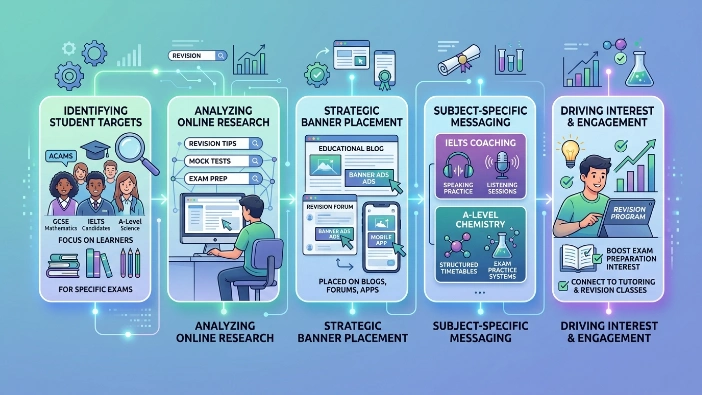
Student engagement begins with audience targeting. Coaching centers identify learners preparing for specific examinations. GCSE mathematics students, IELTS candidates, and A-Level science learners receive different banner advertisements based on academic needs.
Banner ads appear across educational blogs, exam preparation forums, revision platforms, mobile learning applications, and student-focused websites. A learner reading about GCSE revision techniques sees banner advertisements related to revision classes or mock test programs.
Educational messaging focuses on preparation relevance. An IELTS coaching banner highlights speaking practice and listening sessions. An A-Level chemistry banner highlights structured revision timetables and examination practice systems.
Visual consistency strengthens recognition. Coaching centers maintain repeated educational themes across advertisements. Students repeatedly viewing similar preparation messaging develop stronger familiarity with revision programs and academic support services.
Banner advertising also supports long research cycles. Many students compare preparation methods for several weeks before selecting coaching options. Repeated exposure keeps educational programs visible throughout this comparison period.
Why do banner ads increase student engagement in exam preparation?
Banner ads increase student engagement because they provide repeated educational exposure during online learning activity. Consistent visibility strengthens exam awareness, improves preparation recognition, and encourages students to explore revision-focused educational solutions connected to their academic goals and examination timelines.
Students preparing for examinations spend significant time online. They access revision notes, watch educational videos, participate in learning forums, and search for subject guidance. Banner advertisements integrate directly into these digital learning environments.
Repeated exposure increases familiarity. A student researching IELTS vocabulary repeatedly encounters IELTS preparation banners across educational websites. This visibility improves recognition of available coaching support.
Banner ads also simplify educational communication. Coaching centers explain revision schedules, subject coverage, mock testing systems, and examination preparation formats using concise visual messaging.
Targeted educational messaging improves relevance. GCSE English learners receive advertisements focused on language revision, essay structure, and comprehension preparation. A-Level physics students receive advertisements focused on numerical problem-solving and scientific revision systems.
Student engagement improves when banner campaigns align with academic calendars. Coaching centers increase visibility before examination periods, school holidays, and university application deadlines.
Mobile advertising also strengthens engagement. Students frequently access educational material through smartphones. Responsive banner ads ensure revision-focused content remains visible across mobile devices and applications.
What types of banner ads do coaching centers use for exam preparation campaigns?
Coaching centers use static banners, animated banners, responsive display ads, mobile banners, and remarketing advertisements to promote exam preparation programs. Each advertisement format supports different engagement objectives including subject awareness, revision visibility, student retention, and preparation-focused educational communication.
Static banner advertisements use fixed visuals and direct educational messaging. These banners commonly include examination names, subject references, and revision schedules. A GCSE mathematics banner, for example, displays algebra revision messaging alongside preparation dates.
Animated banners use movement to increase student attention. Coaching centers rotate subject highlights, examination reminders, and revision timelines through motion-based advertising.
Responsive banners automatically adapt to available screen sizes and digital placements. These advertisements improve visibility across mobile applications, desktop websites, tablets, and educational platforms.
Remarketing advertisements reconnect students who previously visited course pages or revision content. A learner exploring IELTS preparation information later sees IELTS-related banners while browsing other websites.
Video banners support educational storytelling. Coaching centers use short visual demonstrations of classroom sessions, practice testing environments, or revision workshops to increase preparation interest.
Mobile-first banner campaigns prioritize smartphone engagement. Educational providers optimize layouts, text size, and call visibility for smaller screens because a large percentage of students access learning content through mobile devices.
How does audience targeting improve banner ad performance for coaching centers?
Audience targeting improves banner ad performance by delivering preparation-related advertisements to students actively researching exams, tutoring support, and academic revision. Coaching centers use behavioral data, educational interests, and demographic segmentation to increase relevance and improve student engagement rates.
Audience targeting identifies learners connected to specific examinations or subjects. GCSE students receive different banner campaigns from IELTS applicants or university entrance candidates.
Behavioral targeting analyzes online learning activity. Students visiting science revision websites, mathematics practice platforms, or educational discussion forums become relevant advertising audiences.
Keyword targeting supports educational alignment. Learners searching terms such as “GCSE revision timetable,” “A-Level tutoring,” or “IELTS preparation classes” enter specific preparation-focused audience groups.
Geographic targeting improves local relevance. Physical coaching centers focus advertisements on nearby cities or boroughs within the United Kingdom. Online coaching providers expand targeting nationally across England, Scotland, Wales, and Northern Ireland.
Device targeting improves user experience. Mobile users receive vertical and responsive banner layouts optimized for smaller screens, while desktop users receive larger educational advertisements.
Audience segmentation also supports message personalization. A Year 11 student receives revision-focused messaging connected to GCSE preparation, while adult learners preparing for professional certifications receive career-oriented educational messaging.
These targeting systems improve engagement quality because advertisements appear before students already connected to active examination preparation behavior.
How do coaching centers use banner ads during exam seasons?
Coaching centers use banner ads during exam seasons to increase visibility around revision periods, mock testing schedules, and subject preparation sessions. Seasonal educational campaigns align advertising activity with student demand patterns, examination calendars, and academic preparation timelines across the United Kingdom.
Exam season advertising follows structured academic cycles. GCSE revision campaigns increase during spring months before final examinations. A-Level preparation campaigns expand before subject assessments and university admissions periods.
IELTS preparation advertising rises during international university application seasons. Coaching centers increase visibility when students prepare for language testing requirements connected to higher education admissions.
Seasonal banner campaigns focus on urgent preparation needs. Advertisements reference revision classes, intensive preparation sessions, practice examinations, and timetable-based study programs.
Educational messaging changes according to examination stages. Early campaigns focus on awareness and preparation planning. Later campaigns emphasize revision sessions, mock testing, and examination readiness.
School holidays also influence advertising activity. Coaching centers promote summer revision programs, winter workshops, and intensive learning sessions during academic breaks.
Digital visibility increases during high-stress preparation periods because students actively search for academic support and structured revision resources online.
Explore More Expert Insights:
How Education Brands Guide Students Using Program Awareness Banner Campaigns
How Institutes Increase Enrollment Consideration Using Targeted Display Ads
What challenges affect banner ad campaigns for coaching centers?
Banner ad campaigns for coaching centers face challenges related to advertisement fatigue, high competition, audience overlap, mobile optimization, and message clarity. Effective educational campaigns require consistent content updates, targeted segmentation, and structured visual communication aligned with examination preparation behavior.
Educational advertising competition increases significantly during examination seasons. Multiple coaching providers launch revision-focused campaigns simultaneously before GCSE, A-Level, and university entrance examinations.
Advertisement fatigue reduces engagement when students repeatedly view identical banners. Coaching centers solve this by updating educational visuals, headlines, and preparation-focused messaging regularly.
Generic educational messaging weakens campaign performance. Broad advertisements lacking subject relevance generate lower engagement from students researching specific examinations.
Mobile optimization problems also affect visibility. Poor text formatting and oversized visuals reduce readability on smartphones, where a large portion of educational browsing occurs.
Audience overlap creates inefficiency. A student preparing for IELTS does not require GCSE-focused advertisements. Segmented targeting systems improve educational relevance and reduce wasted advertising exposure.
Timing accuracy remains essential. Revision-focused advertisements launched after peak preparation periods lose engagement opportunities connected to student research behavior.
Campaign measurement systems improve advertising quality. Coaching centers track engagement metrics including impressions, click-through rates, student interaction time, and repeat website visits to refine educational campaigns.
How are banner ads changing coaching center marketing in the United Kingdom?
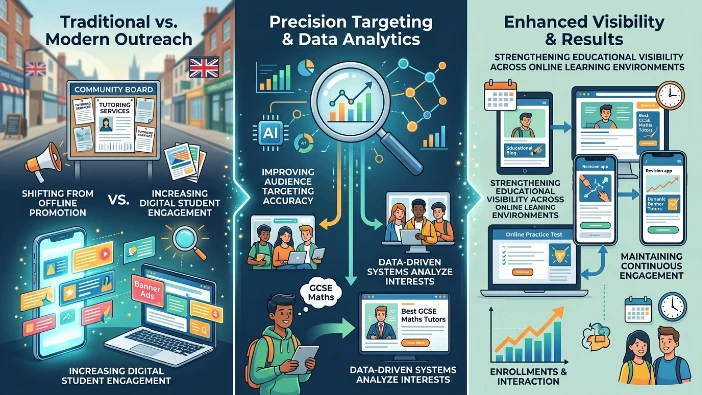
Banner ads are changing coaching center marketing in the United Kingdom by increasing digital student engagement, improving audience targeting accuracy, and strengthening educational visibility across online learning environments. Coaching centers increasingly use data-driven advertising systems to support exam preparation awareness and student interaction.
Digital learning growth has increased online educational competition. Students now research tutoring support, revision systems, and examination preparation resources through search engines, educational platforms, and mobile applications.
Banner advertising supports continuous educational visibility throughout this research process. Coaching centers maintain student engagement across multiple online touchpoints instead of relying only on offline promotion.
Data analytics improve campaign precision. Educational providers analyze audience interaction, preparation interests, and engagement behavior to refine advertisement delivery systems.
Artificial intelligence tools also support automated optimization. Advertising systems adjust placements, audience categories, and educational messaging based on performance patterns.
Personalized educational advertising continues expanding across the United Kingdom. Students receive banners aligned with examination type, subject focus, and academic stage instead of broad general education messaging.
Hybrid learning systems also influence banner advertising strategies. Coaching centers now promote online revision sessions, virtual tutoring programs, and digital mock testing environments through targeted educational campaigns.
Banner advertising remains important because it connects coaching centers with students during active preparation research stages. These campaigns strengthen educational awareness, improve revision engagement, and support structured communication across the United Kingdom’s competitive exam preparation market.