Program awareness banner campaigns are digital advertising campaigns that introduce students to specific educational programmes through repeated visual messaging. Education brands use these campaigns to increase programme visibility, explain course categories, and guide prospective students toward structured research during the early and middle stages of decision-making.
Program awareness banner campaigns focus on educational visibility rather than direct applications. These campaigns help students understand available study options before they begin comparing admission requirements or submitting applications.
Education brands in the United Kingdom use awareness campaigns across regional websites, educational portals, mobile applications, streaming platforms, and social media networks. A university promoting data science programmes in Manchester displays banners on technology news websites accessed by students aged 18 to 24. A vocational training provider in Birmingham promotes healthcare diplomas through mobile display advertising targeted within selected postcodes.
Banner campaigns normally include programme names, subject categories, study durations, intake sessions, and campus-related visuals. These advertisements appear repeatedly across multiple digital touchpoints to strengthen programme recognition.
Program awareness campaigns also support structured student discovery. Students researching business management, engineering, media studies, or healthcare training encounter educational banners before conducting deeper comparisons. This repeated exposure improves programme familiarity during the consideration stage.
Readers exploring:
How Institutes Attract Students Using Local Banner Advertising
How do education brands use banner campaigns to guide student interest?
Education brands guide student interest by displaying programme-focused banner advertisements across platforms frequently visited by prospective learners. These campaigns connect educational subjects with relevant student audiences, helping learners identify study options, compare programme categories, and continue structured research through repeated educational messaging exposure.
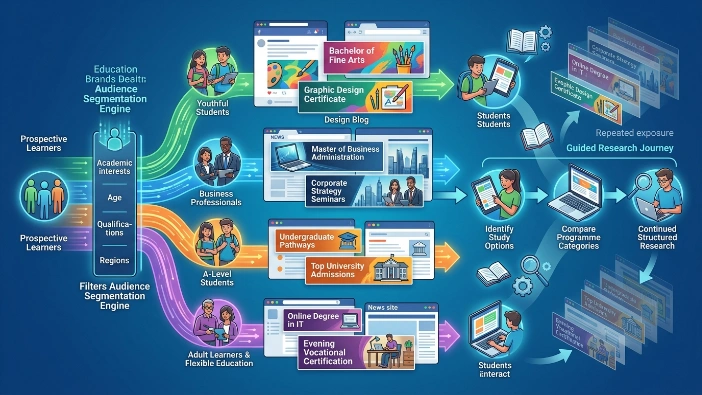
The process begins with audience segmentation. Education brands define student groups according to academic interests, age categories, qualification levels, and geographic regions. Students interested in creative arts receive different banner messaging than learners researching business administration or information technology.
Banner campaigns then align educational messaging with audience behaviour. A-level students researching undergraduate programmes view banners focused on degree pathways. Adult learners exploring flexible education options see banners promoting evening courses, online study schedules, or vocational certifications.
Campaign timing also influences student guidance. Education brands increase banner visibility during clearing periods, open-day seasons, examination months, and January intake cycles. This alignment improves visibility when students actively search for educational information.
Visual consistency strengthens guidance across multiple channels. Students repeatedly viewing the same programme banners across educational websites, streaming platforms, and mobile applications develop stronger awareness of specific study areas.
Awareness campaigns also direct students toward deeper exploration. Banner advertisements often lead students toward programme pages, prospectus downloads, virtual campus tours, or informational webinars instead of immediate application forms. This supports the middle stage of the student journey where learners compare options and gather detailed programme information.
Students interested in application-focused campaign strategies can continue here: [Insert Link to BOFU Article]
Why are banner campaigns important during the student consideration stage?
Banner campaigns are important during the student consideration stage because students compare multiple educational options before selecting programmes. Repeated banner exposure improves programme recall, supports category understanding, and helps education brands remain visible while students research qualifications, tuition structures, and career-related outcomes.
The consideration stage includes active comparison behaviour. Students examine course content, programme duration, study modes, campus facilities, and qualification pathways across different institutions.
Banner advertising supports this process through repeated programme visibility. Students researching engineering programmes in Leeds repeatedly encounter banners highlighting engineering laboratories, technical training, and related course pathways. This repeated exposure increases familiarity during programme evaluation.
Educational banners also simplify information discovery. Students searching for healthcare programmes see advertisements focused specifically on nursing diplomas, clinical training, or healthcare certifications instead of unrelated educational categories.
Digital repetition improves programme recognition over time. A student exposed to the same psychology programme banner six times within two weeks develops stronger recall than a student viewing the advertisement once.
Banner campaigns also help education brands maintain visibility across fragmented student research journeys. Students move between websites, devices, streaming platforms, and educational portals before making decisions. Cross-platform banner campaigns create continuity during this process.
Awareness-focused advertising supports educational clarity rather than direct conversion. The objective during this stage is consistent programme visibility, structured information delivery, and audience engagement through educational relevance.
What information appears in program awareness banner advertisements?
Program awareness banner advertisements usually contain course names, study levels, intake dates, subject categories, learning formats, and educational visuals. These elements help students quickly identify relevant programmes while supporting deeper research into qualifications, academic pathways, and institution-specific educational opportunities across multiple digital channels.
Educational banners focus on concise programme messaging because display space is limited. Most campaigns prioritise direct educational information combined with clear visual presentation.
Programme titles commonly appear first. Examples include accounting and finance, software engineering, digital marketing, healthcare management, and business administration. Education brands often group related programmes within broader academic categories to improve understanding.
Study-level information also appears prominently. Banners identify undergraduate degrees, postgraduate programmes, vocational diplomas, foundation courses, and professional certifications. This helps students filter educational options according to qualification needs.
Many awareness banners highlight learning formats. Full-time study, part-time schedules, blended learning, and online programmes are commonly included within campaign messaging. Flexible study options receive increased visibility among working adult learners.
Visual elements reinforce programme identity. Healthcare advertisements display clinical training environments, while engineering campaigns highlight laboratories, technical equipment, and workshop facilities. Business programme banners often include collaborative learning spaces or professional development imagery.
Some banners include informational prompts such as “Explore Programmes,” “View Course Details,” or “Learn About Study Options.” These phrases encourage deeper educational research without using direct application-focused messaging.
How do digital platforms improve program awareness campaigns?
Digital platforms improve program awareness campaigns by increasing audience targeting precision, cross-device visibility, and engagement tracking. Education brands use these platforms to display relevant programme advertisements to defined student groups based on browsing behaviour, educational interests, location data, and online research activity.
Digital advertising platforms allow education brands to define highly specific student audiences. Campaigns target students researching subjects such as law, business, healthcare, media production, or computer science.
Geo-targeting also improves campaign relevance. A college in Liverpool promotes local vocational courses to users within Merseyside, while a university in Glasgow focuses programme awareness advertising on Scottish secondary school graduates.
Cross-device advertising strengthens continuity. Students researching educational opportunities on smartphones later encounter related programme banners on laptops, tablets, and streaming devices. This repeated visibility improves programme familiarity throughout the consideration process.
Digital analytics provide structured campaign measurement. Education brands track impressions, click-through rates, programme engagement, landing-page visits, and audience interaction patterns. These insights help refine future awareness campaigns.
Retargeting systems also support programme guidance. Students visiting programme pages later receive banners connected to the same educational categories. A student researching cybersecurity courses later sees banners related to information technology certifications or software engineering programmes.
Educational brands also adapt banners according to audience engagement levels. Introductory banners focus on broad programme awareness, while later-stage banners highlight course modules, graduate outcomes, or upcoming information sessions.
Readers interested in progression from awareness campaigns toward application-focused advertising can explore:
How Education Brands Convert Program Interest Into Student Applications Using Banner Ads
Explore More Expert Insights:
How Institutes Increase Enrollment Consideration Using Targeted Display Ads
How EdTech Platforms Build Course Interest Using Banner Advertising
How do banner campaigns support programme comparison and decision research?
Banner campaigns support programme comparison by repeatedly presenting educational categories, study formats, and qualification pathways across digital environments. Students use this visibility to compare programme structures, identify preferred study areas, and continue detailed research before narrowing educational choices during the decision-making process.
Students rarely evaluate one programme in isolation. Most learners compare several educational pathways before identifying preferred options. Banner campaigns support this comparison behaviour by maintaining programme visibility during research sessions.
A student comparing business management and digital marketing programmes encounters banners explaining different study outcomes, learning formats, and subject specialisations. This repeated exposure helps distinguish programme categories more clearly.
Programme comparison also becomes easier when banners present structured educational information. Course duration, qualification type, intake periods, and delivery modes help students organise available study options during research.
Awareness banners often introduce specialised programmes that students previously overlooked. A learner researching general computing courses later discovers cybersecurity, artificial intelligence, or cloud computing programmes through targeted banner campaigns.
Campaign sequencing also supports gradual information expansion. Early banners focus on broad awareness, while later advertisements provide more detailed educational messaging connected to programme structure, student support services, or industry-focused learning opportunities.
Education brands therefore use awareness campaigns as educational guidance systems rather than immediate recruitment tools. The focus remains on helping students understand academic pathways before application activity begins.
How do program awareness banner campaigns support long-term education marketing?
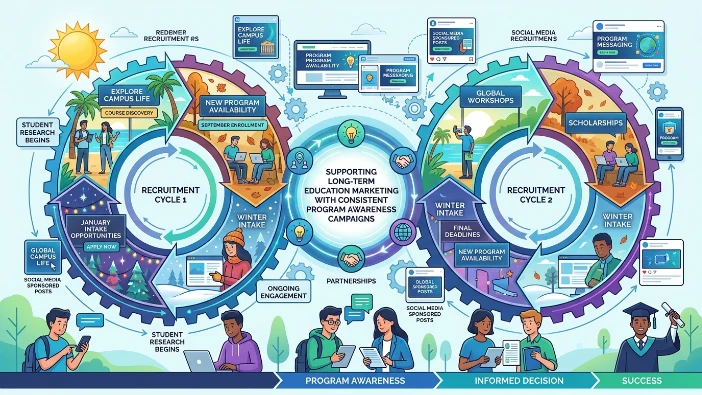
Program awareness banner campaigns support long-term education marketing by maintaining consistent educational visibility across multiple recruitment cycles. Continuous exposure strengthens programme recognition, improves subject familiarity, and supports ongoing engagement among students researching educational opportunities throughout different academic and admission periods.
Educational decision-making often extends across several months. Students begin researching programmes during secondary education, continue comparing institutions after examinations, and revisit educational options during admission periods.
Long-term banner campaigns maintain visibility throughout these stages. Students repeatedly exposed to programme-focused messaging develop stronger familiarity with educational categories and institutional offerings over time.
Awareness campaigns also support year-round audience engagement. Summer campaigns focus on open days and course exploration, autumn campaigns highlight new programme availability, and winter campaigns introduce January intake opportunities.
Education brands use long-term visibility to strengthen educational positioning within competitive markets. Consistent programme messaging across websites, streaming services, and mobile applications increases recognition among prospective learners.
Campaign continuity also improves educational relevance across changing student interests. A student initially researching general business studies later explores entrepreneurship, finance, or marketing specialisations after repeated banner exposure connected to related academic fields.
Program awareness campaigns therefore function as structured educational communication systems. These campaigns guide students through programme discovery, subject comparison, and academic exploration before the application stage begins.