
Banner ads are visual digital advertisements placed across websites, mobile applications, and online media platforms to increase course visibility and drive user signups. Online learning platforms in the United Kingdom use banner ads to present educational programs, skill-based learning options, and enrollment opportunities to targeted audiences.
Banner ads function as awareness-focused digital assets. They appear in fixed placements across news websites, blogs, educational portals, streaming platforms, and mobile applications. These ads contain visual elements such as images, headlines, course categories, and signup prompts.
Online learning platforms use banner ads to introduce educational content to users who actively consume digital media. A coding platform can display a “Learn Python Online” banner on a technology website. A language-learning platform can show “English Certification Courses” on mobile applications used by international students.
Banner advertising supports top-of-funnel audience education. The main objective is visibility and recognition rather than direct enrollment pressure. Platforms focus on presenting educational categories, learning formats, and skill-development opportunities.
In the United Kingdom, online learning demand increased due to remote learning adoption, hybrid work systems, and professional reskilling trends. Banner ads support these trends by placing educational content in front of broad digital audiences.
Readers exploring broader awareness strategies can also read [Insert Link to MOFU Article] for mid-funnel education marketing processes.
How do online learning platforms use banner ads to attract learners?
Online learning platforms use banner ads to attract learners by targeting audience interests, online behavior, educational intent, and demographic signals. These advertisements direct users toward course pages, signup forms, or educational landing pages designed for awareness and engagement.
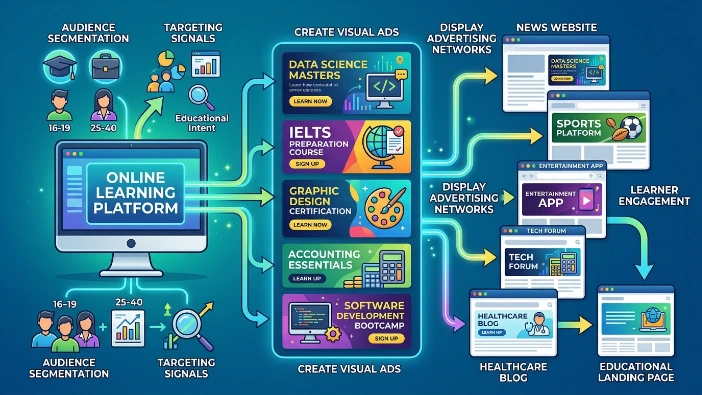
Banner advertising begins with audience segmentation. Platforms define groups based on age, interests, education level, browsing activity, and career goals. A university preparation platform targets students aged 16–19. A business certification platform targets working professionals aged 25–40.
After audience selection, platforms create visual advertisements connected to educational topics. Common examples include data science programs, IELTS preparation courses, graphic design classes, accounting certifications, and software development training.
These advertisements appear through display advertising networks. Educational banners can appear on news websites, sports platforms, entertainment applications, or industry-specific blogs. A healthcare training course can appear on medical information websites. A cybersecurity certification advertisement can appear on technology forums.
The advertisement links users to a landing page. The landing page explains course information, learning duration, skill outcomes, and signup instructions. This process creates a structured user journey from advertisement visibility to platform engagement.
Banner advertising also supports repeated exposure. Users often view the same educational advertisement multiple times across different websites. Repetition improves brand recognition and learning program familiarity.
For readers interested in conversion-focused advertising systems, explore:
How Universities Convert Program Awareness Into Final Enrollments Using Display Retargeting Ads
Why do banner ads work effectively for online learning platforms?
Banner ads work effectively for online learning platforms because they combine visual communication, audience targeting, repeated exposure, and scalable digital distribution. These elements increase educational awareness and improve signup opportunities among users already consuming online content daily.
Online learning depends heavily on digital visibility. Most learners discover educational programs through search engines, social platforms, video platforms, and websites. Banner ads integrate directly into these digital environments.
Visual presentation improves information delivery speed. A banner containing “Digital Marketing Certification – 12 Weeks Online” communicates educational value within seconds. Short educational messaging supports fast user understanding.
Targeting systems improve relevance. Advertising platforms use browsing activity, user interests, location data, and online behavior to deliver education-related advertisements to likely learners. A student searching for “online business degree UK” later receives banner advertisements connected to business education.
Banner ads also support scale. One campaign can display educational advertisements across thousands of websites simultaneously. This expands audience reach without relying on one traffic source.
Another important factor is device compatibility. Banner advertisements appear on desktop computers, tablets, and smartphones. In the United Kingdom, mobile internet usage remains dominant among younger educational audiences. Mobile-compatible banner ads therefore increase learner exposure significantly.
Educational institutions and learning platforms also benefit from measurable advertising performance. Platforms track impressions, click-through rates, signup visits, and landing-page engagement metrics.
What types of banner ads are used in online learning campaigns?
Online learning campaigns use static banner ads, animated banner ads, responsive display ads, mobile banners, and retargeting banners. Each format supports different awareness objectives, audience behaviors, and digital placement environments across websites and applications.
Static banner ads use fixed images and text. These advertisements focus on clarity and fast communication. A simple banner promoting “Online GCSE Revision Courses” provides direct educational information without animation.
Animated banner ads use motion effects or rotating messages. These advertisements display multiple course benefits within one advertising space. An animated design course advertisement can rotate between “Live Classes,” “Certification Included,” and “Portfolio Training.”
Responsive display ads automatically adjust size and format depending on website placement. This format supports compatibility across desktop and mobile devices. Responsive advertisements improve visibility across multiple screen types.
Mobile banner ads target smartphone users specifically. These advertisements use compact layouts optimized for smaller screens. Mobile education advertising often focuses on quick learning messages and simple signup pathways.
Retargeting banner ads display advertisements to users who previously visited an educational website. A learner who viewed a university preparation course later receives reminder advertisements across other websites. Retargeting improves repeated educational exposure and keeps courses visible throughout the research process.
Video-based display banners also exist in some campaigns. These advertisements include short educational clips introducing online classes, digital classrooms, or certification systems.
How does audience targeting improve banner ad performance?
Audience targeting improves banner ad performance by delivering educational advertisements to users with relevant interests, online behaviors, learning goals, and demographic profiles. Accurate targeting increases visibility among potential learners and improves signup efficiency for educational platforms.
Targeting systems rely on data analysis. Advertising platforms categorize users based on browsing history, website visits, search activity, device usage, and content consumption.
Interest-based targeting focuses on user preferences. Someone reading coding tutorials receives software development course advertisements. A user researching language exams receives English preparation advertisements.
Behavioral targeting tracks online activity patterns. Users visiting university websites, educational blogs, or career development platforms enter education-focused audience categories.
Geographic targeting helps platforms localize campaigns. Online learning providers in the United Kingdom frequently target cities such as London, Manchester, Birmingham, Glasgow, and Leeds. Regional targeting supports localized course messaging and time-zone alignment.
Age-based targeting also improves campaign relevance. Teen-focused exam preparation advertisements differ from professional certification advertisements aimed at working adults.
Device targeting supports technical optimization. Desktop advertisements often promote long-form educational content. Mobile advertisements focus on shorter messaging and simplified signup forms.
Audience targeting reduces irrelevant impressions. Instead of showing accounting course advertisements to unrelated audiences, advertising systems focus on users with financial education interests.
What role do landing pages play in banner ad signups?
Landing pages convert banner ad traffic into educational engagement by presenting structured course information, signup options, program details, and learning benefits. These pages connect advertising visibility with learner action through focused educational communication.
A banner advertisement creates initial attention. The landing page continues the educational journey by explaining the course or platform in detail.
Effective educational landing pages include course descriptions, learning outcomes, certification details, instructor information, and enrollment instructions. A digital marketing course page can explain training modules such as SEO, analytics, social media advertising, and campaign management.
Landing pages also simplify navigation. Users arriving from advertisements expect direct information connected to the original banner message. A mismatch between advertisement content and landing-page content reduces engagement.
Visual structure also matters. Educational platforms use readable layouts, clear headings, mobile-friendly design, and organized information sections. This improves user understanding.
Signup forms are commonly integrated into landing pages. Some pages request email registration for free trials, webinars, or course brochures. Others support direct account creation.
Performance measurement tools track landing-page activity. Platforms monitor bounce rates, session duration, scroll depth, and signup completion percentages.
Educational platforms in the United Kingdom also adapt landing pages for local audiences. Pages often reference UK qualifications, regional learning standards, or local career sectors.
Explore More Expert Insights:
How Coaching Centers Increase Admissions Using Display Ads
How Institutes Attract Students Using Local Banner Advertising
How do banner ads support awareness in the education sector?
Banner ads support awareness in the education sector by increasing digital visibility for courses, certifications, learning programs, and academic opportunities. Educational organizations use repeated online exposure to improve recognition among students, professionals, and lifelong learners.
Educational awareness begins before enrollment decisions. Learners first identify subjects, skills, and educational categories relevant to their goals. Banner ads introduce these opportunities early in the decision-making process.
A student exploring university pathways can encounter advertisements for online foundation courses. A working professional reading business news can discover leadership certification programs.
Banner advertising also expands educational reach beyond search engines. Many users do not actively search for courses daily. Display advertising introduces educational opportunities during normal internet browsing activity.
Awareness campaigns also improve familiarity. Repeated visibility increases recognition of learning categories and course topics. Users become more likely to remember educational platforms they repeatedly encounter online.
Online education operates within a competitive digital environment. Thousands of courses compete for user attention across technology, healthcare, finance, language learning, business management, and creative industries. Banner advertising increases visibility within this crowded market.
Educational awareness campaigns often run for extended periods. Long-term exposure supports broader audience education and continuous learner discovery.
How are banner ad campaigns measured in online learning marketing?
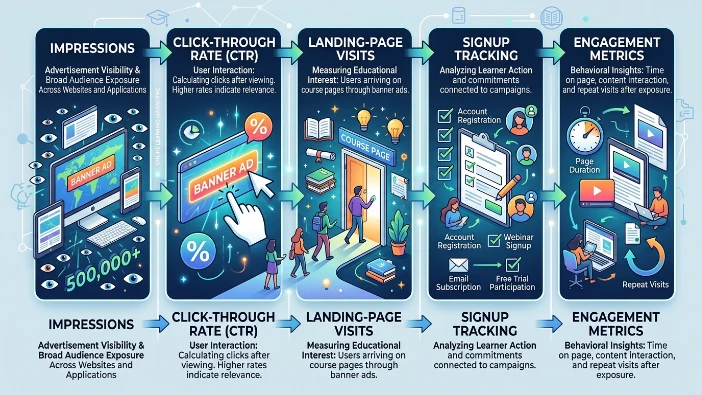
Banner ad campaigns are measured using impressions, click-through rates, signup visits, engagement metrics, and conversion tracking systems. These measurements help online learning platforms evaluate audience reach, educational interest, and advertising effectiveness across digital channels.
Impressions measure advertisement visibility. A campaign generating 500,000 impressions indicates broad audience exposure across websites and applications.
Click-through rate measures user interaction. This metric calculates how many users clicked the advertisement after viewing it. Higher click-through rates indicate stronger advertisement relevance.
Landing-page visits measure educational interest. Platforms track how many users arrive on course pages through banner advertisements.
Signup tracking measures learner action. Platforms analyze account registrations, webinar signups, email subscriptions, and free trial participation connected to banner campaigns.
Engagement metrics provide behavioral insights. Educational platforms measure page duration, content interaction, and repeat visits after advertisement exposure.
Advertising systems also support audience analysis. Platforms identify which demographics engage most with educational campaigns. A coding bootcamp can discover stronger engagement among users aged 18–30, while leadership courses attract older professional audiences.
Data analysis improves future campaigns. Platforms adjust visuals, audience targeting, course messaging, and advertisement placements based on measured performance.
Readers seeking deeper understanding of educational advertising progression can explore:
How Universities Improve Program Awareness Using Mid-Funnel Advertising