Programmatic banner ads in SaaS growth are automated display advertisements purchased and placed through real-time bidding systems. These ads use data-driven algorithms to show relevant banners to defined audiences across websites mobile apps and digital platforms without manual ad placement.
Programmatic banner advertising is a digital advertising method where software systems replace manual media buying. In SaaS growth, it focuses on reaching users across multiple online environments using automated decision-making. The system evaluates user data, selects ad placements, and delivers banner creatives in milliseconds.
This model removes traditional negotiation between advertisers and publishers. Instead, it relies on algorithmic infrastructure that connects demand and supply instantly. SaaS brands use this structure to scale visibility across large audiences without increasing operational complexity.
Programmatic banner ads also standardise ad delivery across multiple channels. This ensures consistent exposure for software products across diverse digital ecosystems, including news sites, blogs, and applications.
How do programmatic banner ads operate in real-time advertising systems?
Programmatic banner ads operate through automated systems that connect advertisers ad exchanges and publishers. When a user loads a webpage real-time bidding evaluates user data selects relevant ads and displays the winning banner within milliseconds based on algorithmic decisions instantly.
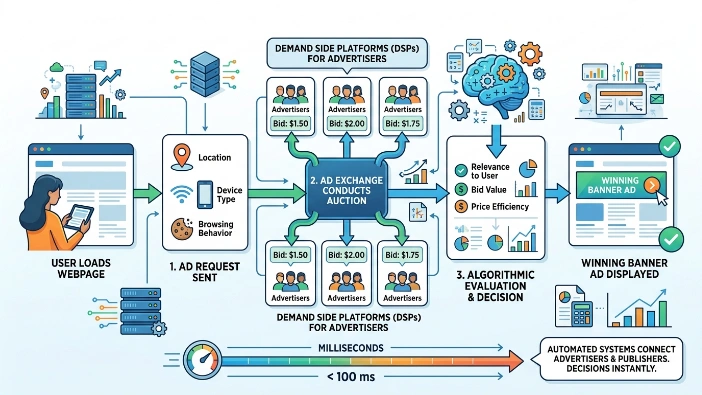
Programmatic advertising systems function through interconnected platforms that communicate in real time. When a webpage loads, a request is sent to an ad exchange. This request includes user-level signals such as location, device type, and browsing behavior.
The system then triggers a bidding process. Advertisers submit bids based on predicted user value. These bids are evaluated instantly by algorithms that rank advertisements according to relevance and price efficiency.
The winning ad is selected and displayed within milliseconds. This entire process occurs before the page fully renders, ensuring seamless integration of banner ads into the user experience.
These systems operate continuously across billions of impressions daily, making them scalable for SaaS companies targeting large and diverse digital audiences.
Why do SaaS brands scale growth using programmatic banner ads?
Software-as-a-Service brands scale growth using programmatic banner ads because automated targeting reaches high-intent users efficiently increases conversion exposure reduces manual media buying effort and allows continuous optimisation of impressions engagement signals and acquisition costs across large digital ecosystems globally efficiently.
SaaS companies operate in competitive digital markets where audience reach determines growth speed. Programmatic banner ads enable them to expand visibility without manual campaign setup for each placement.
Scalability is achieved through automated distribution across thousands of websites and applications. This allows SaaS products to appear in front of users who already demonstrate relevant interest signals such as software research or tool comparison behavior.
Programmatic systems also support continuous optimisation. Performance data feeds back into bidding models, adjusting impressions toward higher-value users. This improves efficiency in customer acquisition at scale.
The model aligns with SaaS growth requirements where user acquisition volume, not just awareness, drives revenue expansion.
What technologies power programmatic banner advertising ecosystems?
Programmatic banner advertising ecosystems rely on demand-side platforms supply-side platforms ad exchanges data management platforms and machine learning algorithms. These technologies process user signals match ads with inventory and execute real-time auctions to deliver relevant advertising impressions at scale efficiently.
Programmatic ecosystems depend on multiple integrated technologies working together. Demand-side platforms allow advertisers to manage campaigns and bid on inventory. Supply-side platforms help publishers make ad space available for auction.
Ad exchanges act as the central marketplace where transactions occur. Data management platforms store and organize user behavior data, enabling precise audience segmentation.
Machine learning algorithms analyze large datasets to predict user engagement probability. These predictions guide bidding decisions and ad selection.
Together, these systems create a continuous loop of data processing and automated decision-making. This architecture enables SaaS brands to reach users across global digital environments without manual intervention.
How does audience targeting work in programmatic banner ads?
Audience targeting in programmatic banner ads works by analyzing behavioral contextual and demographic data to segment users. Algorithms classify audiences based on browsing activity interests and intent signals then deliver tailored banner ads aligned with probability of engagement accurately effectively.
Audience targeting in programmatic advertising relies on structured data classification. Systems collect signals from user interactions across websites and apps. These signals include search behavior, content consumption patterns, and device usage.
Behavioral data identifies user intent based on repeated actions. Contextual data evaluates the type of content being consumed at the moment of ad delivery. Demographic data adds structural information such as age range or location category.
Machine learning models combine these inputs to create audience segments. Each segment reflects a probability score indicating likelihood of engagement with a specific ad category.
This segmentation enables SaaS brands to distribute banner ads more efficiently by focusing on users with higher relevance scores rather than broad audiences.
Read:
How Software Brands Build Trust Using Case Study Banner Campaigns
How does real-time bidding determine ad placement?
Real-time bidding determines ad placement by conducting automated auctions for each ad impression. Advertisers submit bids based on user value predictions and the highest qualifying bid wins placement ensuring dynamic allocation of banner ads across available digital inventory instantly globally.
Real-time bidding operates as an automated auction system triggered whenever an ad impression becomes available. Each impression is treated as a unique transaction opportunity.
Advertisers evaluate user data and assign a value score to the impression. This score determines how much they are willing to pay for placement. The system then compares bids from multiple advertisers simultaneously.
The highest qualifying bid wins the auction, and the corresponding banner ad is displayed to the user. This process ensures that ad space is allocated dynamically rather than pre-sold in bulk.
The system runs at extremely high speed, enabling millions of auctions per second across global advertising networks.
Explore More Expert Insights:
How Software Companies Boost Lead Generation Using Banner Ads
How SaaS Companies Drive User Acquisition with Display Advertising
What benefits do programmatic banner ads deliver for SaaS companies?
Programmatic banner ads deliver benefits including scalable audience reach precise targeting automated purchasing cost efficiency and continuous performance optimisation. SaaS companies achieve higher visibility across digital platforms while reducing manual campaign management and improving data-driven decision-making processes for growth outcomes.
Programmatic banner advertising supports SaaS growth by increasing operational efficiency in digital marketing execution. Automated purchasing reduces time spent on manual ad placement.
Scalable reach allows SaaS brands to expand across multiple markets simultaneously. This ensures consistent visibility across diverse digital environments.
Precision targeting improves engagement quality by focusing impressions on users with relevant intent signals. This reduces wasted ad spend and increases efficiency.
Continuous optimisation systems adjust campaign performance based on real-time data. This improves conversion potential over time without requiring manual intervention.
These combined benefits create a structured system for sustained digital growth in competitive software markets.
Explore:
How Software Brands Convert Case Study Readers Into Customers Using Trust-Based Banner Ads
What challenges exist in using programmatic banner ads for scaling growth?
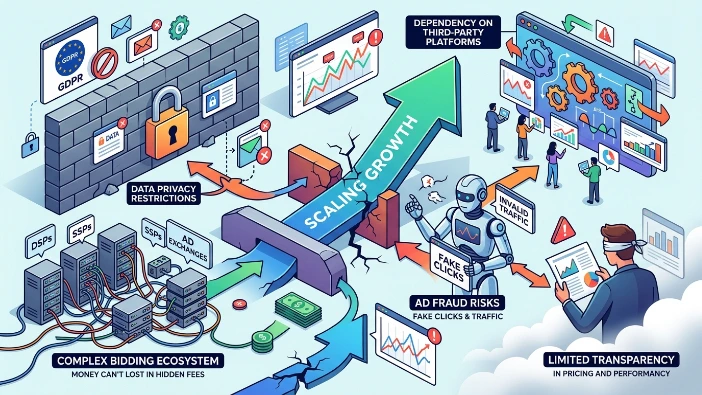
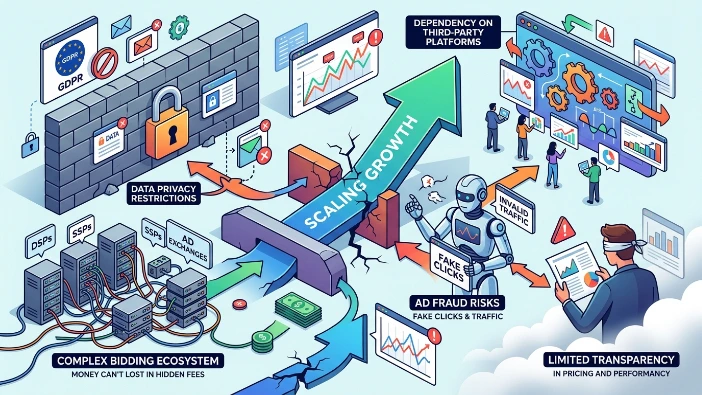
Challenges in programmatic banner ads include data privacy restrictions ad fraud risks complex bidding ecosystems limited transparency and dependency on third-party platforms. These factors affect campaign accuracy budget efficiency and consistent audience reach across global digital advertising environments overall performance.
Programmatic advertising faces structural limitations related to data governance and system complexity. Privacy regulations restrict access to user-level data, reducing targeting precision in some regions.
Ad fraud remains a persistent issue where invalid traffic can distort performance metrics. This impacts return on investment calculations.
The bidding ecosystem is highly complex, involving multiple intermediaries. This reduces transparency in pricing and placement decisions.
Dependency on external platforms also introduces operational risk, as changes in system rules or algorithms can affect campaign stability.
Despite these challenges, programmatic banner ads remain a central component of SaaS digital acquisition strategies due to their scalability and automation capabilities.