Organic social media posts often fail to reach major philanthropic donors because donor decisions rely on trust, credibility, personal networks, and evidence-based impact information rather than public visibility alone. Social algorithms prioritise engagement patterns, while major donors evaluate mission alignment, governance, and measurable outcomes.
Organic social media refers to unpaid content published on platforms such as Facebook, LinkedIn, and Instagram. NGOs use these channels to share campaigns, community stories, fundraising updates, and organisational achievements.
Major philanthropic donors are individuals, foundations, family offices, and institutional funders that provide significant financial support to charitable initiatives. Their decisions involve research, due diligence, relationship building, and assessment of long-term impact.
Organic reach measures how many users see unpaid social media content without advertising support. Platforms distribute posts based on factors such as previous interactions, user interests, content quality signals, and platform algorithms. A new NGO campaign often starts with limited audience history, which reduces visibility among high-value donor groups.
How do social media algorithms affect NGO campaign visibility?
Social media algorithms determine content distribution through user behaviour signals, engagement patterns, and platform priorities. New NGO campaigns often receive limited organic reach because algorithms favour established accounts, frequent interactions, and content formats that generate immediate responses.
Algorithms analyse thousands of signals before showing content to users. These signals include:
- Previous interactions with similar organisations
- Comments and shares from existing followers
- Viewing time on videos
- Content relevance to specific audiences
- Account activity history
A new NGO account usually lacks these signals. A campaign announcement published by a recently created charity profile does not have the same distribution advantage as content from an established organisation with years of audience engagement.
Major donors also represent a narrow audience segment. A post reaching 20,000 general users does not guarantee visibility among individuals who fund humanitarian, environmental, healthcare, education, or community development projects.
Why follower numbers do not represent donor access
Follower counts measure audience size but do not measure donor quality. An NGO with 5,000 followers can still struggle to reach major philanthropic donors if those followers do not include foundation representatives, wealth advisors, corporate social responsibility leaders, or high-net-worth individuals.
Donor acquisition depends on audience relevance. A smaller network containing decision-makers often creates stronger fundraising opportunities than a large public audience without philanthropic connections.
What information do major philanthropic donors look for before supporting NGOs?
Major philanthropic donors evaluate NGOs through evidence, accountability, organisational credibility, and measurable outcomes. Social media posts focused only on awareness often lack the detailed information donors require before committing substantial financial resources.
Philanthropic donors review multiple factors before providing funding. These factors include:
- The organisation’s mission and objectives
- Leadership experience and governance structure
- Financial transparency
- Programme effectiveness
- Community impact measurement
- Long-term sustainability plans
A social media post stating that an NGO supports vulnerable communities communicates purpose but does not provide enough information for a major funding decision.
Donors require deeper evidence. They examine annual reports, impact assessments, project outcomes, beneficiary data, and organisational policies.
Why storytelling alone does not secure major donations
NGO storytelling helps communicate human experiences and community needs. However, major donors require structured information alongside emotional connection.
For example, a campaign about improving education access becomes stronger when it includes measurable details such as:
- Number of schools supported
- Number of students reached
- Programme completion rates
- Partnership information
- Future expansion plans
Social media provides awareness. Donor decisions require verification.
Why do NGOs fail to target the right donor audiences on social platforms?
Many NGOs fail to reach major donors because their social media strategies focus on public engagement rather than targeted relationship development. General awareness content attracts broad audiences but rarely connects directly with philanthropic decision-makers.
Social media platforms contain different audience groups with different expectations. Community supporters, volunteers, journalists, beneficiaries, and major donors consume content differently.
A volunteer may respond to an event announcement. A major donor evaluates governance, impact, and strategic alignment.
Effective donor communication requires understanding audience intent. NGOs need to identify:
- Who funds similar causes
- Which foundations support relevant programmes
- Which sectors align with their mission
- Which decision-makers influence funding choices
How donor profiles differ from general social audiences
General social audiences often engage with:
- Campaign updates
- Event invitations
- Volunteer opportunities
- Community stories
Major philanthropic donors focus on:
- Strategic impact
- Financial responsibility
- Programme scalability
- Leadership capability
- Long-term outcomes
A single social media post rarely addresses all these information needs.
How does limited NGO credibility affect donor discovery?
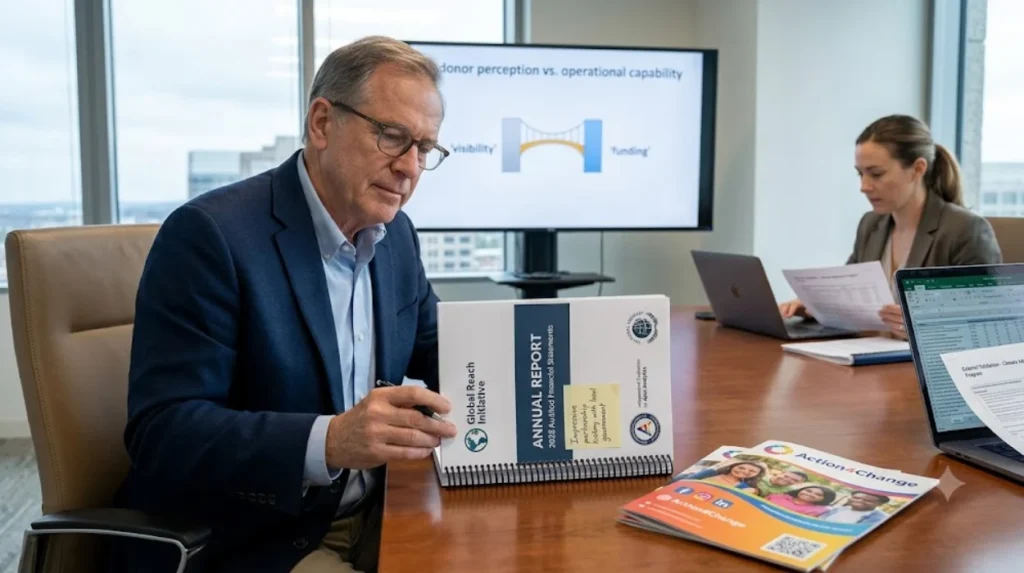
New NGOs often struggle with donor visibility because credibility develops through consistent communication, recognised partnerships, transparent reporting, and external validation. Social media presence alone does not establish institutional trust.
Credibility is a key factor in philanthropic decision-making. Major donors assess whether an organisation has the operational capability to manage significant funding responsibly.
New NGOs often face credibility challenges because they have limited:
- Media recognition
- Public references
- Partnership history
- Published impact records
- Independent evaluations
Building credibility requires consistent public communication across multiple channels.
Why external validation matters for fundraising visibility
External validation includes recognition from trusted sources such as industry publications, community organisations, academic institutions, and established partners.
For example, an NGO working on climate adaptation benefits from documented research partnerships, project outcomes, and independent assessments. These elements provide additional confidence for donors reviewing funding opportunities.
Social media content becomes more valuable when it connects with broader credibility signals.
What role does content quality play in attracting philanthropic attention?
Content quality influences donor perception because major funders expect clear, professional, and evidence-based communication. NGO posts that lack context, data, or strategic information often fail to communicate organisational readiness.
High-quality NGO content explains:
- The problem being addressed
- The communities affected
- The organisation’s approach
- The measurable results
- The future objectives
Low-information posts often focus only on immediate activities. Examples include event photos, short announcements, or general fundraising messages without supporting details.
What types of content improve donor understanding?
Educational and impact-focused content provides stronger context for philanthropic audiences. Useful formats include:
- Impact reports
- Programme summaries
- Research-based articles
- Leadership statements
- Case studies
- Community outcome reports
These formats help donors understand the organisation’s expertise and effectiveness.
How do NGOs build awareness beyond organic social media?
NGOs expand donor awareness by combining social media with strategic communication channels that increase credibility, visibility, and information accessibility. Effective awareness strategies connect public engagement with trusted sources of organisational information.
Organic social media remains useful for maintaining community relationships. However, major donor discovery often involves multiple touchpoints.
These channels include:
- Professional networks
- Industry publications
- Philanthropic databases
- Events and conferences
- Partnership announcements
- Research publications
A comprehensive communication approach helps NGOs reach audiences that are less active on public social platforms.
Why media visibility supports NGO awareness
Media coverage introduces organisations to audiences outside their existing networks. Articles, interviews, and sector publications provide third-party recognition that strengthens public awareness.
Readers interested in understanding how local awareness can develop into broader advocacy can explore:
Media visibility does not replace donor relationships. It supports reputation building and increases discoverability among relevant stakeholders.
How can NGOs measure whether their campaigns reach valuable audiences?
NGOs measure campaign effectiveness by tracking audience relevance, engagement quality, relationship development, and conversion outcomes rather than relying only on likes, views, and follower growth.
Traditional social metrics show activity levels but do not always reflect fundraising potential.
Useful measurement areas include:
- Website visits from relevant audiences
- Donor enquiries
- Partnership requests
- Newsletter subscriptions
- Report downloads
- Event participation
A campaign receiving fewer interactions can still generate valuable outcomes if it reaches the correct stakeholders.
Why donor-focused measurement improves campaign planning
Measurement helps NGOs understand which communication methods attract meaningful attention. Tracking audience behaviour reveals which topics, formats, and messages create stronger connections with philanthropic communities.
This approach allows organisations to refine future campaigns based on evidence rather than general engagement numbers.
Explore More Expert Insights:
Why Traditional Flyer and Local Ad Campaigns Are a Risky Strategy for New Entertainment Concepts
How Modern Travel Industry Influencers and Critics Discover Breakthrough Local Spots
What should NGOs understand about social media and philanthropic fundraising?
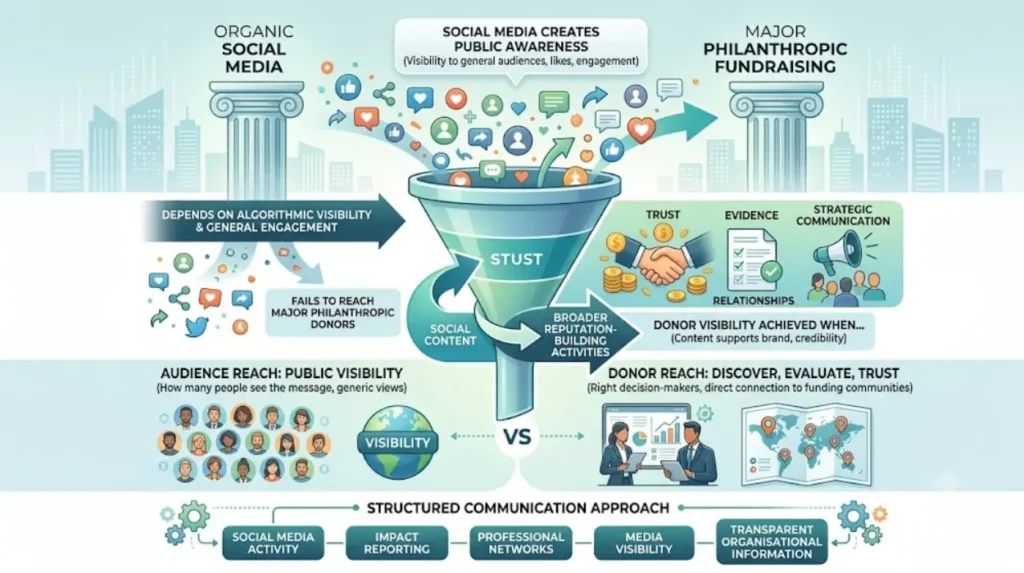
Social media creates public awareness, but major philanthropic fundraising depends on trust, evidence, relationships, and strategic communication. NGOs achieve stronger donor visibility when social content supports broader reputation-building activities.
Organic social media posts fail to reach major philanthropic donors when they depend only on algorithmic visibility and general audience engagement. Donor decisions require deeper information, stronger credibility signals, and direct connection with relevant funding communities.
New NGO campaigns benefit from understanding the difference between audience reach and donor reach. Public visibility measures how many people see a message. Donor reach measures whether the right decision-makers discover, evaluate, and trust the organisation.
A structured communication approach combines social media activity with impact reporting, professional networks, media visibility, and transparent organisational information. This creates a stronger foundation for long-term philanthropic relationships. NGOs seeking a deeper understanding of strategic PR support for mission-focused campaigns can explore: