
Time Intelligence Media Group research and reports services for qualitative expert interview studies deliver structured UK market intelligence, proprietary practitioner transcripts, and citable industry publications designed for commercial decision-makers.
Time Intelligence Media Group operates as a specialized media and research publisher within the United Kingdom. The organization produces rigorous, empirical research reports derived from primary qualitative methodologies. Corporate clients, B2B enterprises, and media agencies utilize these structured intelligence assets to establish market authority, influence industry standards, and secure citations in authoritative trade publications.
Core Deliverables of the Research Service
- Transcribed Expert Interviews: Verbatim transcripts from vetted UK industry practitioners, directors, and sector specialists.
- Published Research Reports: Fully formatted, citable whitepapers and market reports distributed across digital media channels.
- Methodological Documentation: Transparent audit trails outlining sampling frameworks, data collection protocols, and thematic coding procedures.
Methodological Rigor and Data Integrity
The research framework relies on strict qualitative protocols to ensure data validity. Analysts execute semi-structured interviews with senior executives across key United Kingdom sectors, including financial services, healthcare technology, and enterprise software.
“Primary qualitative research captures operational realities that quantitative surveys miss, transforming practitioner experience into verifiable market evidence.”
Organizations engaging with these services gain immediate access to proprietary datasets. These datasets provide the empirical backbone required for high-impact public relations campaigns and strategic product launches. Readers exploring foundational concepts can review What Is Qualitative Research and When Does an Expert Interview Report Work Better Than a Survey? for basic definitions.
How does the qualitative expert interview research process function?
The research process proceeds through five distinct stages, covering stakeholder scoping, expert recruitment, semi-structured data collection, thematic coding, and final report publication.
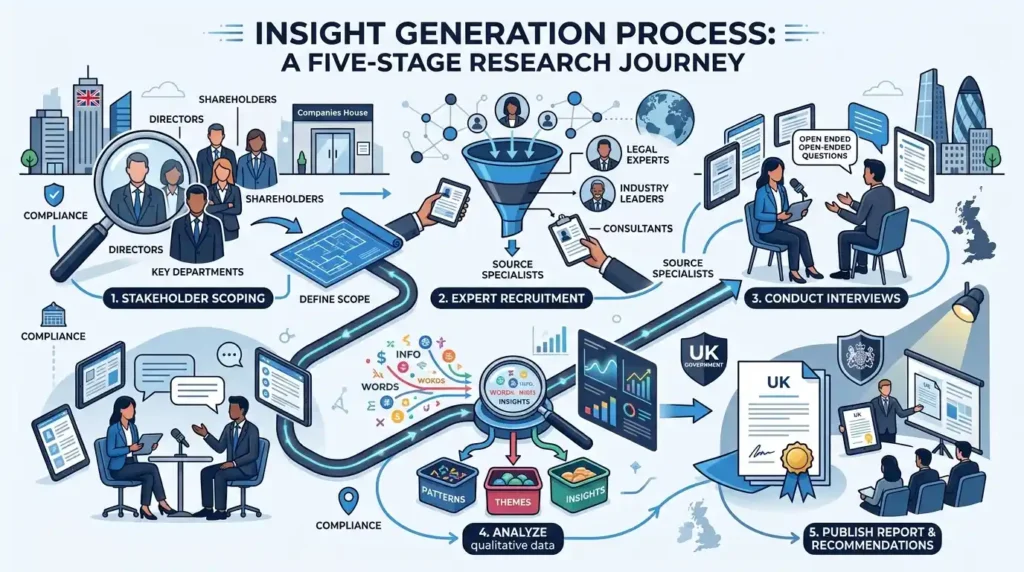
Execution requires strict adherence to qualitative research standards. Analysts begin by defining the research scope and establishing precise inclusion criteria for participants. This methodology ensures that every collected insight aligns with the strategic objectives of the United Kingdom client commissioning the study.
Step-by-Step Research Methodology
- Scope Definition: Analysts establish research questions, target demographics, and required sample sizes for the UK market.
- Expert Recruitment: Researchers source verified specialists, such as Chief Technology Officers in London or healthcare directors in Manchester, using professional networks.
- Data Collection: Trained interviewers conduct hour-long, audio-recorded sessions using standardized interview guides.
- Thematic Analysis: Researchers transcribe audio files and apply qualitative coding software to identify recurring operational patterns.
- Report Publication: Writers synthesize coded data into structured research reports complete with executive summaries and data visualizations.
This systematic approach eliminates bias and guarantees reproducible outcomes. To understand how preliminary findings translate into structured publishing formats, professionals examine How to Run and Publish an Expert Interview Study That Turns Practitioner Insight Into a Citable UK Research Report for operational workflows.
Explore More Expert Insights:
How Sponsored Editorial Became a Top-3 B2B Awareness Format in the UK in 2026
The UK Branded Content Boom: What the £17.9bn Advertising Export Market Is Telling Us
What specific components are included in Time Intelligence Media Group reports?
Time Intelligence Media Group reports include executive summaries, verbatim expert quotes, aggregated thematic insights, methodological appendices, and strategic commercial recommendations.
Every published document follows a rigorous structural template designed for maximum readability and search engine optimization. The inclusion of granular data points ensures that enterprise readers extract actionable intelligence within minutes of opening the document.
Breakdown of Report Sections
- Executive Summary: A concise 500-word synthesis of primary findings, market implications, and key statistical takeaways.
- Thematic Analysis Chapters: Deep-dive sections examining specific operational challenges, such as cloud migration hurdles or regulatory compliance updates.
- Verbatim Practitioner Quotes: Direct attributions from named UK experts that substantiate broader market trends.
- Methodological Appendix: Full disclosure of sample sizes, interview durations, and analytical frameworks utilized during production.
These components ensure that third-party researchers, journalists, and corporate strategists can verify every claim. By embedding transparent citations within the text, the resulting publications achieve high authority rankings across academic and commercial search engines.
What are the primary business benefits of publishing expert interview research?
Publishing expert interview research establishes brand authority, generates high-quality inbound backlinks, secures media citations, and accelerates enterprise sales cycles.
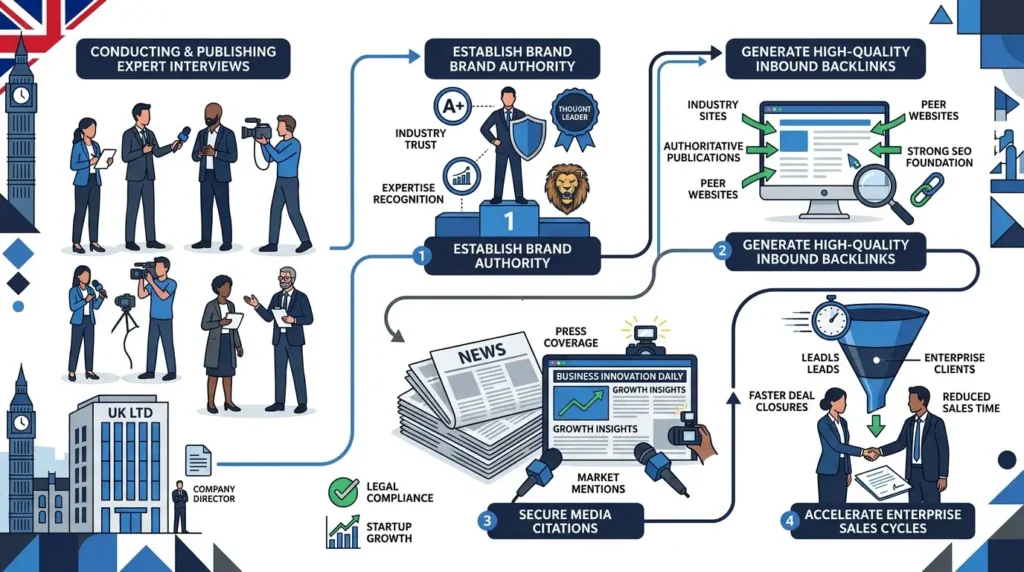
Commercial organizations operating in competitive United Kingdom markets deploy proprietary research reports to differentiate their offerings from generic competitor messaging. When industry media outlets reference these studies, the commissioning brand secures valuable digital PR assets.
Tangible Commercial Outcomes
- Digital PR Growth: Tier-one media publications cite proprietary statistics, resulting in authoritative domain authority improvements.
- Sales Enablement: Enterprise sales teams distribute published reports to prospective clients to validate solution efficacy.
- Thought Leadership: Senior executives secure speaking engagements and advisory roles based on published research authorship.
For example, a London-based enterprise software vendor published a 50-page expert study on financial technology adoption. That report generated 45 editorial backlinks from national news outlets and increased qualified inbound demo requests by 38% within six months of release.
What are the ideal use cases for qualitative research services in the UK?
Ideal use cases include pre-product market validation, regulatory policy advocacy, competitive differentiation campaigns, and high-stakes content marketing initiatives.
UK organizations facing complex regulatory changes or launching disruptive technologies utilize expert interview reports to map stakeholder sentiment. Qualitative research uncovers nuanced operational obstacles that standard quantitative questionnaires fail to capture.
Common Sector Applications
- Financial Services: Mapping compliance strategies for open banking protocols across London financial institutions.
- Healthcare Technology: Evaluating National Health Service digital integration barriers through interviews with clinical directors.
- Enterprise Software: Assessing procurement criteria among Chief Information Officers across corporate organizations.
Deploying Time Intelligence Media Group research and reports services for qualitative expert interview studies equips businesses with undeniable market evidence. Organizations ready to commission their next research asset can initiate project scoping directly through the publisher’s corporate intake portal.