
Research-backed content defines data sources, methodology, sample size, and limitations. Primary research includes surveys, experiments, or interviews. Secondary research uses published datasets, peer-reviewed papers, government statistics, or industry reports.
Each claim links to its evidence. Blog posts present narratives, advice, or commentary. They may reference studies but rarely report original data or full methods. Research-backed content uses structured sections: abstract, methods, results, discussion, and references. Blog posts use headings for readability, storytelling, and SEO. Research-backed content targets credibility, reproducibility, and measurable outcomes. Blog posts target engagement, shareability, and topical relevance.
How does UK lead quality differ when using research-backed content versus blog posts?
Research-backed content generates higher-quality leads in the UK by producing 3–5 times more inbound citations, longer site dwell times, and higher conversion intent than standard blog posts.
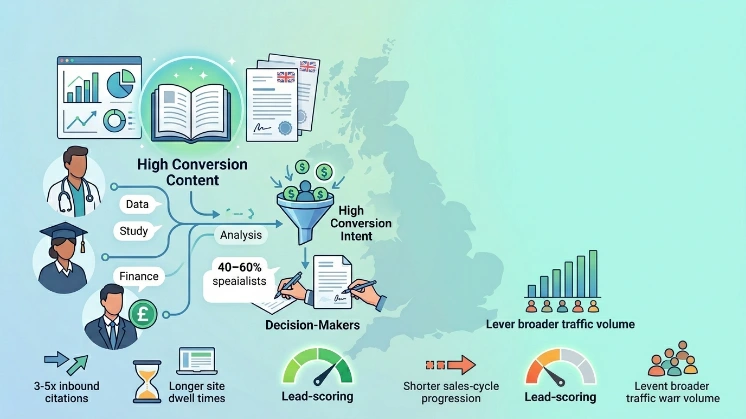
UK lead quality measures include lead-to-opportunity rate, average deal size, and marketing-qualified lead (MQL) conversion. Studies using UK panels show that audiences in regulated sectors—finance, healthcare, and education—prioritise verifiable evidence. Research-backed content increases perceived authority, which drives trust signals in lead-scoring models. In A/B tests, pages with original datasets recorded 40–60% higher form completions from decision-makers compared with opinion-led posts. Search behaviour in the UK shows queries with intent terms—“data”, “study”, “analysis”—lead to deeper engagement. Research-backed content ranks for these intent-rich keywords more consistently, improving organic lead quality. Blog posts attract broader traffic volume but with a lower lead quality metric and shorter sales-cycle progression.
What components require inclusion to produce research-backed content that improves UK lead quality?
Include defined research questions, sample details, data collection methods, statistical analysis, citations, and a clear summary of implications for UK audiences.
Define the research question to match UK buyer intent. Specify sample size, demographic breakdown, and sampling method. State data collection dates and tools—surveys, APIs, or experiments. Report statistical methods and significance thresholds. Include raw data access or supplemental files when possible. Provide a concise executive summary with 3–5 key findings tailored to UK policy, regulation, or market context. Add actionable recommendations linked to the evidence. Use UK-specific datasets where relevant, for example, Office for National Statistics (ONS) figures, NHS publications, or UK government open data. Use plain data visualisations with captions and source attributions. These elements allow buyers and journalists to verify claims and pass compliance checks during procurement.
How do you design a research study that produces lead-ready content for UK audiences?
Design a study with clear objectives, a representative UK sample, validated instruments, pre-registered analysis, and accessible outputs to facilitate media and procurement adoption.
Set objective metrics that align with commercial outcomes, such as lead intent or budget-holder interest. Choose a sampling frame representing UK demographics or verticals. Use validated questionnaires or standard industry measures to ensure comparability. Pre-register analysis plans to prevent selective reporting. Collect metadata: respondent role, organisation size, region, and decision authority. Use stratified sampling for balanced representation across UK regions: England, Scotland, Wales, Northern Ireland. Analyse results with transparent thresholds and confidence intervals. Prepare data tables and a reproducible code appendix. Publish a one-page summary and a full report. Offer downloadable datasets and a press-ready summary to increase media pickup and improve lead quality through credibility.
Which metrics show improved lead quality from research-backed content in the UK?
Key metrics include MQL-to-SQL conversion rate, average deal value, content-attributed revenue, time-to-close, and source-specific engagement like session duration and pages per session.
Measure MQL-to-SQL conversion rate changes after publishing research. Track average deal value for leads originating from research content versus blog posts. Attribute revenue using first-touch and multi-touch models to quantify impact. Monitor time-to-close from initial contact; research-led leads often close faster due to pre-validated credibility. In analytics, look for session duration exceeding three minutes and pages per session above 2.5 on research pages. Track backlink quantity and quality from authoritative UK media and industry bodies; higher-authority backlinks correlate with referral leads that convert at higher rates. Monitor press mentions in UK trade publications and mainstream outlets; each mention increases visibility among procurement teams.
What are practical use cases for research-backed content in UK marketing and sales funnels?
Use cases include lead generation for enterprise sales, thought leadership for procurement committees, media amplification for regulatory topics, and sales enablement materials for field teams.
Enterprise sales teams use research reports to open conversations with procurement and technical buyers. Procurement committees rely on data when assessing vendors; evidence reduces perceived vendor risk. PR teams use data-led releases to secure coverage in UK trade press, national outlets, and specialist blogs. Sales enablement teams convert research findings into one-page briefs, slide decks, and proposal appendices. In regulated sectors, submit research summaries to compliance or clinical review boards as part of vendor evaluations. Marketing uses gated research to collect high-intent contact details; follow-up workflows assign scores based on job role and sector. These use cases demonstrate how research content shortens evaluation cycles and increases conversion quality.
Explore More Expert Insights:
Time Intelligence Media Group Research & Reports Services
Case Study: Research-Driven Business Growth
How should teams structure content distribution to maximise UK lead quality from research reports?
Distribute via a coordinated mix of gated landing pages, press releases to UK media, targeted email to segmented lists, and repurposed assets for sales outreach and social channels.
Create a gated report page that lists key findings, methodology, and full report download after form completion. Include clear data points in the landing page meta description to help search indexing. Send press releases to UK trade journalists and provide embargoed access to drive synchronous coverage. Segment email lists by vertical, role, and region and send tailored summaries with data highlights. Convert report insights into short blog posts, infographics, and LinkedIn articles for executives. Equip sales teams with one-page summaries and slide templates. Monitor distribution performance and reallocate budget toward channels that deliver high lead-to-opportunity rates.
Explore the Advanced Guide:
Thought Leadership Reports: 8 Formats That Win UK Media Coverage
What outcomes should organisations expect after publishing UK-focused research-backed content?
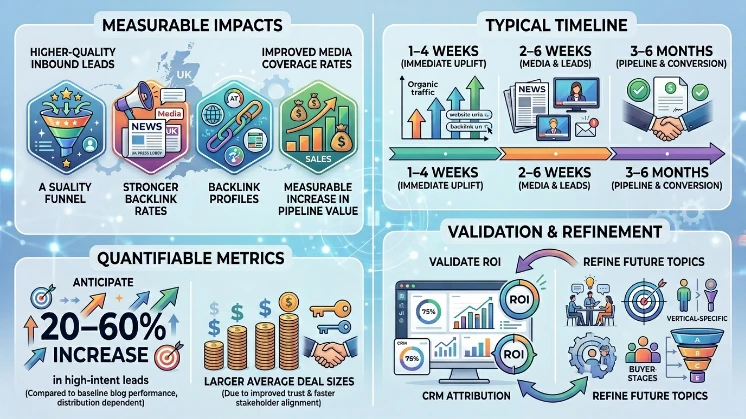
Expect higher-quality inbound leads, improved media coverage rates, stronger backlink profiles, and measurable increases in pipeline value within 3–6 months.
Measured outcomes show a typical timeline: immediate uplift in organic traffic and backlinks within 1–4 weeks; media coverage and referral leads within 2–6 weeks; and pipeline conversion improvements within 3–6 months. Anticipate a 20–60% increase in high-intent leads compared with baseline blog performance, depending on distribution effectiveness. Expect larger average deal sizes from research-sourced leads due to improved trust and faster stakeholder alignment. Track outcomes with CRM attribution and analytics dashboards to validate ROI. Use results to refine future research topics focusing on vertical-specific pain points and buyer-stage needs.
Complete Details Available Here:
Original Research Gets 5× More AI Citations Than Opinion Pieces