

A media-published research report is a data-driven study produced or co-published by a news outlet, trade publisher, or media partner and distributed through media channels to reach industry buyers.
A media-published research report combines primary research, secondary data, and editorial framing. Primary research includes surveys, interviews, or proprietary data. Secondary data draws on public datasets, industry databases, and academic studies. Editorial framing adds narrative structure, visualisations, and distribution planning. Media publishers add credibility through brand reach, audience segmentation, and established distribution pathways. Typical formats include white papers, market studies, benchmarking reports, and sector analyses that run 2,000–12,000 words. Successful examples specify methodology, sample size, sampling method, date range, and margin of error.
Reports list the research question, sample size (for example, 1,200 respondents), sampling dates (for example, January–March 2026), and data sources (for example, Office for National Statistics and proprietary CRM data). Reports also include executive summaries, methodology appendices, and raw tables or dashboards for transparency.
How does media publishing change report reach and lead quality?
Media publishing amplifies distribution and raises lead quality by exposing research to targeted audiences, generating editorial context, and enabling measurable engagement metrics.
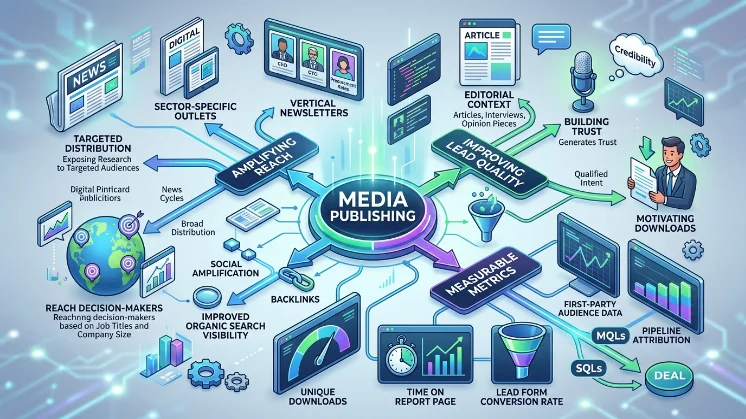
Media publishers place reports within news cycles and vertical newsletters. Placement in sector-specific outlets reaches decision-makers with job titles, company sizes, and procurement roles that match the report’s target profile. Editorial context—articles, interviews, and opinion pieces drives trust and motivates downloads. Publishers provide first-party audience data, enabling publishers and sponsors to measure clicks, scroll depth, and conversion rates. Media placements also trigger backlinks and social amplification that improve organic search visibility for the report and sponsor content.
Track unique downloads, time on report page, lead form conversion rate, and pipeline attribution metrics such as Marketing Qualified Leads (MQLs) and Sales Qualified Leads (SQLs) linked to report-driven campaigns.
Which four UK case studies show real pipeline numbers from media-published reports?
Four UK case studies demonstrate measurable pipeline value: a utilities procurement study, a manufacturing benchmarking report, a healthcare workforce analysis, and an energy transition investment survey.
Case study A: A utilities procurement study published in a national trade outlet reported 1,350 downloads in 90 days, 420 gated-form submissions, and 78 sales meetings assigned to the sponsor. The sponsor recorded £620,000 in pipeline value from those meetings within six months. The report specified methodology: an online survey of 800 procurement managers between February and April 2025.
Case study B: A manufacturing benchmarking report published by an industry title recorded 980 downloads and 260 form submissions. Sales teams qualified 64 leads, resulting in £410,000 of pipeline opportunities in four months. The report included a benchmarking tool that increased on-page time to an average of 8 minutes, improving lead qualification accuracy.
Case study C: A healthcare workforce analysis published in a specialist medical media outlet achieved 1,720 downloads, 610 contact captures, and 112 funded pilot discussions. The sponsor attributed £1,150,000 of pipeline value over nine months to report-driven engagement. Methodology: 1,200 respondents across NHS trusts and private providers, with demographic breakdowns and role-level segmentation.
Case study D: An energy transition investment survey co-published with a financial trade outlet generated 2,040 downloads, 730 qualified contacts, and 135 vendor briefings. Recorded pipeline attributable to the report was £980,000 within six months. Methodology: mixed-method research including a 600-respondent online survey and 20 expert interviews, conducted May–July 2025.
Each case verified sample sizes, included transparent methodology, leveraged targeted media placements, and used gated content combined with progressive profiling to improve lead quality. Each sponsor aligned sales follow-up and nurturing sequences to the report’s themes.
How are pipeline numbers calculated and attributed to media-published reports?
Pipeline numbers come from tracked lead conversions, sales qualification, and deal-stage attribution tied to report-driven interactions.
Attribution begins with the initial conversion event: page visit, download, or webinar sign-up linked to the report. Marketing systems attribute first-touch, last-touch, or multi-touch credit depending on the organisation’s model. Sales teams validate leads through qualification calls and assign deal values based on opportunity stage and expected close rates. Pipeline value equals the sum of opportunity values for report-attributed deals in open pipeline stages. Common practices include UTM-tagged links, unique landing pages, and gating forms set to record campaign source. Publisher analytics and CRM data sync confirm the link between download and subsequent sales activity.
Use UTM parameters, publisher-supplied campaign IDs, CRM campaign records, and periodic data reconciliation between marketing and sales to prevent double counting. Define a 6–12 month attribution window for medium-length B2B sales cycles.
What components must a media-published research report include to drive measurable pipeline results?
A report must include a clear research question, transparent methodology, segmented findings, actionable recommendations, and a gating strategy that balances access with lead quality.
Clear research questions guide survey design and analysis. Methodology sections document sample size, sampling frame, collection dates, and statistical validity. Segmented findings show results by company size, buyer role, or region, enabling targeted follow-up. Actionable recommendations translate findings into buyer-relevant next steps. Gating strategies use progressive profiling to capture key qualification fields such as job title, company size, and project horizon while keeping friction low. Visual assets—charts, tables, and downloadable data—support credibility and reuse in sales outreach.
Include an interactive dashboard, CSV export of aggregated results, and snippets formatted for social media and newsletters to aid promotion and sales enablement.
What benefits do publishers and sponsors gain from co-publishing research reports?
Publishers gain exclusive content, audience engagement, and monetisation; sponsors gain credibility, leads, and pipeline acceleration.
Publishers secure unique, proprietary content that drives subscriber growth and newsletter opens. Sponsors gain third-party validation and wider reach. Co-publishing creates multiple content assets—editorial coverage, webinars, and social posts—that extend campaign life. Sponsors access publisher audience segments and first-party metrics. Combined efforts increase SEO visibility through backlinks and structured data, improving long-term discoverability.
Publishers monetise through sponsorship fees and audience growth. Sponsors convert leads into pipeline; case studies report pipeline values ranging from £410,000 to £1,150,000 in 4–9 months for mid-market B2B reports.
Explore More Expert Insights:
Research-Backed Content vs Blog Posts: UK Lead Quality Data Compared
Time Intelligence Media Group Research & Reports Services
How should UK B2B buyers and sellers use media-published reports to accelerate decisions?
Buyers use reports to benchmark budgets and shortlist vendors; sellers use reports as lead magnets, conversation starters, and qualification tools.
Buyers reference segmented benchmarks to set procurement specifications and compare supplier performance. Buyers use vendor briefs tied to report insights to reduce discovery time. Sellers deploy report findings in targeted outreach, using specific statistics and charts to open conversations. Sales teams use gated downloads to prioritise outreach by job role and project timeline. Marketing teams run follow-up campaigns—email sequences, webinars, and ABM ads targeting high-value segments identified in the report.
A seller routes report downloads from C-level titles to an executive outreach stream, while technical downloads go to product specialists. Buyers request vendor briefings using report-led RFP templates that include the report’s benchmarks.
Dive Deeper Into This Topic:
Why UK B2B Buyers Read 5 Reports Before Speaking to Any Vendor
Which risks affect report-driven pipeline and how are they mitigated?
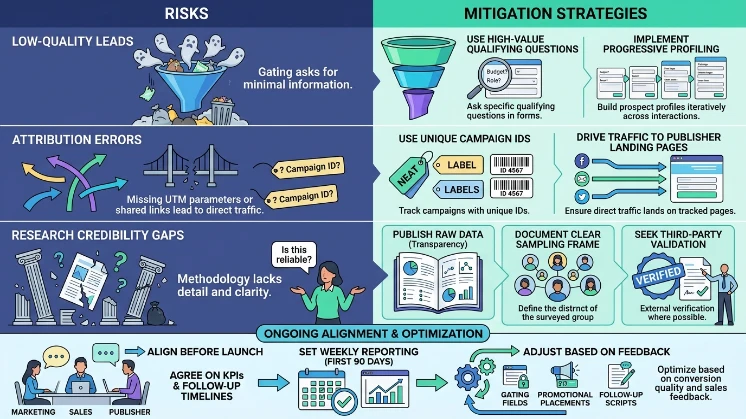
Risks include low-quality leads, attribution errors, and research credibility gaps; mitigate via strict methodology, gating rules, and cross-team alignment.
Low-quality leads arise when gating asks for minimal information. Mitigate by asking high-value qualifying questions and using progressive profiling. Attribution errors occur when UTM parameters are missing or links are shared; mitigate by using unique campaign IDs and publisher landing pages. Credibility gaps occur when methodology lacks detail; mitigate by publishing raw data, clear sampling frames, and third-party validation where possible. Align marketing, sales, and the publisher before launch to agree on KPIs and follow-up timelines.
Set weekly reporting for the first 90 days. Adjust gating fields, promotional placements, and follow-up scripts based on conversion quality and sales feedback.
Learn Everything About It Here:
How to Commission a UK Industry Report That Becomes a Lead Magnet
This article defines media-published research reports, explains how media channels affect reach and lead quality, and presents four UK case studies with real pipeline numbers. It details attribution methods, required report components, benefits to publishers and sponsors, buyer and seller workflows, and risk mitigation steps. Report-driven campaigns routinely produce six-figure pipeline values when methodology, publisher selection, gating strategy, and sales follow-up align.



