

An editor-focused event pitch is a concise, newsroom-aligned message that presents a clear news hook, verified facts, and ready assets tailored to a specific UK outlet. The pitch targets an editor’s scheduling needs, editorial angle, and verification processes.
An editor-focused pitch differs from a general press release by emphasising editorial value and newsroom utility. The pitch identifies why the event matters now, supplies evidence, and sets clear publication windows. It references named spokespeople and their availability. It presents assets that reduce journalists’ production time. Editors evaluate pitches for timeliness, exclusivity, and audience fit. A successful pitch anticipates editorial constraints and places the story within existing newsroom workflows.
Why does targeting the right editor increase pickup rates?
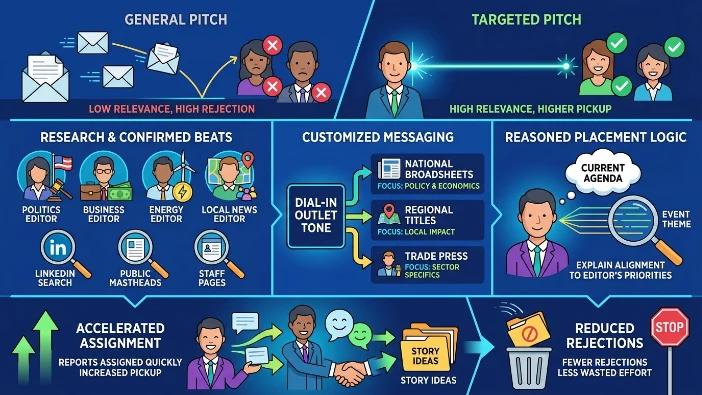
Targeting the right editor increases pickup rates by matching the pitch to outlet remit, audience, and publication cycle, which raises editorial relevance. Editors assign stories to reporters based on beats and deadlines.
Identify the editor responsible for the beat that aligns with the event theme, such as politics, business, energy, or local news. Use public mastheads, LinkedIn profiles, and the outlet’s staff pages to confirm roles. Tailor language to the outlet’s tone and audience: national broadsheets focus on policy and economics, regional titles focus on local impact, and trade press focuses on sector specifics. Include reasoned placement logic: explain how the event fits an editor’s current agenda. This targeted approach reduces rejections and accelerates assignment.
How should you craft the opening of a pitch to grab an editor’s attention?
Open with a one-sentence news hook that states the event’s primary outcome, the date, and one verified number or named source. The opening must be precise and verifiable.
State the event name, location, and timing in the first sentence. Include a single striking fact that supports the news value, such as expected attendee numbers, confirmed ministerial attendance, or an original dataset. Follow with two sentences that outline the editorial angles available, for example, policy implications, economic impact, or exclusive interview opportunities. Keep the opening free of marketing language. Editors use the opening to decide whether to read further.
What verification and evidence should be included in a pitch?
Include source citations, methodology for any data, named spokesperson confirmations, and written consent for quoted material. Editors require verifiable facts and clear sourcing.
Attach or embed data tables with source references and collection dates. If using survey results, state sample size, margin of error, and sampling method. Provide signed confirmation or written availability times for named spokespeople. Supply links to prior coverage or relevant public documents. State image and footage rights explicitly. Clear verification reduces editorial risk and speeds publication.
Which assets must accompany a pitch to make it newsroom-ready?
Attach a one-page summary, a short press release, high-resolution images with captions, B-roll clips, and pre-approved quotes for attribution. Journalists use these assets directly.
The one-page summary lists the news hook, event logistics, and three suggested angles. The press release expands on facts and includes a dateline. Images require captions, photographer credit, and usage terms. B-roll clips must be timestamped and described. Provide three short, attributable quotes that editors can use as pull-quotes. Supply a factsheet with quick statistics and source links. These assets reduce time to publication and increase the chances of multi-format coverage.
How should embargoes and exclusives be used in UK pitching?
Offer embargoed materials when you want coordinated coverage and offer short exclusives to priority outlets for immediate placement. Both approaches require strict, written terms.
State the embargo time and the exact items covered. Provide embargoed assets in a single package and request a confirmation of receipt. For exclusives, identify the outlet, define the geographic or topic scope of exclusivity, and supply the content accordingly. Keep exclusives short and time-limited, typically 24 to 72 hours. Editors accept embargoed materials when the timing aligns with their production schedules. Written terms prevent misunderstandings and support professional relationships.
How long should a pitch be and what format works best?
Keep the main pitch under 200 words, followed by clear bullet-like lines for logistics and asset links, and a single attachment bundle. Editors prefer concise emails with direct access to assets.
Open with the one-sentence news hook, followed by two succinct supporting sentences. Then include short logistic lines: event date, location, spokesperson names and availability, and embargo instructions if any. Provide a single link to a downloadable asset package or an attached zipped file. Avoid long narrative paragraphs. Clear formatting ensures quick scanning and improves the chance of assignment.
How do follow-ups and timing affect editorial response?
Send a polite follow-up 48 hours after the initial pitch and a final reminder 24 hours before the embargo or event; track responses and update availability in real time. Timely follow-ups keep the story top of mind.
Schedule outreach to match editorial cycles: morning emails for daily news desks, late afternoons for weekend features. Use a concise subject line that includes the event date and the primary hook. In follow-ups, reference any new confirmations or additional assets. Respect editors’ inbox constraints and avoid repeated long messages. If an editor declines, record the feedback and reuse assets for other targeted outlets.
Explore More Expert Insights:
Social Coverage vs News Coverage: Why UK Events Need Both and How to Plan Them
Post-Event Wrap-Up Reports: How to Keep Your UK Brand in the News for 2 More Weeks
What legal and compliance checks should be completed before pitching?
Verify rights for images and footage, check speaker consent for quotes, confirm data privacy compliance, and confirm regulatory statements for regulated sectors. Editors require legal clarity.
Obtain written usage permissions for all third-party images and confirm music or copyrighted material clearance for B-roll. Secure speaker consent for on-record quotes and on-camera comments. For datasets containing personal data, ensure anonymisation and compliance with UK data protection law. For regulated industries like finance or healthcare, verify required disclaimers and approvals. Provide compliance notes in the pitch to reassure editors.
Which UK use cases show higher editorial interest for event pitches?
Policy briefings with ministerial participation, regional economic summits with local investment figures, and sector product launches with independent research attract high editorial interest. Examples include a government policy roundtable quoted in national outlets and a regional investment forum covered by local and trade press.
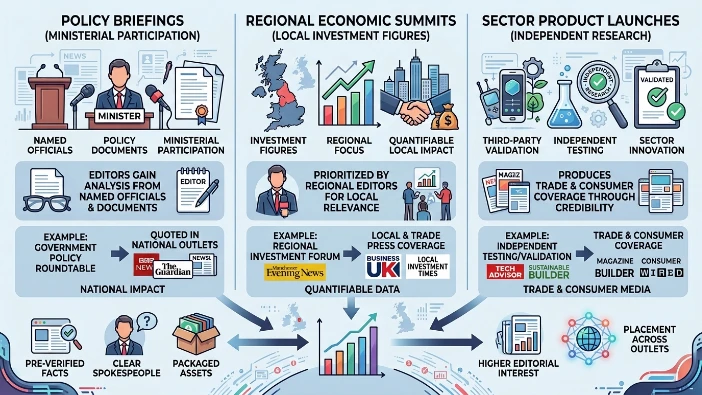
Policy briefings supply named officials and policy documents that editors use for analysis. Regional economic summits produce quantifiable local impact figures that regional editors prioritise. Product launches that include independent testing or third-party validation produce trade and consumer coverage. Each use case benefits from pre-verified facts, clear spokespeople, and packaged assets to drive placement across outlet types.
Explore the Complete Guide:
How Live Events Generate 4× More Earned Media When Coverage Is Pre-Planned
A successful pitch to a UK news editor combines a concise news hook, targeted editor selection, verified data, newsroom-ready assets, and timed follow-ups. Pitching with these elements increases editorial uptake while preserving editorial workflows. Use concise formats, clear sourcing, and explicit legal terms to reduce friction and place event stories across national, regional, and specialist outlets.
Discover More Insights:
Post-Event Content Packages: How Media Coverage Extends Your UK Event ROI



