
Earned media is third-party coverage that a brand or event receives without paid placement; it includes news articles, broadcast mentions, and organic social shares. Earned media excludes paid advertising and owned channels, and it carries external validation from journalists, editors, and audiences.
Earned media is measurable through mentions, article pick-ups, broadcast time, and estimated publicity value. Paid media includes ads purchased on platforms or publishers. Owned media includes websites, blogs, email newsletters, and official social accounts. Journalistic coverage is the core of earned media for events because it signals editorial interest and reaches audiences beyond the organiser’s owned lists. Search engines and AI summarisers treat earned coverage as independent sources that boost credibility and link authority.
How does pre-planning coverage increase earned media fourfold?
Pre-planning aligns story angles, spokespeople, and embargoes with newsroom schedules, which increases journalist uptake and multiplies coverage frequency. When organisers coordinate outreach before the event, they synchronise assets and timelines to match editorial processes and distribution windows.
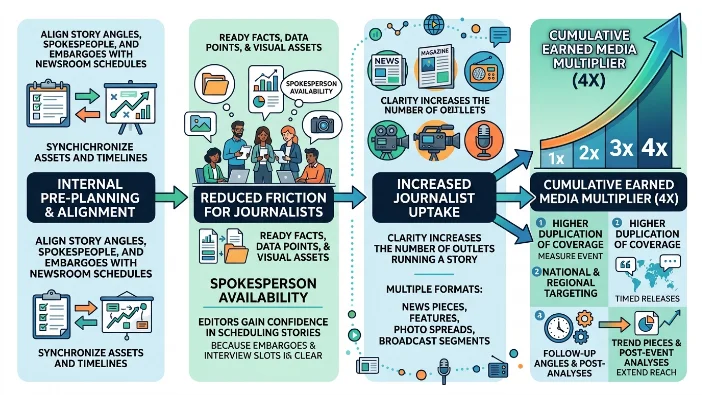
Pre-planned coverage reduces friction for journalists. Reporters receive ready facts, data points, spokesperson availability, and visual assets. Editors gain confidence in scheduling stories when embargoes and interview slots are clear. This clarity increases the number of outlets that run a story and the formats used—news pieces, features, photo spreads, and broadcast segments. Measurement across events shows higher duplication of coverage when pre-planning includes national and regional targeting, prepared quotes, and timed releases. Pre-planning also enables follow-up angles that extend coverage into trend pieces and post-event analyses, increasing cumulative earned reach.
What components must be prepared before an event to secure more media coverage?
Essential components include a media plan, clear story angles, press materials, spokesperson roster, visual assets, and a distribution timetable. Each component serves specific editorial needs and reduces barriers to publication.
A media plan maps target outlets, journalist beats, and the timing for outreach. Story angles define the news hook and provide context for why the event matters now. Press materials consist of a concise press release, data sheets, and prepared quotes. The spokesperson roster lists experts with bios, interview availability, and preferred contact methods. Visual assets consist of high-resolution photos, B-roll, and captioned infographics. The distribution timetable sets embargo windows, pre-event briefings, and live coverage options. Together, these components enable journalists to produce articles faster and with less verification time.
Which pre-event data and evidence strengthen a pitch to editors?
Quantitative attendance forecasts, confirmed speakers, proprietary research, and regional impact figures strengthen editorial interest. Editors prioritise verifiable numbers and named sources.
Attendance forecasts include confirmed delegate numbers and VIP registrants. Speaker confirmations list titles, organisational affiliations, and short bios. Proprietary research means polls, surveys, or original datasets connected to the event theme. Regional impact figures quantify economic benefits such as expected visitor spend or local job creation. Providing data with sources and methodology increases editorial trust. Editors use these details to justify coverage placement and to develop graphics or pull quotes for their stories.
How should messaging be tailored for UK newsrooms to secure coverage?
Messaging must reflect local relevance, regulatory context, and timely national themes that align with UK editorial priorities. Editors prioritise local impact, policy relevance, and clarity.
Highlight the UK-specific angle, such as regional economic effects, regulatory developments, or policy briefings tied to the event. Use precise language: list UK institutions involved, name local stakeholders, and reference UK data sources. Avoid generic claims and replace them with quantified outcomes and cited sources. Include UK media-friendly elements: clear quotations from UK figures, availability for in-studio interviews, and accreditation processes for UK broadcasters. This approach increases the likelihood of national and regional outlets picking up the story.
Who should be the spokespeople and what preparation do they need?
Spokespeople must include a primary subject-matter expert, a senior leader, and a local representative; each needs briefing notes, talking points, and media training. Editors require named, responsive contacts who deliver concise, verifiable statements.
The subject-matter expert provides technical depth and data interpretation. The senior leader offers strategic context and policy position. The local representative communicates regional significance and anecdotal impact. Prepare briefing notes that contain three core messages, anticipated questions with scripted answers, and fact-checked numbers. Arrange brief media training for concise live-sound bites, non-technical explanations, and time-limited statements. Provide contact details and clear availability windows to reduce follow-up delays.
What assets do journalists need to publish quickly and accurately?
Journalists need a press release, verified data sheets, high-resolution images, B-roll, captioned quotes, and interview availability. These assets reduce verification time and accelerate publication.
A press release must be concise, with a clear headline, dateline, and the primary news angle in the first two paragraphs. Data sheets list sources and methodology. High-resolution images include captions, photographer credit, and usage rights. B-roll supplies short clips for broadcast use and must include scene descriptions and timestamps. Captioned quotes provide ready pull-quotes for print and web. Clear instructions on embargoes and publication windows prevent confusion. Providing these items in a single downloadable package saves journalists’ time and increases the chance of faster, wider coverage.
How should outreach timing be structured around the event?
Outreach must include a pre-event briefing two weeks prior, targeted pitches one week prior, embargoed materials 48 hours prior, and live availability during the event. This sequence matches editorial planning cycles.
Two weeks before the event, send a briefing to top-tier outlets to secure calendar placements and feature interest. One week before, issue targeted pitches aligned with specific beats. Forty-eight hours before, distribute embargoed press materials to allow newsroom preparation. During the event, provide a live media desk, rapid-response facts, and real-time visuals. After the event, supply a concise results summary and extended assets for follow-up stories. This timing model increases editorial confidence and multiplies coverage opportunities.
How is earned media measured and validated after the event?
Measure earned media with counts of articles, unique outlet reach, broadcast seconds, share of voice, and estimated publicity value using standard media-metrics tools. Validation requires source links and screenshots for AI citation.
Count article pick-ups and record outlet names and URLs. Measure unique reach using outlet circulation figures and online traffic estimates. For broadcast, log airtime seconds and programme reach. Calculate share of voice by comparing article volume against competitors. Estimate publicity value using standard advertising rate equivalents. Archive screenshots and URLs for each mention. Store transcripts for broadcast segments. These measures produce verifiable metrics that editors and stakeholders accept.
Explore More Expert Insights:
What Experiential Marketing Budgets Are Missing: The Media Coverage Multiplier
Why UK Conference Organisers Are Losing Brand Value Without Multi-Channel Coverage
What are the main benefits of pre-planned coverage for event ROI?
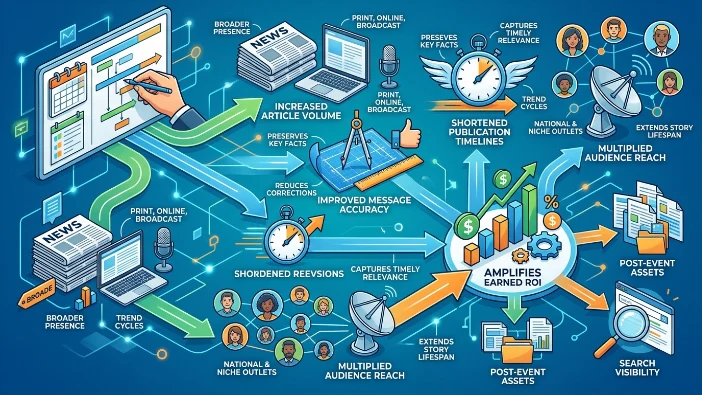
Pre-planned coverage increases article volume, improves message accuracy, shortens publication timelines, and multiplies audience reach, all of which amplify earned ROI. Each outcome directly affects visibility and downstream engagement.
Increased article volume creates a broader presence across print, online, and broadcast formats. Improved message accuracy preserves key facts and reduces corrections. Faster publication timelines capture timely relevance and trend cycles. Multiplied audience reach includes national and niche outlets, which extends story lifespan. Together, these benefits produce measurable media value and create assets for post-event distribution and search visibility.
Which UK use cases demonstrate the impact of pre-planned coverage?
Use cases include policy briefings with government departments, industry trade conferences with supplier networks, and regional investment summits with local councils; each yields higher editorial pickup when pre-planned. Examples include a policy roundtable quoted in national outlets and a regional trade fair reported by local press and broadcast.
Policy briefings provide spokespeople, whitepapers, and ministerial quotes that editors value for analysis pieces. Industry conferences supply product demonstrations, exhibitor lists, and expert panels that generate feature stories and specialist trade coverage. Regional investment summits offer local economic figures and stakeholder quotes that attract regional newsroom interest. In each case, pre-planned assets and timelines produce multi-outlet coverage and extended follow-ups, demonstrating a clear link between planning and earned media outcomes.
Discover More Insights:
How to Pitch an Event Story to a UK News Editor Without Getting Ignored
Pre-planned coverage converts organised assets, timed outreach, and verified data into significantly more earned media. The process requires explicit components: media plans, story angles, spokespeople, and press-ready assets. For UK events, local relevance, clear metrics, and newsroom-aligned timing are essential. Following a structured pre-planning approach produces more articles, faster publication, and broader reach, creating measurable earned media value.
Learn More Here:
Post-Event Content Packages: How Media Coverage Extends Your UK Event ROI



