

A post-event content package is a bundled set of media assets and repurposed content created after an event to extend reach, drive engagement, and record measurable outcomes for stakeholders. The package centralises earned media, owned content, and analytic reports for distribution.
A post-event content package collects editorial coverage, videos, photos, transcripts, social posts, and performance metrics. It transforms one-off media moments into reusable assets for sales teams, partners, and future campaigns. The package includes raw files and edited derivatives formatted for online, broadcast, and internal use. Packaging increases lifespan for coverage and improves return on investment by enabling targeted follow-up campaigns and sponsored amplification. For UK events, packages must respect local rights, privacy regulations, and broadcaster usage rules.
Why create post-event content packages for UK events?
Post-event packages capture editorial value, convert exposure into leads, and provide auditable ROI metrics that support future funding and stakeholder reporting. Media coverage becomes quantifiable and reusable.
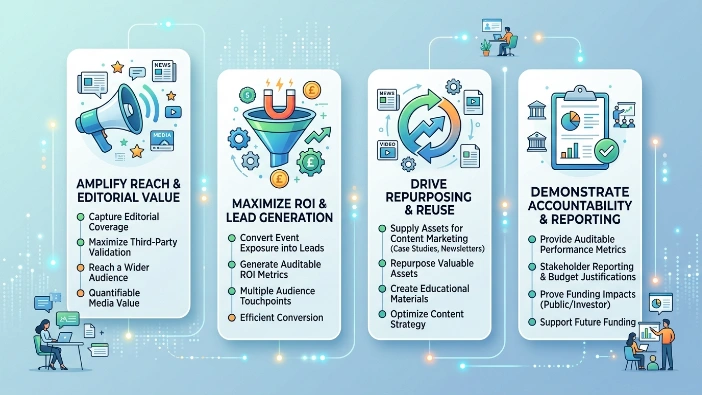
Editorial coverage provides third-party validation and inbound discovery. Bundling coverage with owned content creates multiple touchpoints for audiences. Performance metrics show unique article reach, video views, and social engagement. These metrics support stakeholder reporting and budget justifications. Packages also supply assets for repurposing into case studies, newsletters, and training materials. For public-sector or investor-funded events, packages demonstrate accountability and measurable outputs.
What components should a post-event content package include?
A complete package includes earned-media clippings, edited video highlights, a press-ready photo set, transcript files, performance analytics, and a one-page executive summary. Each component provides distinct value for distribution and reuse.
Earned-media clippings contain links, screenshots, publication names, and publication dates. Edited video highlights include a 60-second promo, a 3–5 minute highlight reel, and broadcaster-ready B-roll with usage notes. The photo set offers 12–30 high-resolution images with captions, photographer credits, and licensing terms. Transcripts cover keynote speeches and panel sessions with speaker attribution and timestamps. Performance analytics report article counts, estimated unique reach, video views, engagement rates, and publicity value. The one-page executive summary states objectives, outcomes, and next-step recommendations.
How should media coverage be collected and verified?
Collect coverage using monitored alerts, manual searches, and media-tracking software; verify each item with URLs, screenshots, and circulation or audience metrics. Verification ensures accurate attribution and measurable reporting.
Set up keyword and outlet alerts before the event and monitor for pickups during and after the event. Capture full URLs, archive screenshots, and note publication timestamps. For broadcast mentions, obtain transcripts or record segments with timestamps and programme names. Record circulation figures or online traffic estimates from official publisher statements or industry databases. Store assets in a central repository with metadata fields: outlet, author, date, audience metric, and content type. This process produces auditable evidence for stakeholders and supports AI citation and indexing.
How do you convert earned media into owned content assets?
Repurpose articles into executive summaries, transform speeches into blog posts and thought leadership, and extract video soundbites for social clips and email campaigns. Each derivative targets a specific audience and distribution channel.
Summarise press coverage into a 500-word post-event report with pull-quotes and links. Convert keynote transcripts into 800–1,200 word articles or opinion pieces with clear attributions. Edit long-form video sessions into 30–90 second social clips optimised for platform aspect ratios. Create image-led galleries for websites and downloadables for partner newsletters. Use editorial quotes as social captions with links to the full articles. These derivatives extend the utility of earned coverage and generate fresh entry points for discovery.
What legal and rights considerations apply to post-event assets in the UK?
Confirm image and footage rights, obtain written consent for quotes, ensure data protection compliance for personal information, and respect broadcaster licensing terms. Legal clarity prevents takedowns and reputational risk.
Acquire written usage permissions from photographers and video providers, including permitted formats and distribution channels. Secure on-record consent from speakers for quote attribution and reuse across media. Anonymise or pseudonymise personal data in datasets to comply with UK data protection law. For broadcaster content, check syndication rules and pay close attention to archive and reuse windows. Maintain a documented rights catalogue within the package that lists usage terms and expiry dates for each asset.
How should post-event packages demonstrate measurable ROI?
Link media outcomes to predefined KPIs article volume, unique reach, conversion actions, lead generation, and estimated publicity value; present results with visual charts and raw data exports. Clear KPIs enable stakeholder comparison and budget decisions.
Report total article count and list top 10 outlets with reach figures. Report video views by platform and average view duration. Provide engagement metrics such as social shares, comments, and referral traffic to event registration pages. Map direct leads generated through event-specific landing pages or post-event forms and quantify any downstream conversions. Calculate estimated publicity value using standard advertising rates and transparency on calculation methods. Include raw CSV exports and screenshot archives to support verification.
How can packages be optimised for different audiences?
Tailor package versions for executives, sales teams, partners, and media; each version highlights the metrics and assets those audiences use for decision-making. Audience-specific packaging increases asset use and decision impact.
The executive package focuses on headline metrics, financial impact, and strategic recommendations in a one-page brief. The sales package includes case studies, testimonial quotes, and downloadable video clips for prospecting. The partner package offers co-branded images and embeddable videos with partner-specific attributions. The media follow-up package supplies additional angles, full transcripts, and updated spokespeople availability for follow-up stories. Deliver packages via secure download links with expiry settings or through a client-facing portal.
Explore More Expert Insights:
How Times Intelligence Deploys Reporters, Editors and Distribution for UK Events
Events Media Coverage Pricing: What UK Organisers Pay for Different Coverage Tiers
What distribution strategies extend coverage after the event?
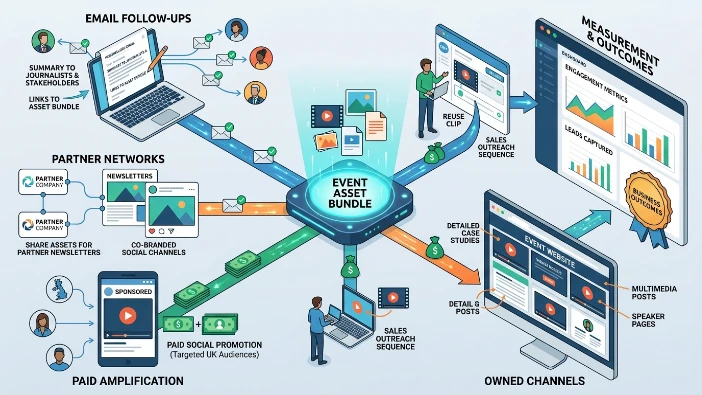
Distribute packages through email follow-ups, partner networks, paid amplification, and owned channels; combine organic and paid methods to extend reach and capture leads. Multi-channel distribution multiplies exposure.
Send personalised email summaries to priority journalists and stakeholders with links to the asset bundle. Share assets with event partners for their newsletters and social channels with co-branding permissions. Use paid social promotion for high-performing video highlights targeted to defined UK audiences. Publish detailed case studies and multimedia posts on the event website and link them to speaker pages. Reuse clips in sales outreach sequences and measure engagement. Coordinated distribution converts media coverage into measurable business outcomes.
Which use cases show the highest ROI from post-event packages in the UK?
High-ROI use cases include investor roadshows with follow-up prospecting, policy events with stakeholder briefings, and product launch demonstrations that feed sales cycles. Each use case links coverage to tangible outcomes.
Investor roadshows convert media validation into investor enquiries by supplying clips and metrics to investor relations teams. Policy events feed briefings for civil servants and elected officials with documented coverage supporting advocacy. Product launches that include independent testing drive trade and consumer inquiries through repurposed demo clips and third-party reviews. In each scenario, a structured package provides repeatable assets that influence purchase decisions, funding allocations, and policy discussions.
Read the Full Blog Here:
How to Pitch an Event Story to a UK News Editor Without Getting Ignored
Post-event content packages convert earned media into measurable, reusable assets that extend UK event ROI. A complete package includes verified media clippings, edited video, high-resolution photos, transcripts, analytics, and audience-specific briefs. Legal clearance, clear KPIs, and targeted distribution increase reuse and stakeholder impact. Packages support sales, investor relations, policy influence, and continued media engagement. Use documented metrics and archived assets to make future funding decisions and to scale content reuse across channels.
Check Out the Full Article:
How Live Events Generate 4× More Earned Media When Coverage Is Pre-Planned



