

Post-event wrap-up reports are concise, data-driven summaries produced after an event that combine key outcomes, media coverage, attendee metrics, quotes, and next steps to extend publicity for 7–14 days.
A post-event wrap-up report defines event performance in measurable terms. It records attendance numbers, media mentions, social metrics, speaker quotes, and exhibitor feedback. The report converts raw activity into shareable narratives for journalists, partners, and stakeholders. It becomes a content asset for continued outreach across owned channels and external outlets.
How do wrap-up reports extend brand visibility after an event?
Wrap-up reports extend visibility by supplying journalists and platforms with fresh, verifiable content that sustains news cycles for two weeks through targeted distribution and repackaging.
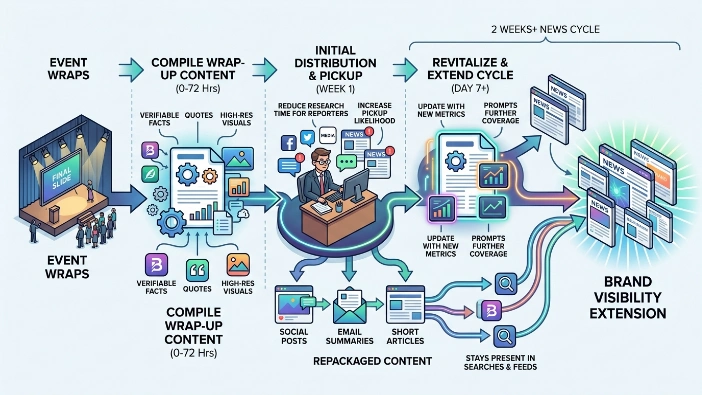
Journalists and digital publishers require timely facts and fresh angles. A well-crafted wrap-up delivers that content, reducing research time for reporters and increasing pickup likelihood. Distributing the report within 24–72 hours captures momentum from the event. Republishing the core findings as short articles, social posts, and email summaries across different channels keeps the brand present in searches and feeds. Updating the same report with new metrics on day seven revitalises outreach and prompts further coverage.
What elements must a post-event wrap-up report include?
A wrap-up report must include headline metrics, verified media mentions, attendee demographics, key quotes, visual assets, and clear next-step recommendations.
Headline metrics list attendance, registration-to-attendee conversion, session attendance, and sponsor engagement. Verified media mentions catalogue outlets, reach estimates, and URLs. Attendee demographics break down role, sector, and geography. Key quotes from organisers and speakers provide soundbites for journalists. Visual assets include high-resolution photos, speaker headshots, and short video clips. Recommendations provide suggested angles for further stories and target outlet lists. Including contact details for media follow-up accelerates pickup.
How should organisers structure the report for journalists and publishers?
Organisers should structure the report with an immediate summary, data section, narrative highlights, verified mentions, assets, and contact information, presented in both full and one-page formats.
Start with a single-paragraph summary of the most newsworthy outcome. Follow with a data section that uses clear numbers and dates. Present narrative highlights that explain why the numbers matter, including specific examples such as product launches or policy announcements. List verified mentions with links and reach figures. Attach a media kit with images and short videos. Provide a one-page executive summary for editors who need quick copy. Deliver both PDF and plain-text versions to match publisher workflows.
Discover the Full Information:
Why UK Conference Organisers Are Losing Brand Value Without Multi-Channel Coverage
When should organisers distribute wrap-up reports?
Distribute the initial wrap-up within 24–72 hours after the event and send a refreshed update on day seven with new metrics or additional assets.
Immediate delivery captures journalists riding the event’s news wave. A refreshed update on day seven addresses delayed reporting cycles and provides new content to re-engage contacts. Time the initial distribution for mid-morning UK time on weekdays to match newsroom schedules. Include personalised outreach to top-priority contacts within the same window. Maintain a distribution log noting who received each version and any follow-up responses.
Who benefits from post-event wrap-up reports?
Event organisers, sponsors, speakers, exhibitors, and media partners benefit because the report converts event activity into measurable publicity and business development leads.
Organisers use reports to demonstrate return on investment to stakeholders. Sponsors receive documented exposure metrics for their records. Speakers gain post-event visibility through quoted soundbites and media links. Exhibitors obtain leads and validated reach figures. Media partners receive ready-to-use material that reduces their production time. Each beneficiary gains a clear record of outcomes to justify future participation and partnerships.
What distribution channels yield the best results?
Distribute reports via targeted journalist emails, press distribution services, owned channels, partner networks, and social platforms using both full reports and condensed summaries.
Targeted journalist emails require tailored subject lines and a one-line hook that highlights the most newsworthy metric. Press distribution services extend reach to local and national outlets. Owned channels such as the organiser’s website and email lists provide immediate audience access and improve SEO. Partner networks and sponsors amplify distribution through their contacts. Social platforms publish condensed summaries and link back to the full report to drive traffic and search visibility.
How do wrap-up reports support SEO and sustained search visibility?
Wrap-up reports support SEO by producing indexed, unique content with keyworded headlines, named entities, and linked sources that search engines surface for two weeks or longer.
Search visibility increases when reports include named entities such as speaker names, sponsor companies, and venue names. Use explicit dates, locations, and numeric metrics to create distinct search queries. Publish the report as a canonical page and also repurpose the content as blog posts, social captions, and news snippets that link back to the canonical version. Internal linking from event pages and related posts signals relevance to search engines. Refreshing the report with new data on day seven sends fresh signals to indexing bots.
What metrics prove the effectiveness of a wrap-up report?
Measure press pickup count, earned media reach, referral traffic, organic search rankings for event-related queries, and follow-up lead generation over 14 days.
Press pickup count equals the number of outlets that published coverage referencing the event. Earned media reach aggregates estimated audiences from each outlet. Referral traffic shows visits to the organiser’s website coming from media links. Check organic rankings for targeted queries such as event name plus “wrap-up” or speaker names. Track direct lead generation attributed to report distribution, including media inquiries and sponsor follow-ups logged within the 14-day window.
How do organisers repurpose report content across channels?
Organisers repurpose content by extracting headlines, speaker quotes, data points, and images into short-form social posts, blog summaries, email highlights, and partner newsletters.
Create a sequence of short posts for the first 14 days that each highlights a different metric or quote. Use blog summaries to present a fuller narrative with embedded images and links to the report. Send tailored email highlights to sponsors and top-tier media. Provide partners with pre-written copy and assets for their newsletters. Each repurpose instance includes a single link to the canonical report page to concentrate SEO value and make tracking simpler.
Explore More Expert Insights:
The Event Coverage Brief: What to Give a UK Media Partner 6 Weeks Before Your Event
How to Turn a One-Day UK Conference Into 30 Days of Content Across News Sites
What common mistakes reduce the impact of wrap-up reports?
Common mistakes include delayed distribution beyond 72 hours, missing visual assets, using vague metrics, and failing to personalise outreach to key journalists.
Delay reduces news relevance. Missing images and video lower pickup because publishers prefer ready-made assets. Vague metrics such as “many attendees” give no verifiable claim. Impersonal mass emails reduce engagement with high-value contacts. Avoid these errors by preparing templates before the event, ensuring media capture during the event, and assigning a distribution timeline and owner.
What are practical next steps after distributing the report?
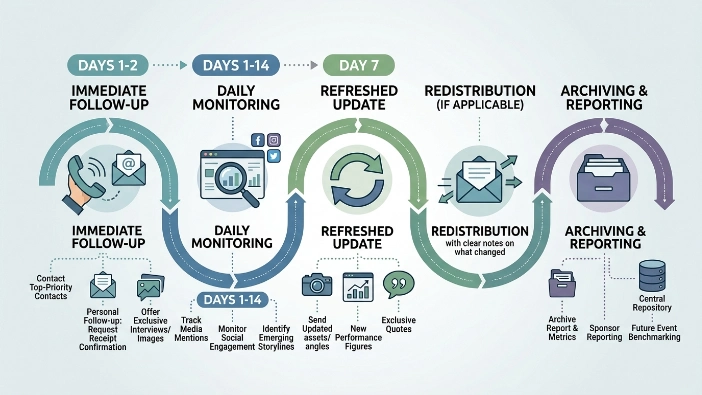
After distribution, follow up with top-priority contacts within 48 hours, monitor pickup daily for 14 days, and send a refreshed update on day seven with new assets or angles.
Personal follow-ups request confirmation of receipt and offer exclusive interview access or additional images. Monitor media mentions and social engagement to surface emerging storylines. When the day-seven update produces new performance figures or exclusive quotes, redistribute with clear notes on what changed. Archive the report and its metrics in a central repository for sponsor reporting and future event benchmarking.
Click Here to Explore More:
Events Media Coverage Pricing: What UK Organisers Pay for Different Coverage Tiers



