
A project showcase campaign presents a property development through curated visuals, specifications, and calls to action to convert interest into qualified leads. A project showcase campaign defines the property, highlights unique selling points, and targets audiences across digital channels.
Developers use professional photography, floor plans, virtual tours, and targeted messaging to communicate value. The campaign packages assets into ad formats, landing pages, email sequences, and sales handovers that follow a clear lead journey.
How do developers define the project?
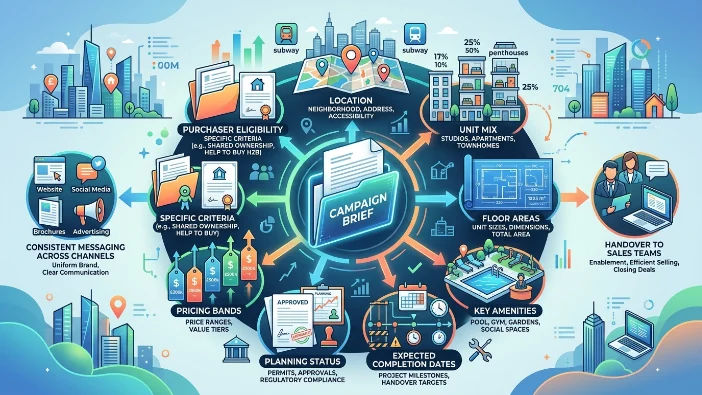
Developers define the project by listing location, unit mix, floor areas, key amenities, and expected completion dates. They specify planning status, pricing bands, and purchaser eligibility such as shared ownership or Help to Buy. Developers store these facts in a campaign brief to ensure consistent messaging across channels and handoffs to sales teams.
How does the lead nurturing process work in these campaigns?
Lead nurturing moves prospects from initial interest to booking a site visit through staged content, scoring, and targeted follow-up. Developers map the buyer journey from awareness to viewing, then to reservation. They assign lead scores based on engagement with assets: brochure downloads, virtual tour duration, and form completions. High-score leads receive personalised contact from sales staff; lower-score leads receive automated email sequences that provide additional information and incentives.
What is the typical lead-flow sequence?
A typical sequence begins with an awareness ad or search click, moves to a campaign landing page, then to a gated brochure or virtual tour requiring contact details. Collected leads enter a CRM, receive automated emails at predetermined intervals, and are evaluated for sales outreach based on engagement thresholds.
What digital channels do developers use for these campaigns?
Developers use display advertising, social media adverts, search engine marketing, email marketing, and property portals to distribute showcase assets. Display adverts place visual banners on publisher sites to build recognition. Social adverts target demographic and interest segments with carousel images and short videos. Search engine campaigns use intent-based keywords to capture active home hunters. Email marketing nurtures registered prospects, while property portals list detailed specifications and imagery for wide discovery.
How are channels selected?
Channel selection follows the target buyer profile and project stage. For central London apartments, paid search and property portals perform strongly. For suburban family homes, social adverts and display retargeting produce higher engagement. Developers allocate budget across channels using performance metrics such as click-through rate and cost per lead.
What creative assets form the campaign?
Creative assets include high-resolution photos, floor plans, 3D walkthroughs, brochure PDFs, short video tours, and headline/value statements tailored to buyer segments. Photos show exterior context and key interiors. Floor plans communicate layout and square metre data. Walkthroughs provide immersive discovery and increase time-on-page metrics. Brochures compile legal notices, specification lists, and pricing bands into a downloadable package. Video tours of 30–90 seconds display circulation and amenity proximity.
How is content optimised for conversion?
Content optimisation uses concise headings, clear pricing ranges, prominent calls to action, and conversion-focused forms with minimal required fields. Developers test different headlines, hero images, and form lengths using A/B experiments to reduce cost per lead and improve conversion rates.
How do developers score and segment leads?
Developers score leads with point systems based on actions: 10 points for brochure download, 20 points for virtual tour completion, 30 points for contact form with preferred move-in date. Segmenting separates warm buyers, research-stage prospects, and investors. Warm buyers receive personalised calls and booking offers. Research-stage prospects receive educational emails about financing and neighbourhood benefits. Investor leads receive data on rental yield and planning permissions.
What CRM rules support scoring?
CRMs automate score updates and trigger workflows when thresholds are met. Rules assign sales tasks when scores exceed 50, send reminder emails at 7 and 14 days, and flag inactive leads for reactivation campaigns after 90 days.
How do developers convert leads into site visit bookings?
Developers convert leads by offering limited-time incentives, available viewing slots, and easy booking flows integrated into the landing page and email links. Booking flows provide real-time calendar availability, available unit types for viewing, and a short pre-visit questionnaire. Sales staff confirm bookings within 24 hours. Developers use follow-up SMS reminders 48 and 6 hours before visits to reduce no-shows.
What incentives increase booking rates?
Incentives include reservation fee waivers for same-week bookings, deposit reductions for early reservations, and developer-funded conveyancing credits. Publicising a finite number of viewing slots increases urgency and clarifies supply constraints.
What metrics measure campaign effectiveness?
Key metrics include cost per lead (CPL), lead-to-visit conversion rate, website time-on-page, webinar/video completion rate, and sales-qualified lead rate. CPL measures budget efficiency. Lead-to-visit conversion shows the campaign’s ability to generate physical interest. Time-on-page and video completion indicate content engagement. Sales-qualified lead rate reflects the share of leads that meet predefined buying criteria.
What benchmark numbers apply in the UK market?
Benchmarks vary by product type. For new-build apartments in urban areas, CPL ranges from £40 to £200. Lead-to-visit conversion rates range from 10% to 35% depending on targeting precision. Video completion rates above 40% indicate strong engagement for short tours.
What legal and compliance elements do campaigns require?
Campaigns require compliance with the UK’s Data Protection Act 2018 and PECR rules for electronic marketing; developers must obtain consent for marketing and provide clear privacy notices. Collecting personal data needs lawful basis, usually consent for direct marketing. Email consent requires clear opt-in mechanisms. Retained lead data must include storage duration and contact preferences. SMS and phone outreach require separate preferences recording.
How do developers document consent?
Consent statements appear at form submission and link to a privacy notice detailing use, retention, and rights to withdraw consent. CRM records store consent timestamps and source of sign-up for audit purposes.
What operational teams and roles manage campaigns?
Campaign teams include marketing managers, creative production, digital paid specialists, CRM administrators, and sales agents trained for handover. Marketing managers define strategy and budgets. Creative production produces assets. Paid specialists set bids, targets, and tracking. CRM administrators configure scoring and automation. Sales agents receive lead briefings and handle viewing bookings and negotiations.
How are handovers managed?
Handover scripts summarise lead actions, scores, and communication history. Sales teams receive warm-lead briefings via CRM tasks and a standard email template. Handover meetings occur daily during peak launch periods to prioritise available viewing slots.
What are common campaign benefits for developers?
Benefits include higher qualified lead volumes, faster sales cycles, lower marketing waste, and clearer handoffs between marketing and sales. Project showcase campaigns increase the proportion of leads who attend viewings. Structured assets reduce information gaps and improve buyer confidence. Data-driven scoring reduces time spent on low-probability leads and increases productive sales activity.
Residential launches in city fringes that target first-time buyers use concise financing content and short tours. Suburban family home campaigns focus on local schools and commute data, using longer-form walkthroughs. Build-to-rent projects target investors with yield calculators and management detail.
Explore More Expert Insights:
How Real Estate Firms Build Buyer Interest Using Property Banner Ads
How Healthcare Brands Improve Service Consideration Using Banner Ads
How do developers iterate and improve campaigns?
Developers run A/B tests, review channel-level CPL, reweight budgets, and refine landing page content every 4–8 weeks during active sales periods. Iteration uses conversion data to prioritise high-performing creative and channels. Underperforming ads are paused and replaced after a 2-week test. Landing pages change headlines, hero images, and form fields based on heatmap and session replay data.
What data sources support iteration?
Sources include CRM engagement logs, ad platform analytics, session recordings, and direct feedback from sales staff after site visits. These sources identify content gaps and buyer objections.
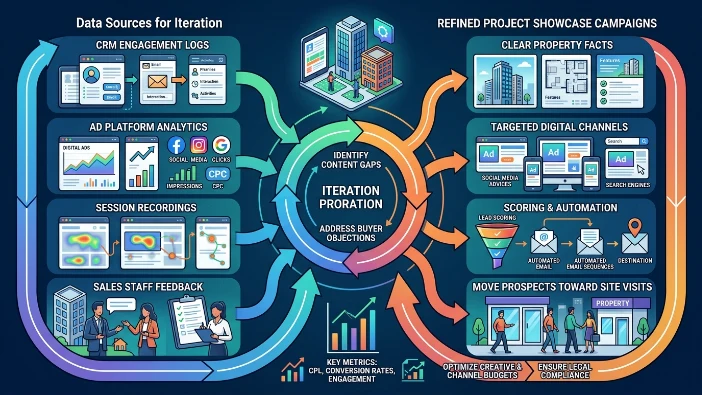
Project showcase campaigns present clear property facts, use targeted digital channels, and apply scoring and automation to move prospects toward site visits. Developers measure CPL, conversion rates, and engagement to optimise creative and channel budgets and ensure legal compliance.
For guidance on campaign tactics that focus on awareness, see the following:
How Property Developers Increase Sales Using Banner Advertising
Campaigns that turn leads into bookings, see the following:
Property Showcase Campaigns That Turn Leads Into Site Visit Bookings