Multi-channel coverage means distributing event-related content across at least three distinct media channels—earned media, owned media, and paid media—to reach diverse audience segments and search indexes.
Multi-channel coverage combines press coverage, social media posts, email newsletters, podcasts, and paid placements. Earned media includes articles, interviews, and news mentions. Owned media includes event websites, blogs, and official social accounts. Paid media includes sponsored posts, display ads, and promoted search results. Each channel uses different formats and timelines. Combining channels increases visibility in search engines and in-platform algorithms. UK organisers require integrated plans that specify channels, content formats, and publishing cadence. Typical plans list 8–12 content pieces across channels for events with 200–1,000 attendees.
Why does lack of multi-channel coverage reduce brand value?
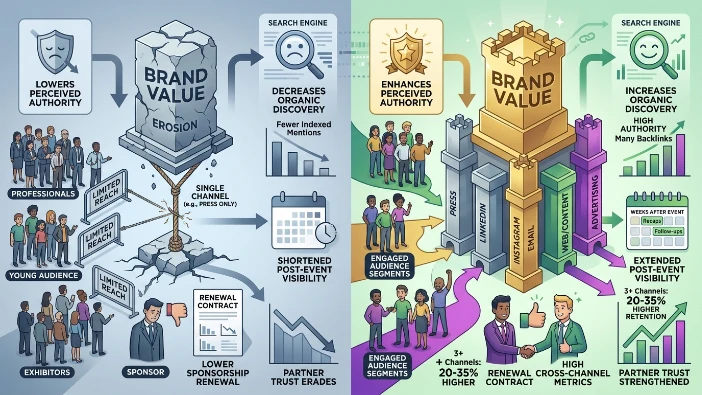
Reduced exposure across public and professional outlets lowers perceived authority, decreases organic discovery, and shortens post-event visibility, which directly erodes brand recognition and partner trust.
Brand value links to consistent public signals. When organisers rely on one channel only, they limit reach to single audience segments. For example, a press-only strategy reaches journalists and readers but misses younger professionals on LinkedIn and Instagram. Search engines index diverse content types; fewer indexed mentions reduce organic authority metrics such as domain mentions and backlink profiles. Sponsors and exhibitors evaluate measurable reach; lower cross-channel metrics reduce sponsorship renewal rates. In the UK market, commercial partners expect multi-channel metrics—top-tier organisers report 20–35% higher sponsor retention when campaigns include three or more channels.
How does multi-channel coverage improve event discoverability?
Multi-channel content increases the number of indexed signals and referral paths, which boosts search visibility and drives diverse traffic sources to event pages and brand assets.
Search engines and social platforms each surface content differently. Journalistic articles produce backlinks and authority signals for search. Social posts create real-time engagement and reach algorithmic feeds. Email sends produce direct traffic and repeat visits. Podcasts and video increase time-on-site and offer alternative discovery paths. A coordinated calendar that synchronises a press release, three social posts, two newsletter inserts, and one podcast appearance yields multiple referral sources over a 30-day window. This multi-path discovery leads to higher organic registrations and higher-quality attendee profiles because different channels attract different professional demographics.
What components belong to a multi-channel coverage plan?
A plan contains explicit channel selection, content types, publication schedule, measurement metrics, and a distribution workflow assigning responsibilities and timelines.
Channel selection lists earned, owned, and paid channels. Content types include articles, interviews, short-form social videos, long-form blog posts, email templates, and press kits. The publication schedule defines pre-event, live-event, and post-event timing with specific dates for each asset. Measurement metrics list KPIs: unique mentions, referral visits, social impressions, email open rates, and backlinks. The distribution workflow assigns tasks to roles: PR lead, social manager, content producer, and analytics owner. Example: a 90-day plan for a mid-size UK conference might allocate 30 days to outreach (20 journalist pitches), 7 days to live coverage (12 social posts), and 30 days to post-event amplification (3 follow-up articles).
What processes ensure consistent multi-channel messaging?
Documented messaging guidelines, an approved asset bank, and a synchronised publishing calendar ensure consistent cross-channel messaging and brand tone.
Messaging guidelines define headlines, key messages, speaker bios, sponsor mentions, boilerplate copy, and visual style. An asset bank stores high-resolution logos, speaker photos, cut-down video clips, and quote pullouts. The publishing calendar maps each asset to a channel and an actor with deadlines. Approval steps include legal sign-off for sponsor claims and speaker release confirmations. Consistent tagging and canonical URL rules prevent content dilution across platforms. For example, using the same canonical event page in press releases and social posts consolidates search authority and reduces conflicting metadata that harms SEO.
What measurement framework verifies brand impact?
A measurement framework tracks volume of mentions, referral traffic, backlink growth, engagement rates, and sponsor KPI attainment against predefined weekly and 30-day targets.
Set baseline metrics before promotion. Track mention volume across national outlets, trade journals, and regional press. Measure referral traffic to event pages from news sites, social platforms, and newsletters. Monitor backlink quantity and domain authority growth. Record engagement metrics per channel: click-through rates for email, watch time for video, and share rates for social posts. Compare sponsor KPIs such as lead forms submitted and demo requests. Weekly reporting highlights deviations and allows tactical shifts. For example, if social impressions fall 25% below target in week two, reallocate budget from low-performing display ads to boosted posts for the next 14 days.
What are the technical SEO actions for multi-channel coverage?
Technical SEO actions include canonicalisation, structured data markup for events, consistent meta descriptions, and consolidated landing pages to maximise indexing and search clarity.
Use event-structured data to surface dates and locations in search results. Apply canonical tags to avoid duplicate content across press releases and partner sites. Create one authoritative landing page with segmented sections for agenda, speakers, sponsors, and registration. Ensure meta titles and descriptions contain the event name, city, and primary date. Optimise image file names and alt text for speaker photos and venue images. Implement server-side redirects for old event pages to the current event URL to retain historical authority. These steps improve crawl efficiency and increase the probability of rich search results.
How does multi-channel coverage extend post-event newsworthiness?
Post-event coverage across channels repurposes recorded assets and generates fresh editorial angles, which sustains media interest and extends brand visibility for an additional two weeks or more.
After the event, organisers republish highlights as articles, social carousels, and short video reels. Release measurable outcomes: attendee counts, survey results, and quoted statements. Pitch follow-up stories: trend analysis, speaker takeaways, and sponsor impact summaries. Distribute a consolidated wrap-up newsletter to registrants and partners. Reuse recorded sessions as gated content to drive traffic and lead capture. Coordinated post-event outreach produces new backlinks and social traction, which search engines index as continued relevance. For many UK conferences, a systematic 14–21 day post-event programme delivers 40–60% of the total post-event referral volume.
What benefits do organisers gain from multi-channel coverage?
Organisers gain higher brand authority, improved sponsor retention, diversified traffic sources, and clearer performance data that supports pricing and partnership decisions.
Higher authority derives from broader indexing and authoritative backlinks. Sponsor retention increases when organisers demonstrate measurable multi-channel reach. Diversified traffic reduces dependence on paid channels for registrations. Clear performance data informs future pricing and sponsorship tiers. For example, organisers who show year-on-year increases in referral sources secure higher upfront sponsor fees. Multi-channel coverage also shortens time-to-fill sponsorship inventory by improving perceived event prominence among commercial buyers.
How do UK-specific market dynamics affect multi-channel strategies?
UK media fragmentation and strong regional press presence require targeted outreach plans that include national titles, trade outlets, and local regional media to maximise relevance and reach.
The UK media landscape includes national newspapers, trade journals, professional niche publications, regional outlets, and broadcast channels. Regional press often covers venue and local economic impact; trade outlets cover sector-specific angles; national press covers broad industry trends. Tailored pitches use localised data for regional outlets and sector-specific insights for trade media. Scheduling must consider UK news cycles and public holidays. For example, avoid major announcements in the final week of December. Accounting for these dynamics increases the chance of placements and relevant audiences for each channel.
Explore More Expert Insights:
The 36% Surge in LinkedIn Video Views Is Reshaping UK Professional Event Reach
How Short-Form Video Changed What UK Event Coverage Looks Like in 2026
What use cases show measurable improvement from multi-channel coverage?
Use cases include sponsor retention increases, higher qualified registration rates, improved search rankings, and more robust post-event lead lists, each quantifiable through defined KPIs.
Case example types: a medical conference that increased sponsor renewals by 25% after adding podcast interviews and sponsored LinkedIn posts; a technology summit that improved organic search impressions by 45% after implementing Event structured data and coordinated press outreach; a regional business forum that doubled local attendee sign-ups after targeted regional press and email sequences. Each use case ties directly to measurable KPIs such as sponsor renewal rate, organic impressions, and conversion rate from referrals.
Read the Full Blog Here:
Post-Event Wrap-Up Reports: How to Keep Your UK Brand in the News for 2 More Weeks
How should organisers begin implementing multi-channel coverage?
Start by auditing current channels, setting three-channel minimums, defining KPIs, and creating a 90-day editorial and distribution calendar with assigned responsibilities.
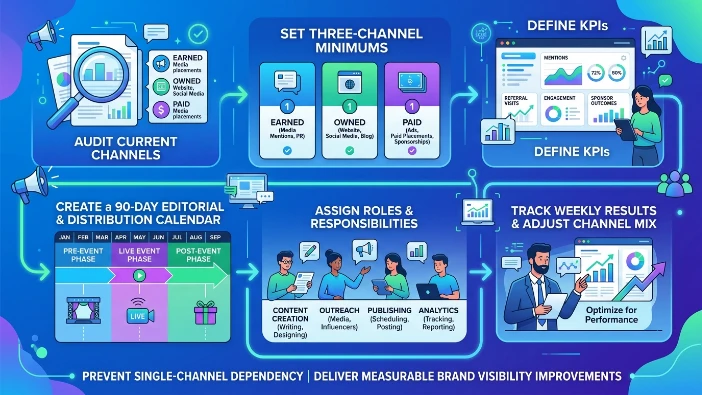
Audit existing media mentions, owned channels, and paid placements. Set a minimum of one earned, one owned, and one paid channel for each campaign. Define KPIs for mentions, referral visits, engagement, and sponsor outcomes. Build a 90-day calendar that covers pre-event, live, and post-event phases. Assign roles for content creation, outreach, publishing, and analytics. Track results weekly and adjust channel mix based on performance. This structured start prevents single-channel dependency and delivers measurable improvements in brand visibility.
Find Out More:
Events Media Coverage Pricing: What UK Organisers Pay for Different Coverage Tiers