
Visual display advertising uses image-based ad formats to present property visuals, floorplans, and key features across websites, apps, and connected TV to drive awareness and consideration. It includes static banners, HTML5 rich media, video, and native placements targeted by demographics and behaviors.
Visual display advertising for housing projects defines ad units that show visual property content to prospective buyers. Ad formats include standard banner sizes (300×250, 728×90), responsive display, rich media with interactive floorplans, and short video clips (6–30 seconds). Platforms include ad exchanges, demand-side platforms (DSPs), social display networks, and publisher direct buys.
Targeting layers use location, age 25–54, income bands, property-interest signals, contextual keywords like “two-bedroom apartment,” and first-party CRM lists. Measurement uses viewable impressions, click-through rate (CTR), cost per thousand viewable impressions (vCPM), cost per click (CPC), and view-through conversions.
How do visual display ads move prospects from awareness to consideration?
Display ads use tailored creative, sequential messaging, and targeting refinement to increase engagement and prompt site visits and inquiry actions. Campaigns progress from broad reach to narrower retargeting based on engagement signals and onsite behaviour.
The typical process uses three phases. Phase 1 focuses on reach and brand visuals: property hero images, location maps, and lifestyle shots to introduce the development. Phase 2 narrows targeting by serving interactive or video ads to users who viewed project pages or engaged with earlier ads. Phase 3 retargets high-intent users with detailed offers such as virtual tour invites, floorplan downloads, or booking forms. Each phase tracks distinct metrics: reach and frequency in Phase 1, engagement time and micro-conversions in Phase 2, and lead submissions in Phase 3. Campaigns use frequency caps to avoid ad fatigue and use A/B creative tests to raise CTR by 10–35% based on historical campaign data.
What targeting methods improve consideration for property buyers?
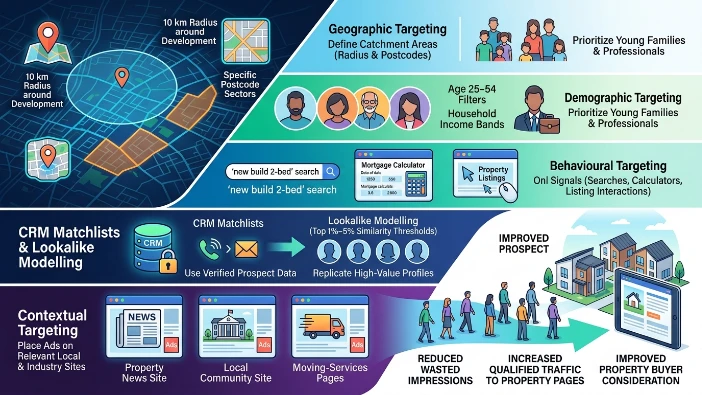
Targeting combines geographic radius, demographic segments, behavioural signals, and CRM matchlists to reach prospects with higher purchase intent. Use city, postcode, radius in kilometres, age 25–54, household income bands, property search behaviour, and CRM look-alikes.
Geographic targeting defines catchment areas such as a 10 km radius around the development or specific postcode sectors. Demographic targeting sets age and household composition filters to prioritise young families or professionals. Behavioural targeting uses online signals: searches for “new build 2-bed,” visits to mortgage calculators, and property listing interactions. CRM matchlists upload verified prospect emails and phone-hash lists for direct targeting.
Lookalike modelling uses top 1%–5% similarity thresholds to replicate high-value prospect profiles. Contextual targeting places ads on property news, local community sites, and moving-services pages to increase relevance. Combining these layers reduces wasted impressions and raises qualified traffic to property pages.
Which creative elements increase ad consideration for housing projects?
High-resolution property photography, concise benefit text, clear location cues, and an explicit next-step asset (virtual tour or floorplan) increase engagement and time-on-page. Use 2–3 strong images, 10–12 words maximum headline, and a brief value statement.
Photography should show exterior elevation, key living spaces, and neighbourhood amenities. Include a small map graphic or local landmark to signal location quickly. Headline copy must state the offer: “2–3 Bed Apartments from £250,000” or “New Family Homes, 10-Min Walk to Station.” Use a single primary callout like “View Floorplans” or “Watch 30s Tour.” Interactive elements such as expandable floorplan thumbnails or 15–30 second vertical video increase dwell time and raise view-through rates. Ensure creative adheres to platform specifications and keeps file sizes under 150 KB for images and under 2 MB for HTML5 units to maintain fast load times.
How should housing projects measure consideration from display campaigns?
Use a mix of viewable impressions, engagement metrics, behavioural site signals, and lead attribution windows to evaluate consideration. Track viewable vCPM, CTR, engaged-view rate for video, pages-per-session, time-on-page, and inquiry rate within 30 days.
Start with viewable impression counts to confirm delivery to intended audiences. Use CTR and video engaged-view rate (percentage of viewers watching 15+ seconds) as immediate engagement indicators. Onsite metrics show deeper interest: pages-per-session for property pages, average session duration, and downloads of floorplans or brochures. For leads, measure form fills, call clicks, and booked appointments, and apply a 7–30 day view-through attribution window to capture delayed enquiries. Use incrementality tests (control vs exposed cohorts) to isolate the ad effect on inquiry lift. Report results in weekly dashboards with clear KPIs: vCPM, CTR, pages-per-session, and lead conversion rate.
Explore:
Visual Property Ads That Convert Consideration Into Buyer Shortlists
What campaign structure supports progressive consideration?
Layered campaigns broad reach, interest, and retargeting—deliver sequential messages and increase qualified lead flow. Use frequency-capped reach campaigns first, then engagement-driven ad sets, then high-intent retargeting creatives.
Create three campaign tiers. Tier 1 runs prospecting display ads to a defined city or postcode set with broad interest signals and a 5–8 frequency cap over 14 days. Tier 2 runs to users who clicked or viewed property content and serves interactive creatives or video with callouts for virtual tours. Tier 3 retargets users who visited booking pages or started forms with reminders, availability notices, or limited-time viewing slots. Use audience expiry windows: 0–14 days for Tier 2, 0–30 days for Tier 3. Sync creative messaging to the funnel stage: lifestyle and location for Tier 1, features and floorplans for Tier 2, and booking incentives for Tier 3. Track movement between tiers as a primary indicator of consideration progression.
What legal and compliance considerations apply in the UK?
Ads must comply with ASA rules, Consumer Protection from Unfair Trading Regulations, and property-specific advertising standards including accurate pricing and availability statements. Display pricing in pounds, disclose availability status, and avoid misleading claims.
Include full price information when using price quotes. State whether images are CGI where applicable. Avoid statements that guarantee completion dates without evidence. For mortgage-related messaging, follow Financial Conduct Authority guidelines and ensure any finance claims state representative APR rates if included. Maintain records of creative approval and data processing consents for CRM matchlists according to UK data protection standards. Use clear privacy notices on landing pages and allow easy opt-out for marketing communications.
What are proven use cases of display ads for housing projects in the UK?
Use cases include generating local enquiries for new developments, driving virtual tour attendance for showhomes, and promoting limited-release phases to previous registrants. Examples: targeting commuters within 20 km of London stations to increase weekday viewing rates, promoting weekend open-house slots to families in a specific postcode, and re-engaging CRM lists for second-phase launches.
A commuter targeting example uses a 20 km radius around major stations. Creative highlights commute time and shows evening social spaces to increase relevance. A virtual tour use case runs short video ads to users who viewed the floorplans, prompting virtual tour sign-ups and increasing booked tours by measurable percentages. A phase-release use case sends display reminders to CRM matchlists and lookalikes, then measures conversion to reservation within 14 days.
Explore More Expert Insights:
How Real Estate Agencies Increase Site Visits Using Banner Advertising
How Property Developers Nurture Leads Using Project Showcase Campaigns
How do display ads integrate with other channels to strengthen consideration?
Display ads perform best when integrated with search, email, and onsite experiences to create consistent messaging and measurable touchpoints. Use shared creative themes and synchronised remarketing lists across channels.
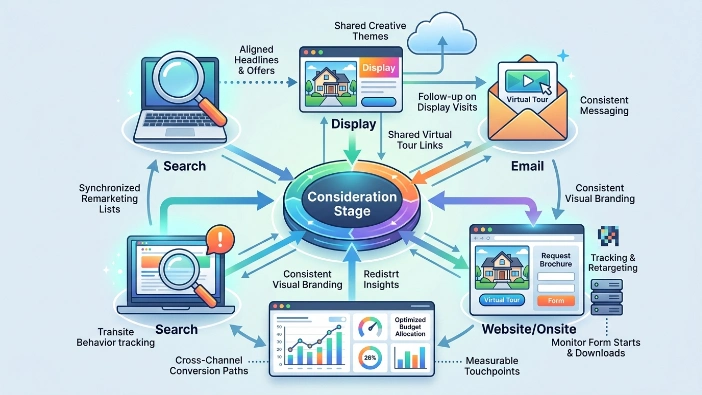
Coordinate display creative with search ads by aligning headlines and offers. Use email to follow up on display-driven visits and include the same virtual tour links seen in ads. Connect display retargeting to onsite behaviour using pixels and server-side tracking to capture form starts and brochure downloads. Measure cross-channel conversion paths to attribute leads correctly and optimise budget allocation toward the highest-performing channels.
Where can readers learn more about consideration-stage display strategies?
Consult campaign case studies, digital advertising measurement guides, and UK advertising regulation resources. For deeper tactical reads, see performance reports on display formats, targeting guides for property advertising, and ASA rulings on property claims.
How Housing Societies Boost Inquiries Using Display Campaigns are relevant internal resources for readers who want deeper tactical workflows and conversion-focused creative examples.