
Final stage banner campaigns in healthcare consultation booking are highly targeted digital display systems designed to convert users with prior interest into confirmed consultation actions by presenting appointment-focused messaging, structured booking pathways, and decision-ready healthcare information across digital platforms.
Final stage banner campaigns operate at the bottom of the healthcare digital funnel. They target users who have already engaged with healthcare-related content or demonstrated consultation interest signals. The objective shifts from awareness and interest to structured booking conversion.
These campaigns use refined audience segmentation. Users are grouped based on prior interactions such as healthcare page visits, symptom searches, or consultation-related content engagement. This ensures that banners appear only to high-intent audiences.
The communication structure becomes action-oriented. Messaging focuses on consultation pathways, appointment availability, and structured healthcare access processes. This supports immediate decision completion within digital environments.
How do final stage banner campaigns convert consultation interest into bookings?
Final stage banner campaigns convert consultation interest into bookings by delivering structured, high-intent messaging that reduces decision barriers, reinforces healthcare relevance, and directs users toward defined consultation pathways through repeated, action-focused digital exposure.
Conversion occurs when users transition from evaluation to action. Final stage banners support this transition by presenting clear consultation structures. These include appointment pathways, scheduling formats, and service access steps.
The system relies on behavioral targeting. Users who previously interacted with healthcare content receive repeated exposure to booking-focused banners across multiple platforms. This increases conversion probability.
Messaging removes informational gaps. Instead of general education, banners provide structured consultation access details. This clarity reduces hesitation during decision-making.
Repeated exposure strengthens intent. Users encounter consistent booking signals across different websites, which reinforces readiness to complete consultation actions.
What components define effective final stage healthcare banner campaigns?
Effective final stage healthcare banner campaigns are defined by high-intent messaging, conversion-optimized structure, precise audience targeting, streamlined consultation pathways, and consistent exposure frequency that collectively guide users toward completing consultation booking actions.
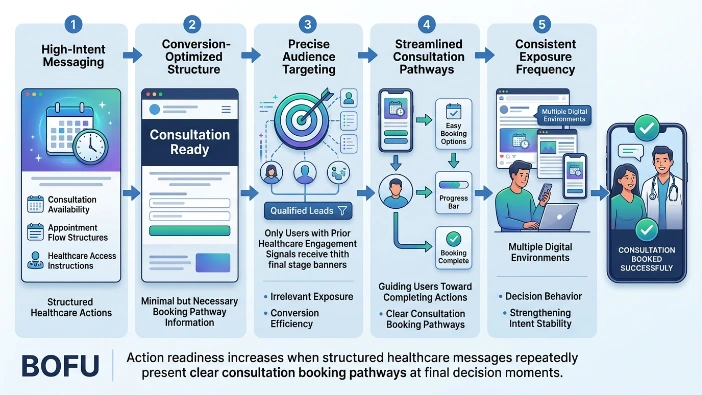
High-intent messaging focuses on structured healthcare actions. Content includes consultation availability, appointment flow structures, and healthcare access instructions.
Conversion-optimized structure ensures clarity. Headlines communicate consultation readiness, while supporting elements provide minimal but necessary booking pathway information.
Audience targeting ensures precision. Only users with prior healthcare engagement signals receive final stage banners. This reduces irrelevant exposure and increases conversion efficiency.
Exposure frequency reinforces decision behavior. Users see consistent booking-focused banners across multiple digital environments, strengthening intent stability.
Why do final stage banner campaigns increase consultation bookings?
Final stage banner campaigns increase consultation bookings by focusing on users already positioned at decision readiness, delivering structured booking pathways, and removing informational barriers that prevent completion of healthcare consultation actions in digital environments.
Users at this stage already understand healthcare context. They have passed awareness and evaluation phases. Final stage banners align with this readiness level.
Booking increases occur through structured exposure. Users repeatedly see clear consultation pathways that simplify decision execution. This reduces cognitive friction during action completion.
Digital environments support instant transitions. Banner campaigns connect users directly to structured consultation processes, ensuring seamless movement from interest to booking action.
Consistency is key. Repeated exposure to booking-focused messaging reinforces decision confidence across multiple browsing sessions.
Read:
How Healthcare Providers Promote Services Using Banner Campaigns
How is targeting structured in final stage healthcare banner campaigns?
Targeting in final stage healthcare banner campaigns is structured using behavioral data, engagement history, and intent signals that identify users most likely to complete consultation bookings based on prior interaction with healthcare content and digital consultation pathways.
Behavioral targeting identifies users who previously viewed healthcare content or searched for symptoms and medical information. These signals indicate readiness for final stage messaging.
Engagement history refines audience segmentation. Users who interacted with consultation-related pages receive higher frequency of booking-focused banners.
Intent signals include repeated visits to healthcare content, interaction with appointment-related pages, and extended dwell time on medical information platforms.
This structured targeting ensures that final stage banners reach only high-probability conversion users, increasing efficiency of consultation booking systems.
What elements improve consultation booking conversion in banner campaigns?
Consultation booking conversion in banner campaigns is improved through structured clarity, simplified messaging, visual hierarchy, direct consultation pathways, and repeated exposure to appointment-focused healthcare information that reduces friction in final decision execution processes.
Structured clarity ensures that healthcare booking information is easy to understand. Users process consultation steps without complexity.
Visual hierarchy directs attention toward booking-related elements. Headlines and supporting content guide users toward consultation pathways.
Direct consultation pathways define clear steps. Users understand how to proceed from banner exposure to booking completion.
Repeated exposure reinforces decision confidence. Users see consistent booking signals across multiple platforms, strengthening conversion likelihood.
How do users complete consultation bookings through banner campaigns?
Users complete consultation bookings through banner campaigns by interacting with structured digital advertisements that connect them to appointment systems, where they follow defined consultation pathways after repeated exposure to healthcare-focused booking messages across multiple digital touchpoints.
The process begins with banner exposure. Users see structured consultation-focused messaging during routine browsing sessions.
Interaction occurs when users click on banners that present booking pathways. This leads to structured healthcare consultation environments.
Within these environments, users follow defined steps that present consultation availability and appointment structures. The process remains streamlined and information-based.
Completion occurs when users finalise consultation booking decisions through structured digital pathways initiated by banner interactions.
How Healthcare Providers Increase Consultation Interest Using Banner Campaigns
Explore More Expert Insights:
How Clinics Convert Educated Patients Into Scheduled Appointments Using Conversion Ads
How Medical Centers Turn Condition Awareness Into Patient Consultations Using Banner Retargeting
What role do final stage banners play in healthcare decision completion?
Final stage banners play a critical role in healthcare decision completion by providing structured, high-intent messaging that bridges consultation interest and booking execution, ensuring users receive consistent prompts to finalize healthcare appointments through digital conversion pathways.
Decision completion requires alignment between intent and access. Final stage banners provide this alignment through structured consultation messaging.
These campaigns maintain continuity across digital environments. Users encounter consistent booking signals across multiple platforms and sessions.
This continuity reduces drop-off rates. Users remain engaged with healthcare booking pathways until decision completion occurs.
Final stage banners function as the final informational bridge between healthcare evaluation and confirmed consultation booking execution within structured digital ecosystems.
What metrics measure success in final stage healthcare banner campaigns?
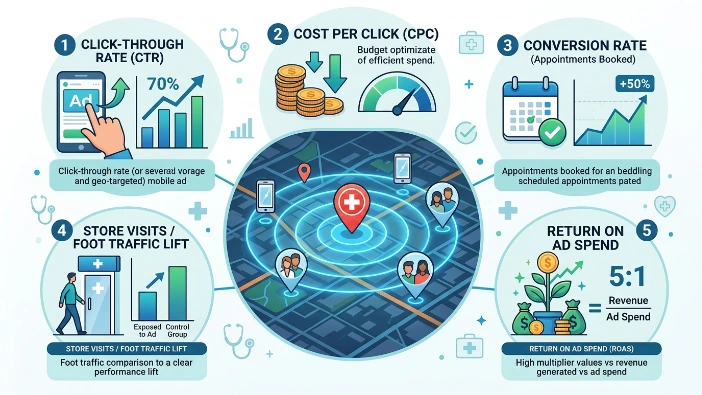
Success in final stage healthcare banner campaigns is measured using conversion rate, booking completion rate, click-to-book ratio, engagement depth, and repeated exposure effectiveness, all of which indicate how efficiently users transition from banner interaction to confirmed consultation booking actions.
Conversion rate measures how many users complete bookings after interacting with banners. This is the primary success indicator.
Booking completion rate tracks finalized consultation actions within healthcare systems. This reflects end-stage effectiveness.
Click-to-book ratio measures how many banner clicks result in completed booking pathways. This highlights conversion efficiency.
Engagement depth tracks how users interact with booking-related pages before completing consultation actions.
Repeated exposure effectiveness measures how multiple banner impressions influence final decision completion rates across user journeys.
Performance optimization depends on structured measurement of conversion behavior where consultation booking completion defines final success outcomes.