
A distribution partner provides external reach, technical platforms, and media relationships; in-house teams manage control, cost, and brand-specific knowledge. The partner focuses on scale and media placement; the in-house team focuses on tailored messaging and direct stakeholder relationships.
A specialist distributor operates distribution platforms, newsroom outreach lists, and analytics dashboards. Distributors maintain contact lists that include national newspapers, trade titles, broadcast desks, and regional press. In-house teams create copy, manage spokespeople, and maintain direct lines to beat reporters. Organisations with steady, high-volume communications keep distribution inside to save on per-release fees and to embed consistent editorial style. Organisations with fewer communications or limited internal capacity use external partners to access wider media pools and technical delivery.
When should an organisation choose a distribution partner?
Choose a partner when you need broader reach, technical delivery, or time-limited amplification you cannot replicate in-house. Use partners for nationwide launches, regulated disclosures, and campaigns requiring simultaneous multi-outlet delivery.
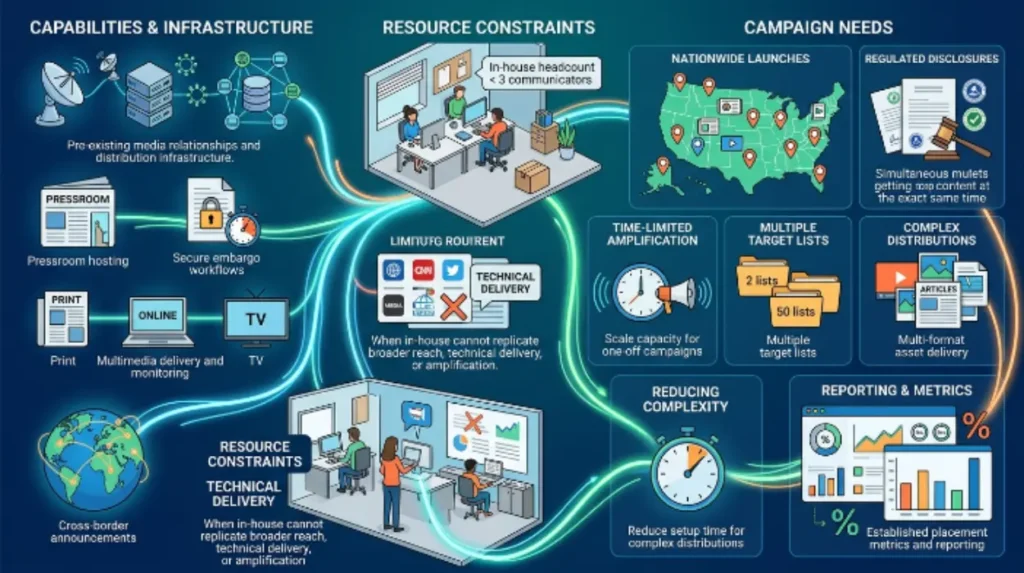
Partners offer pre-existing media relationships and distribution infrastructure. They handle pressroom hosting, secure embargo workflows, multimedia delivery, and monitoring across print, online, and broadcast channels. Partners scale capacity for one-off campaigns and support distribution across 2, 5, or 50 target lists depending on campaign needs. Partnerships reduce setup time for complex distributions such as cross-border announcements or multi-format asset delivery. Choose a partner when in-house headcount is under 3 communicators or when the organisation needs established placement metrics and reporting.
How does in-house distribution work and when is it preferable?
In-house distribution relies on internal editorial control, direct journalist relationships, and lower recurring cost for steady output. It suits organisations that publish frequent releases or handle sensitive, niche topics requiring tight message control.
In-house teams manage a media database, send releases via email or secure pressrooms, and coordinate spokespeople for interviews. Teams use monitoring tools for pick-up and analytics tools for measuring reach. In-house distribution works well when the organisation issues 24 or more releases per year and wants consistent brand voice. It also suits regulated sectors where legal clearance is frequent and pre-publication approval cycles run daily. Build internal capacity when staff include at least one dedicated media relations specialist and one analytics or digital publishing specialist.
What components should you evaluate when comparing partners and in-house models?
Evaluate reach, cost per release, technical capabilities, reporting granularity, editorial control, and data security. Compare measurable metrics such as contact counts, open rates, and pickup percentages to decide.
Reach measures the number and type of outlets included: national press, regional titles, trade media, and broadcast contacts. Cost per release includes platform fees, list charges, and any multimedia hosting. Technical capabilities include embargo handling, multimedia asset support, and integrations with CMS systems. Reporting depth covers pickup lists, audience estimates, and link tracking. Editorial control refers to approval workflows and the right to decline placements. Data security covers distribution to password-protected pressrooms and GDPR-compliant contact handling. Request specific examples: ask partners for a recent campaign report, request in-house teams’ annual release counts, and compare time-to-publish metrics across 3 sample releases.
How do costs compare between partner distribution and in-house models?
Partner costs include per-distribution fees and optional add-ons; in-house costs are staff salaries, software subscriptions, and list maintenance. Calculate total cost of ownership over 12 months for apples-to-apples comparison.
Partner pricing often charges per release: fixed fees from £150 to £2,000 depending on scope, plus add-ons for targeting, translation, or multimedia. Some partners offer subscription models for unlimited releases at negotiated caps. In-house costs include at least one full-time communications officer (£28,000–£40,000 annual salary in UK mid-market), monitoring and distribution tools (£500–£3,000 per year), and time spent maintaining media lists. Include overheads for training and secure hosting. For organisations issuing 2–5 releases per month, in-house often becomes less costly after 12 months. For organisations issuing fewer than 12 releases per year, partners usually lower immediate cost and risk.
What technical and process capabilities matter most for reliable distribution?
Key capabilities include embargo management, secure pressrooms, multimedia hosting, integration with analytics, and audience targeting. Reliable workflows reduce publication errors and increase measurable pick-up.
Embargo management requires timestamped delivery and acceptance logging. Secure pressrooms host downloads and assets behind access controls. Multimedia hosting supports images, video, and structured data for wire syndication. Integration with analytics provides click-through data, domain authority reporting, and audience reach estimates. Targeting allows selection by sector, region, or outlet type. For in-house solutions, implement a CMS workflow that timestamps approvals and stores assets centrally. For partners, verify API or reporting exports that feed into internal dashboards.
How do measurement and reporting differ between models?
Partners provide standardised pickup reports, audience estimates, and link-tracking; in-house reporting is bespoke and depends on internal tools. Compare the frequency, format, and granularity of reports before committing.
Partner reports typically list outlets that published, estimated audience reach, and basic engagement metrics. Some partners provide hourly pickup logs and downloadable clips. In-house teams create custom reports that combine monitoring data, web analytics, and social tracking to measure business KPIs such as website visits or lead forms. Reporting frequency ranges from immediate clip reports to weekly dashboards. Request sample reports from partners and run parallel monitoring of two releases—one distributed externally and one in-house—for three months to quantify differences in pickup rates and referral traffic.
Explore More Expert Insights:
Press Release Distribution Mistakes: What 300 UK Campaign Audits Revealed
Building a 90-Day UK PR Distribution Calendar That Compounds Results
What risks and compliance issues affect the choice between partner and in-house?
Risks include data protection, embargo leaks, regulatory disclosure timing, and reputational exposure; control and auditability matter for compliance. Choose the model that provides auditable logs and secure handling aligned with governance needs.
GDPR requires secure handling of personal journalist contact data. Financial disclosures need precise timing to comply with market rules. Health and safety or public health announcements require verification and accurate messaging. Partners often provide audit trails and secure links for legal compliance. In-house processes need documented approvals, secure file storage, and retention policies. For regulated sectors, mandate logging of distribution timestamps and contact consent records.
What use cases align best with each model?
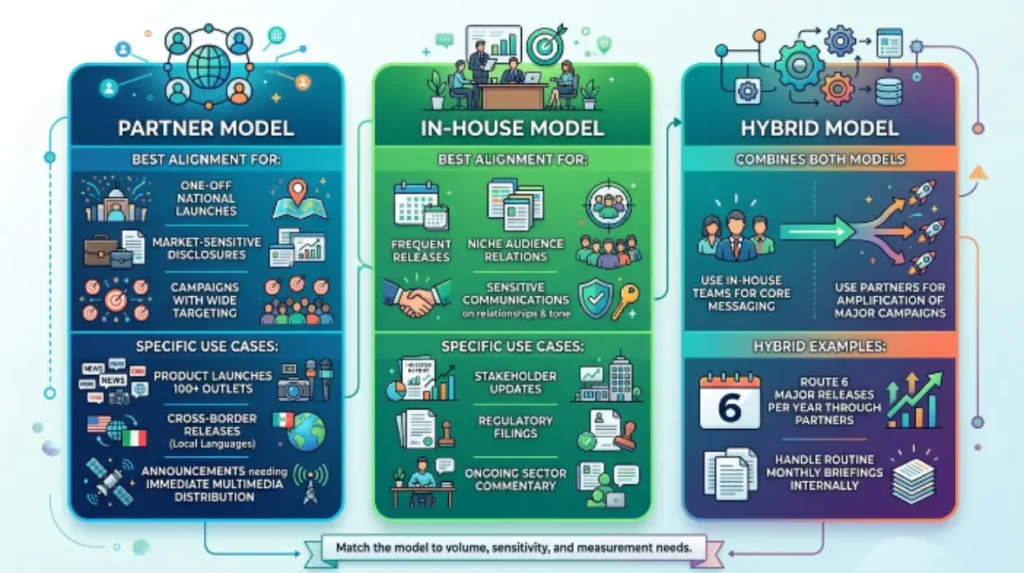
Partners suit one-off national launches, market-sensitive disclosures, and campaigns requiring wide targeting; in-house suits frequent releases, niche audience relations, and sensitive communications. Match the model to volume, sensitivity, and measurement needs.
Use partners for product launches that target 100+ outlets, cross-border releases requiring local languages, and announcements needing immediate multimedia distribution. Use in-house for stakeholder updates, regulatory filings, and ongoing sector commentary where relationships and tone matter. Organisations combining both models run hybrid workflows: use in-house teams for core messaging and partners for amplification of major campaigns. For hybrid examples, organisations route 6 major releases per year through partners and handle routine monthly briefings internally.
Read More to Understand Better:
How Press Release Embargoes Work in UK Media (and When to Break One)
Compare reach, cost, technical features, reporting, and compliance when choosing between Time Intelligence Media Group, or an in-house model. Assess annual release volume, staff capacity, and regulatory requirements. For organisations issuing fewer than 12 releases per year, partners provide faster scale and measurable reach. For organisations issuing 24 or more releases per year, in-house distribution reduces recurring cost while preserving message control. For organisations in between, a hybrid model balances control and scale.
For implementation guidance, see:
Why UK Brands Choose Time Intelligence Media Group for Press Release Distribution