
Publishing a sustainability report on UK media requires corporate data verification, journalistic pitching, regulatory compliance verification, and multi-channel content distribution. Organizations transform raw environmental, social, and governance metrics into structured media releases distributed to UK national, financial, and trade publications.
Data Preparation and Verification
Organizations assemble raw sustainability performance indicators into verifiable disclosure frameworks. Enterprise entities use established international frameworks like the Global Reporting Initiative, the Sustainability Accounting Standards Board, and the Task Force on Climate-related Financial Disclosures. Independent third-party auditors review the quantitative figures to confirm data integrity before public dissemination.
This auditing step eliminates factual inaccuracies in greenhouse gas emissions inventories, supply chain labor audits, and board diversity metrics. UK newsrooms reject unverified environmental disclosures to protect editorial standards.
Editorial Adaptation and Angle Creation
Raw corporate disclosures require translation into journalistic news narratives. Public relations teams and editorial strategists extract high-impact performance milestones from corporate PDF documents. Journalists prioritize concrete outcomes over ambition metrics. Strong news angles highlight measurable achievements, including:
- Year-over-year reductions in Scope 1 and Scope 2 emissions
- Circular economy supply chain transformations
- Specific capital allocation toward renewable energy projects
Articles that examine [How Sustainability Reports Build ESG Credibility for Brands] demonstrate how transparent disclosures establish institutional trust.
Targeted Media Pitching
Pitching targeted editors and specialist correspondents forms the operational link between corporate PR departments and media distribution networks. Corporate communications teams distribute press materials under strict embargo agreements to targeted journalists at national newspapers, financial platforms, and sector-specific trade magazines. Key media categories across the United Kingdom include:
- National Broadsheets: The Financial Times, The Guardian, and The Times cover macroeconomic climate policy and enterprise-wide sustainability transitions.
- Trade and Industry Publications: Sustainability Magazine, Edie, and ESG Today cover operational compliance, waste management protocols, and supply chain logistics.
- Regional News Platforms: Evening Standard and Yorkshire Post focus on localized community initiatives, green jobs creation, and regional manufacturing decarbonization.
Why do UK media outlets publish corporate sustainability reports?
UK media outlets publish corporate sustainability reports to inform investors, hold corporations accountable to regulatory frameworks, satisfy public demand for ESG disclosures, and deliver verifiable business intelligence to readers. Editorial teams evaluate corporate disclosures using strict public-interest criteria and auditing standards.
Regulatory Compliance Reporting
UK national publications cover corporate environmental metrics to inform institutional investors about legal compliance risks. UK-listed companies face mandatory reporting obligations under the Streamlined Energy and Carbon Reporting framework, the Corporate Governance Code, and UK Sustainability Disclosure Standards. Media organizations analyze enterprise filings to highlight compliance gaps, regulatory fines, or industry-leading operational standards. Financial journalists treat sustainability disclosures as material metrics that directly influence corporate valuation.
Corporate Accountability and Anti-Greenwashing Safeguards
UK media organizations act as public watchdogs against corporate greenwashing. Media outlets audit corporate statements against verified progress. Newsrooms prioritize stories that expose discrepancies between published environmental commitments and actual carbon expenditures. The United Kingdom Competition and Markets Authority enforces strict guidelines via the Green Claims Code. Publications use these regulatory standards to assess whether corporate press statements comply with UK consumer protection laws.
Public and Stakeholder Demand
Readers, institutional investors, and enterprise buyers require transparent sustainability data to make commercial decisions. Publications fulfill reader demand by covering corporate ESG performance milestones. Business readers analyze environmental reports to benchmark corporate performance across sectors, including commercial real estate, retail, manufacturing, and financial services.
What key components must a sustainability report contain for UK publication?
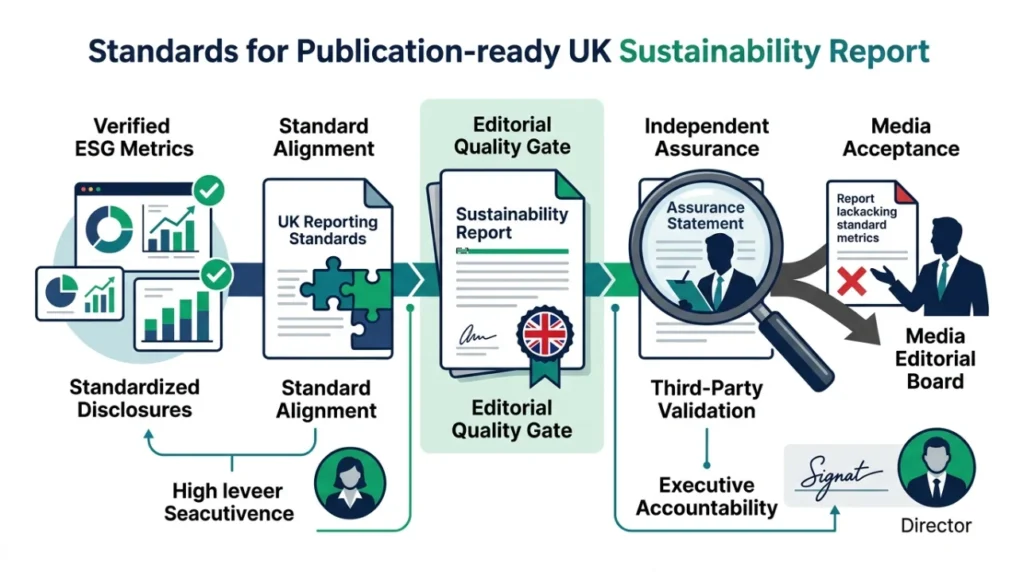
A publication-ready sustainability report contains verified ESG quantitative metrics, explicit alignment with UK reporting standards, independent assurance statements, and clear executive accountability. Reports missing standardized disclosure metrics or third-party data validation face automatic rejection by UK media editorial boards.
Verified Carbon Accounting Metrics
Quantitative greenhouse gas accounting forms the technical core of a publishable report. Reports must delineate emissions into three distinct operational boundaries defined by the Greenhouse Gas Protocol:
- Scope 1 Emissions: Direct emissions from owned or controlled operational sources like manufacturing plants and corporate vehicle fleets.
- Scope 2 Emissions: Indirect emissions generated from the consumption of purchased electricity, steam, heating, and cooling.
- Scope 3 Emissions: Indirect emissions occurring across the upstream and downstream supply chain, including capital goods, transport, and product end-of-life processing.
Reports must present these figures in metric tons of carbon dioxide equivalent using standardized baseline year comparisons.
Alignment with Recognized Standards
UK media outlets check corporate reports against standardized international reporting frameworks. Standardized reporting eliminates selective disclosure practices. Publishing organizations structure their data according to the International Sustainability Standards Board IFRS S1 and S2 frameworks, European Sustainability Reporting Standards, or the Global Reporting Initiative standards.
Independent Assurance Statements
Third-party assurance documentation validates corporate disclosures for newsroom publication. Accredited auditing firms review corporate environmental datasets under assurance standards like ISAE 3000 or ISO 14064-3. The inclusion of an independent assurance statement verifies that reported energy reduction figures match actual utility logs and operational audits. Reports featuring limited or reasonable assurance levels gain immediate editorial trust over self-reported corporate disclosures.
Explore More Expert Insights:
Headlines for Sponsored Articles: 9 Formulas That Drive UK News Reader Clicks
Sponsored Content Calendar Planning: A 12-Month UK Framework for B2B Brands
How do organizations distribute sustainability reports across UK media channels?
Organizations distribute sustainability reports across UK media channels using wire service syndication, targeted pitch campaigns to specialist journalists, sponsored content partnerships, and direct digital publishing. Strategic distribution ensures corporate disclosures reach specific investor networks, trade professionals, and general consumer audiences simultaneously.
Wire Service Syndication networks
Press release wire services broadcast corporate announcements directly into newsroom terminal systems. Distribution networks like PR Newswire, Business Wire, and PA Media distribute corporate releases directly to Bloomberg terminals, Refinitiv systems, and UK national editorial desks. Wire distribution guarantees timestamped public disclosure, satisfying regulatory requirements for publicly traded companies on the London Stock Exchange.
Direct Pitching to ESG Journalists
Direct engagement with specialist beat reporters generates earned media coverage across national broadsheets and industry publications. PR teams supply journalists with media kits that contain:
- High-resolution executive imagery
- Downloadable raw data tables in CSV format
- Direct quotes from Chief Sustainability Officers
- Pre-cleared executive interview availability
Direct pitches succeed when corporate disclosures present clear industry benchmarks or novel decarbonization initiatives. Companies exploring customized enterprise distribution models can evaluate commercial outreach methods in [Sustainability Reports by Time Intelligence Media Group 2026].
Sponsored Content and Native Media Partnerships
Organizations utilize paid media partnerships to ensure full control over narrative positioning and publication timelines. Native advertising and sponsored content partnerships allow brands to publish complete sustainability summaries within dedicated sections of mainstream publications. Examples include sponsored hubs on news platforms like The Commercial Times or targeted industry trade portals. Native content marked as sponsored media maintains narrative framing while reaching the established subscriber bases of major news outlets.
What are the commercial benefits of publishing sustainability reports on UK media?
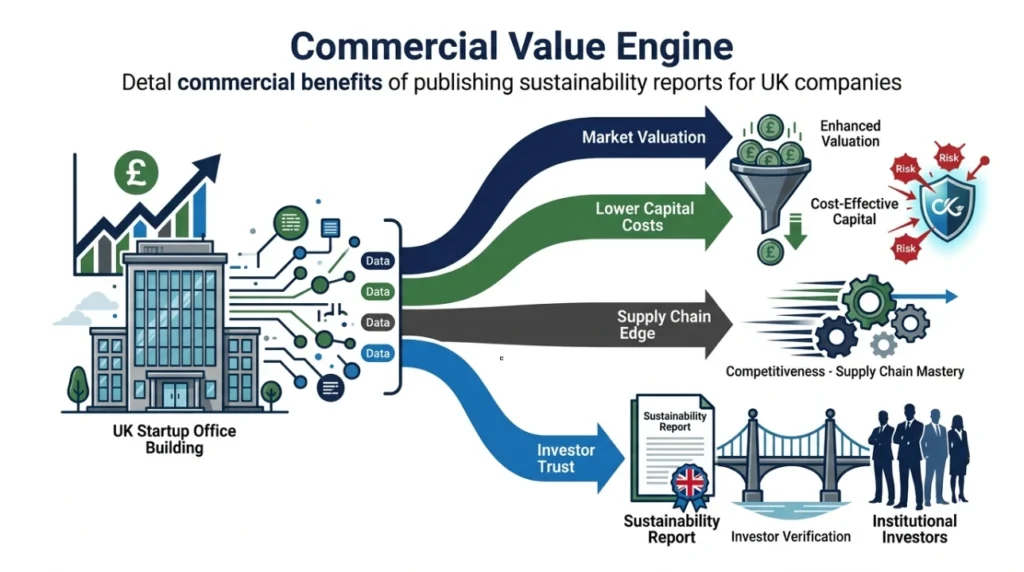
Publishing sustainability reports on UK media increases corporate market valuation, lowers capital acquisition costs, protects brand reputation, and improves supply chain competitiveness. Verifiable public disclosures demonstrate long-term commercial viability to institutional investors, enterprise procurement boards, and commercial partners.
Enhanced Investor Relations and Access to Capital
Publicly distributed sustainability reports attract ESG-focused capital allocations. Institutional investors managing funds in the UK prioritize companies with verified environmental metrics. Media coverage of corporate sustainability milestones increases visibility across institutional investment networks. Companies with top-tier ESG performance ratings benefit from reduced borrowing costs, favorable credit terms, and increased equity investment from green asset managers.
Competitive Advantage in Enterprise Procurement
UK enterprise buyers and public sector organizations require suppliers to demonstrate clear carbon reduction plans during commercial procurement processes. Under UK Public Procurement Note 06/21, major government contracts require bidding organizations to publish carbon reduction plans covering Scope 1, 2, and 3 emissions. Companies that publish verified sustainability reports across industry media channels streamline procurement vetting procedures, outperforming competitors that lack verified disclosures.
Stakeholder Trust and Talent Retention
Public media coverage of sustainable operations builds institutional brand equity. Transparent disclosures reduce regulatory scrutiny and build consumer goodwill. Furthermore, top-tier professional talent in the UK favors employers with clear environmental metrics. Published sustainability achievements serve as a recruiting asset, lowering talent acquisition costs and improving employee retention across technical and executive roles.
What are the primary use cases for UK sustainability report media campaigns?
Primary use cases for UK sustainability report media campaigns include corporate annual disclosures, crisis management recovery, major clean technology investments, and merger or acquisition compliance verification. Strategic media campaigns align corporate reporting milestones with broader business communication objectives.
Annual Corporate Disclosures
Public enterprise entities run annual media campaigns to coincide with the release of their yearly financial and non-financial reporting packages. These scheduled campaigns inform shareholders and corporate stakeholders about annual progress toward long-term net-zero commitments. The media push ensures consistent messaging across financial news platforms and trade publications.
Crisis Management and Environmental Reputation Recovery
Companies recovering from operational accidents, environmental regulatory penalties, or supply chain labor issues publish verified sustainability reports as part of structured corporate rehabilitation efforts. Publishing audited progress metrics across national media channels demonstrates systemic operational change to regulatory authorities, shareholders, and the general public.
Capital Financing and Green Bond Issuance
Organizations launching green bonds, sustainability-linked loans, or major clean infrastructure projects publish targeted sustainability reports to justify capital requests. Media campaigns highlight specific project outcomes, such as energy storage installations, fleet electrification milestones, or sustainable facility construction. Direct coverage across financial news networks attracts institutional underwriters and ensures full subscription of corporate green debt instruments.
Digital Consumption Trends & Audience Trust Explained This video explains the UK news media environment, audience trust dynamics, and how strategic intelligence services support institutional publishers and brands distributing technical corporate reports.