

Blocked by default means journalists automatically filter or reject incoming outreach from unknown senders unless the sender passes predefined verification or trust criteria. This practice enforces source vetting before engagement.
Blocked-by-default is a policy-setting in email systems, social platforms, and newsroom tools. It routes messages from unknown domains or unverified accounts into quarantine or auto-deletes them. Newsrooms implement this to reduce spam, limit misinformation risk, and protect reporters’ inboxes. Verification factors include prior contact history, sender domain reputation, authenticated press lists, and third-party authentication tokens.
How do newsrooms implement blocking rules?
Newsrooms configure mail servers, social account settings, and newsroom management tools with rule sets. Rules include domain allowlists, DKIM/SPF/DMARC checks, and sender reputation thresholds. Systems integrate spam filters and content classifiers that flag mass distributions or repetitive subject lines. Editorial operations teams maintain allowlists for trusted agencies and regular contacts. Some outlets require senders to register on a newsroom portal and pass identity checks before messages reach reporters.
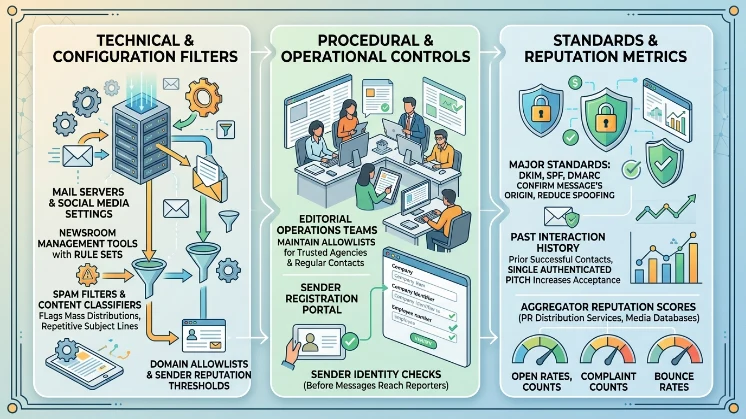
Major standards are technical and procedural. DKIM, SPF, and DMARC confirm a message’s origin and reduce spoofing. Sender registration requires a working reply address, company identifiers, and an employee contact number. Past interaction history records prior successful contacts; a single authenticated past pitch increases acceptance probability. Aggregator reputation scores come from PR distribution services and media databases that quantify sender behavior (open rates, complaint counts, bounce rates).
Why did UK outlets adopt blocking by default in 2026?
Outlets adopted blocking by default to reduce volume, lower security risk, and limit misinformation exposure while preserving journalists working time.
Rising pitch volume, phishing campaigns, and coordinated misinformation increased operational costs for newsrooms. Blocking reduces triage workload and limits time spent on low-value outreach. Regulatory attention to digital safety and defined newsroom risk policies also pushed adoption. The shift accelerated after measurable incidents where unauthenticated messages led to data exposure or false reporting.
What categories of senders are affected most?
Affected senders include first-time PRs, small businesses without authenticated domains, and automated mass-mailing systems.
First-time PR contacts from personal email providers often land in quarantine. Small companies that use generic emailing platforms without proper authentication see higher block rates. Mass-distribution tools that send identical messages to many inboxes trigger classifiers and get blocked. In contrast, recurring trusted contacts and registered newsroom partners pass filters more often.
How does blocking change the press distribution process?
Blocking short-circuits mass emailing; it requires authentication, personalised contact, or newsroom registration before a pitch reaches a journalist.
Senders must authenticate domains and tailor pitches. Distribution processes now emphasise targeted outreach instead of high-volume blasts. Press lists need hygiene updates to reflect allowance status. Communicators use verification steps—portal registrations, follow-up confirmations, and single-threaded conversations to move messages from quarantine to inbox.
What technical steps must communicators follow to avoid blocks?
Communicators must implement DKIM/SPF/DMARC, host a working domain, keep low send volumes, and secure a newsroom registration or prior permission.
Domain authentication is essential. DKIM signs messages cryptographically; SPF lists permitted sending IPs; DMARC publishes policies for handling failures. Senders should send lower, targeted volumes with varied subject lines. Maintain a valid reply address, add contact phone numbers, and provide transcriptable company identifiers. If available, complete newsroom registration forms and provide references from previous published work.
What are measurable effects on journalist workflow?
Blocking reduces unsolicited message volume by measurable percentages, increases time spent on verified leads, and changes story-sourcing patterns toward trusted networks.
Newsrooms report inbox volume reductions between 40% and 70% after strict blocking. Journalists spend less time deleting spam and more time verifying complex leads. Sourcing shifts toward contacts within verified networks, expert databases, and social signals from known accounts. Time-to-response for verified senders shortens because messages bypass quarantine and go straight to reporters’ prioritised folders.
How does blocking affect PR measurement and reporting?
Blocking reduces raw open rates from mass distributions, requiring reliance on targeted engagement metrics and earned coverage tracking.
Open-rate and click-through benchmarks from mass sends become unreliable because many recipients never receive the message. PR measurement shifts to coverage outcomes, journalist replies, and tracked earned media. Senders must track registered-inbox deliveries and monitor newsroom portals. Attribution relies on time-stamped registered submissions and clipping services rather than open-rate dashboards.
What legal or regulatory factors influence blocking policies?
Regulatory factors include data-protection rules, anti-harassment policies, and newsroom safety standards that encourage pre-screening of inbound communications.
Data-protection laws require safe handling of personal data and limit unsolicited processing. Anti-harassment and workplace-safety obligations require newsrooms to screen and limit abusive communications. Platforms’ terms of service and government guidance on information integrity also influence policies. These frameworks justify automated pre-filtering that enforces minimum verification for external contacts.
What are the benefits and risks for public interest journalism?
Benefits include reduced misinformation exposure and more time for investigative work; risks include reduced access for new sources and potential bias toward established networks.
Reduced exposure to manipulated or malicious content protects editorial integrity. Journalists can allocate time to verification and reporting. However, filtering risks excluding new voices with no prior relationship to outlets. This exclusion may narrow the diversity of sources and lower the chance of uncovering novel stories. Newsrooms need processes to allow vetted new-source onboarding to mitigate that risk.
Explore More Expert Insights:
Why 73% of UK Press Releases Never Get Picked Up
How to Turn Your Industry Reports into High-Authority Media Coverage
How can independent sources and SMEs reach journalists under new rules?
Independent sources must use authenticated domains, supply verifiable identity details, and register where required; targeted, evidence-backed pitches improve acceptance.
Recommendations for independent sources: establish a domain with DKIM/SPF/DMARC in place; include full contact details and organisational identifiers in messages; reference prior publications or verifiable credentials; use newsroom registration portals or secure aggregator services that maintain reputation scores; limit distribution size and personalise pitches with specific reporter names and relevant context.
How will blocking practices evolve after 2026?
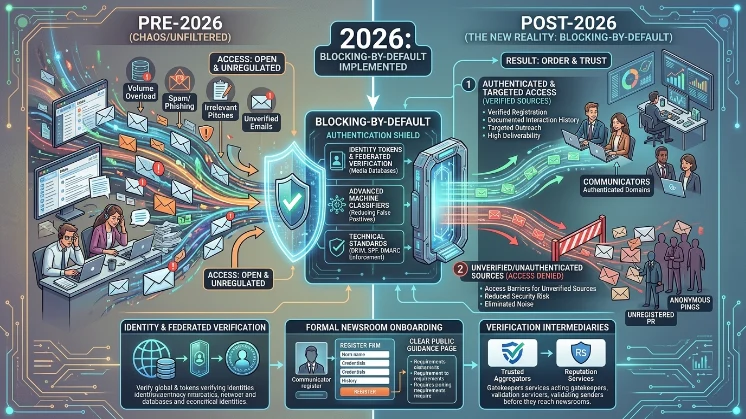
Blocking will further integrate identity verification, machine-classification improvements, and formal newsroom onboarding systems.
Expect deeper integration of identity tokens and federated verification across media databases. Machine classifiers will refine criteria for trust while reducing false positives. Newsrooms will adopt standardised onboarding for new contacts and create clear public guidance pages listing submission requirements. Aggregators and verification services will gain importance as intermediaries verifying sender reputations.
Blocking by default in UK newsrooms in 2026 redefines how communicators reach journalists. The approach prioritises authenticated identity, targeted outreach, and verified registration. It reduces inbox volume and security risk while creating access barriers for unverified sources. Technical standards such as DKIM, SPF, and DMARC, plus newsroom registration and documented interaction history, determine deliverability. Independent sources must adopt authenticated domains and verifiable contact practices to regain access.
For more detailed operational guidance and checklists on press distribution processes, readers can follow deeper resources such as the following:
Press Release Distribution Checklist: 11 Steps UK PRs Miss
Monitor trends in managed PR distribution at:
Why 9 in 10 UK SMEs Switch to Managed PR Distribution in Year 2



