Audience search intent is the specific purpose a UK user has when entering a query; aligning sponsored content with that intent increases relevance and conversion by matching content themes to informational, commercial, transactional, or navigational needs.
Search intent defines user expectations at the moment of search. Informational queries request facts, how-tos, or explanations. Commercial queries compare products or services. Transactional queries indicate readiness to purchase or sign up. Navigational queries seek a specific site or page. For UK audiences in 2026, intent classification remains primary ranking signal alongside content quality and authority. Accurate intent mapping reduces bounce rates, increases time on page, and improves sponsored content ROI. Define intent by analysing query language, SERP features, and user behaviour metrics. Use search volume, click-through rates, and query modifiers such as “best”, “compare”, “how to”, or brand names to tag intent precisely.
What process aligns sponsored content themes with identified search intent?
Align themes by mapping content formats and message angles to each intent bucket, then test performance with A/B experiments and iterative optimisation.
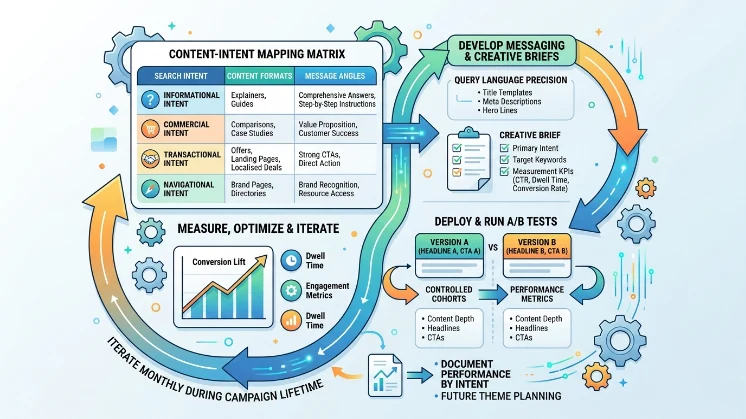
First, create a content-intent matrix. Assign formats: explainers and guides for informational intent; comparison pieces and case studies for commercial intent; offers, landing pages, and localised deals for transactional intent; brand pages and directories for navigational intent. Next, develop title templates, meta descriptions, and hero lines that reflect query language precisely. Then, build creative briefs that specify primary intent, target keywords, and measurement KPIs such as CTR, dwell time, and conversion rate. Deploy sponsored content in controlled cohorts and run A/B tests varying headlines, CTAs, and content depth. Measure against control pages and adjust based on conversion lift and engagement metrics. Iterate monthly during campaign lifetime. Document performance by intent to refine future theme planning.
What content components best satisfy informational search intent in the UK?
Informational intent content requires clear definitions, step-by-step explanations, verified facts, and UK-specific context such as regulation, pricing, and timelines.
Define the core topic in the first paragraph, using the exact search phrase. Provide concise explanations with numbered or chronological processes when appropriate. Include UK-specific citations such as GOV.UK guidance, NHS pages, or the Financial Conduct Authority for claims about rules or compliance. Present timelines, eligibility criteria, and fiscal figures in GBP where relevant. Use internal links to related long-form resources and include structured data where allowed to enable featured snippets. Example: a sponsored explainer for a health vertical should state regulatory approval dates, NHS referral pathways, and typical wait times in weeks. Keep sections focused and label each section with a clear subheading that mirrors common query phrasing.
What elements convert commercial and transactional intent within sponsored themes?
Commercial and transactional themes convert with comparative evidence, transparent pricing, clear benefits, trust signals, and direct action pathways tailored to UK user expectations.
Provide feature-by-feature comparisons versus alternatives, including price ranges in GBP and service level differences. Display trust indicators such as accreditation, customer reviews with UK datapoints, and outcome statistics. Present purchase paths with explicit steps and expected timelines for fulfilment within the UK (for example, delivery windows in working days). Use scarcity and availability data only when accurate, such as stock counts or next-appointment slots. Ensure privacy and cookie disclosure aligns with UK data-protection norms; link to clear terms and opt-outs. For sponsored content promoting offers, show exact fees, refunds, and cancellation policies. Readers proceed to conversion when information reduces perceived risk and clarifies cost and process.
How should creative tone and messaging vary across intent-driven themes?
Tone must be factual and directive for transactional content, comparative and evidence-based for commercial content, and explanatory and neutral for informational content.
Transactional content uses short directives and clear microcopy for forms and CTAs. Commercial content emphasises side-by-side evidence, use cases, and quantified benefits. Informational content explains concepts, provides resources, and avoids overt persuasion. For UK readers, use precise language and remove ambiguity in regulatory or tax references. Avoid promotional phrasing in informational placements. In sponsored placements, include clearly labelled disclosures that match UK advertising rules and platform policies.
How do performance metrics map to each intent and how should they guide optimisation?
Map metrics to primary intent: informational content optimises for time on page and SERP clicks; commercial content optimises for comparison interactions and micro-conversions; transactional content optimises for conversion rate and revenue per visitor.
For informational pages, track organic impressions, CTR, and average time on page. For commercial pages, measure engagement with comparison tables, click-throughs to product pages, and lead submissions. For transactional pages, use conversion rate, average order value, and post-conversion return metrics. Use funnel metrics to diagnose drop-off points and run targeted experiments: refine headlines for low CTR, improve body content for low dwell time, and streamline forms when conversion rates drop. Segment metrics by device, UK region, and referral source to identify localisation opportunities and channel-specific issues.
What are legal and disclosure requirements for sponsored content in the UK in 2026?
Sponsored content requires clear, prominent disclosure, truthful claims, and compliance with ASA and CMA rules; include identity of sponsor, material connection, and accurate pricing.
Label content as “Sponsored” or “Paid-for” near the headline. Disclose the sponsor relationship and any incentives. Avoid misleading claims about outcomes, pricing, or endorsements. Ensure financial claims reference FCA guidance when applicable. For healthcare claims, reference MHRA approvals or NHS guidance for clinical accuracy. Maintain accessible privacy notices and cookie consent that reflect UK data-protection rules. Preserve evidence for claims and store documentation for 12 months for potential regulatory review.
Explore More Expert Insights:
Headlines for Sponsored Articles: 9 Formulas That Drive UK News Reader Clicks
Sponsored Content Calendar Planning: A 12-Month UK Framework for B2B Brands
What tools and datasets help refine intent alignment for UK audiences in 2026?
Use UK-specific keyword tools, SERP feature crawlers, first-party analytics, and regulatory databases such as GOV.UK and FCA registers to refine intent mapping and content accuracy.
Collect query data from Search Console and site search logs. Use keyword planners filtered to the UK and SERP-scraping tools that identify featured snippets and shopping results. Combine third-party audience panels for demographic insights and transaction data for price sensitivity. Use regulatory databases for fact-checking and citation. Implement A/B testing platforms and tag events to capture micro-conversions. Store results in a central dashboard to track intent performance across campaigns and verticals.
What use cases show clear ROI when sponsored themes match UK search intent?
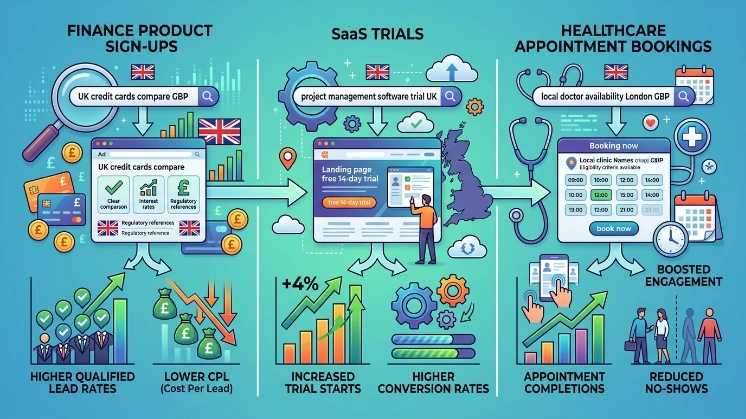
When themes match intent, sponsored content shows higher engagement, lower acquisition costs, and higher conversion rates in use cases such as financial product sign-ups, SaaS trials, and healthcare appointment bookings.
Financial service sponsored content aligned to commercial intent yields higher qualified lead rates and lower CPL when comparisons and pricing are clear. Tech SaaS campaigns that map landing copy to trial-related transactional queries increase trial starts by measurable percentages. Healthcare booking campaigns that provide local clinic availability and eligibility criteria increase appointment completions and reduce no-shows. Each use case benefits from UK localisation: region-specific options, regulatory references, and price transparency in GBP produce measurable lifts in outcome metrics.
Explore the Advanced Guide:
The 39% Quality Problem: Why Most UK Sponsored Content Fails to Convert in 2026
Aligning sponsored content themes with UK search intent requires precise intent classification, format mapping, UK-specific facts and citations, and iterative optimisation based on intent-aligned KPIs. Use regulatory sources and first-party analytics for accuracy. Implement controlled tests and document performance so future campaigns allocate spend to intents that deliver the best conversions.
Discover the Full Information:
Sponsored Content for UK Financial, Tech and Healthcare Brands: Vertical Benchmarks