
Banner campaigns for increasing consultation interest in healthcare are structured digital display systems that present targeted medical information across websites and apps to build user awareness, strengthen condition understanding, and encourage deeper evaluation of healthcare options before consultation decisions form.
Banner campaigns function as visual communication systems inside digital advertising networks. They deliver healthcare-related messages in predefined placements such as web headers, side panels, and in-content spaces. The primary focus at this stage is not final booking but interest development in consultation services.
In the context of consultation interest, banner campaigns shift from general awareness to structured informational depth. Users are exposed to content that explains symptoms, care categories, or diagnostic pathways. This creates a transition from passive awareness to active consideration.
The system operates through impression delivery, where banners appear during routine browsing sessions. Each impression contributes to repeated exposure, which strengthens familiarity with healthcare topics and builds cognitive readiness for consultation consideration.
How do banner campaigns increase consultation interest in digital healthcare environments?
Banner campaigns increase consultation interest by delivering repeated, structured healthcare messages across digital platforms, guiding users from general health awareness toward deeper evaluation of symptoms, conditions, and available consultation pathways through consistent visual exposure and informational reinforcement.
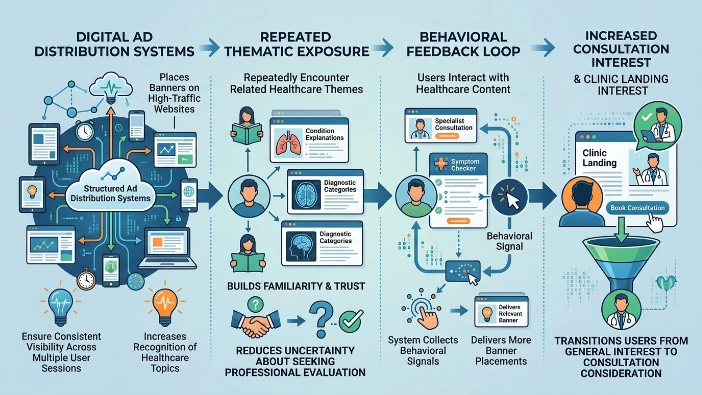
Digital healthcare environments rely on structured ad distribution systems that place banners on high-traffic websites. These placements ensure consistent visibility across multiple user sessions. Each exposure increases recognition of healthcare topics.
Consultation interest develops when users repeatedly encounter related healthcare themes such as condition explanations or diagnostic categories. This repetition builds familiarity and reduces uncertainty about seeking professional evaluation.
Banner systems use behavioral signals to refine exposure. Users who interact with healthcare content receive more relevant banner placements. This increases the likelihood of transitioning from general interest to consultation consideration.
The process remains informational. The goal is to support understanding of healthcare pathways rather than immediate decision-making.
What components influence consultation interest in banner campaigns?
Consultation interest in banner campaigns is influenced by message clarity, visual structure, targeting precision, informational depth, and frequency of exposure, all of which work together to shape how users interpret healthcare topics and develop evaluation readiness for potential consultation actions.
Message clarity ensures that healthcare information is presented in direct language without complexity. Users process structured content more efficiently when terminology remains simple and consistent.
Visual structure controls how attention moves within the banner. Headlines introduce the healthcare topic, while supporting text provides brief contextual details. This improves comprehension speed.
Targeting precision ensures that banners appear in relevant browsing environments. For example, users exploring general health content receive related consultation-focused informational banners.
Frequency of exposure reinforces memory formation. Repeated impressions across multiple websites strengthen recognition of healthcare topics and build gradual consultation interest.
Why do banner campaigns support consultation interest development in healthcare?
Banner campaigns support consultation interest development by providing structured, repeated exposure to healthcare information, which helps users understand conditions, recognize symptoms, and evaluate the relevance of professional consultation within a gradual informational decision-making process.
Healthcare decision-making begins with information accumulation. Banner campaigns contribute by introducing structured knowledge about medical topics across digital environments. This supports early evaluation stages.
Users often require multiple exposures before developing consultation intent. Banner systems deliver repeated impressions across different platforms, ensuring that healthcare topics remain visible during routine browsing activity.
The format supports low-friction learning. Users do not need to actively search for information; instead, structured content appears within their existing browsing flow. This reduces effort required to build understanding.
Over time, repeated exposure creates informational familiarity. This familiarity increases the likelihood that users will consider professional consultation when related symptoms or conditions become relevant.
How Healthcare Providers Promote Services Using Banner Campaigns
How does targeting improve consultation interest in banner campaigns?
Targeting improves consultation interest by aligning banner delivery with user behavior signals, content categories, and browsing patterns, ensuring healthcare messages reach audiences already engaging with relevant health information and increasing the probability of consultation evaluation.
Targeting systems analyze browsing behavior to identify users who interact with health-related content. These signals indicate informational relevance and readiness for deeper healthcare engagement.
Contextual targeting places banners within medically relevant digital environments. Users reading health articles or condition explanations are more likely to receive consultation-focused informational banners.
Behavioral targeting refines exposure based on previous interactions. Users who engage with healthcare-related pages receive more structured consultation-oriented messages across multiple sessions.
This alignment increases efficiency of message delivery. Instead of broad exposure, healthcare information reaches audiences already positioned within early evaluation stages of decision-making.
What metrics measure consultation interest in banner campaigns?
Consultation interest in banner campaigns is measured using engagement rate, click-through rate, dwell time on informational pages, impression frequency, and interaction pathways that indicate progression from exposure to deeper healthcare content exploration.
Engagement rate tracks how users interact with banners beyond initial viewing. Higher engagement indicates stronger informational relevance.
Click-through rate measures the proportion of users who move from banner exposure to detailed healthcare content pages. This reflects early consultation interest development.
Dwell time on linked pages indicates how long users stay within healthcare information environments. Longer durations reflect deeper evaluation of medical topics.
Impression frequency tracks repeated exposure levels. Higher frequency increases recognition and supports gradual transition toward consultation consideration.
Together, these metrics provide structured insight into how users move through informational stages before consultation intent forms.
Explore More Expert Insights:
How Clinics Guide Patients Using Mid-Funnel Healthcare Advertising
How Medical Centers Build Awareness Using Condition-Based Banner Ads
How do users transition from awareness to consultation interest through banners?
Users transition from awareness to consultation interest through repeated exposure to structured healthcare messages in banner campaigns, which gradually increases understanding of symptoms, conditions, and healthcare pathways, leading to evaluation readiness for professional consultation consideration.
The transition begins with awareness exposure, where users first encounter general healthcare topics. These early impressions establish baseline recognition.
Repeated exposure introduces more detailed informational layers. Users begin to associate symptoms or conditions with structured healthcare explanations presented through banners.
As familiarity increases, users shift from passive awareness to active evaluation. They start considering whether their own health context aligns with presented information.
This stage reflects consultation interest formation. Users are not yet making appointments but are actively assessing relevance of professional healthcare guidance.
What role do banner campaigns play in structured healthcare decision journeys?
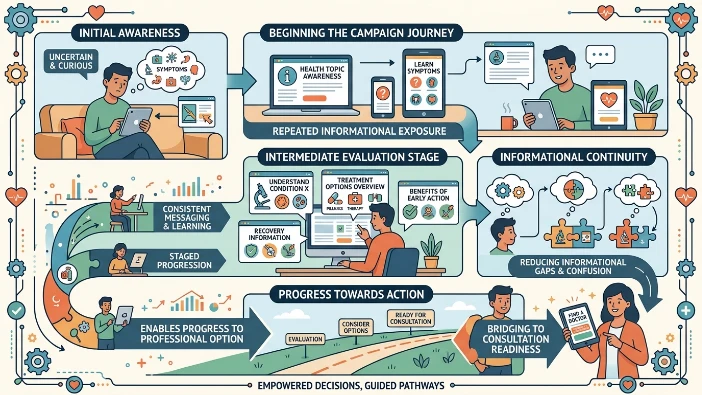
Banner campaigns play a structured role in healthcare decision journeys by bridging initial awareness and consultation readiness through repeated informational exposure, supporting gradual understanding of medical conditions and enabling users to progress naturally toward evaluating professional healthcare options.
Healthcare decision journeys follow a staged progression. Banner campaigns operate at the intermediate stage where users evaluate information but have not yet taken action.
These campaigns maintain informational continuity across multiple digital touchpoints. Users receive consistent messaging about healthcare topics across different platforms.
This continuity reduces informational gaps. Users are less likely to experience confusion about symptoms or healthcare pathways when exposed to structured content repeatedly.
Explore:
How Healthcare Providers Increase Consultation Bookings Using Final Stage Banner Campaigns
The result is a progressive shift in understanding. Users move from general awareness toward structured consultation interest through repeated, targeted informational exposure within banner ecosystems.