
Medical centers use banner ads to increase visibility among online audiences searching for healthcare information. These advertisements appear across websites, mobile applications, and digital platforms. Banner advertising supports patient discovery, local healthcare awareness, and early-stage lead generation across the United Kingdom.
What are banner ads in healthcare marketing?
Banner ads are digital display advertisements placed on websites, apps, and online platforms to increase healthcare visibility, attract attention, and guide users toward medical information. Medical centers use banner ads to promote healthcare awareness, highlight services, and generate patient interest through visual communication online.
Banner ads are image-based or animated advertisements displayed in predefined digital spaces. In healthcare marketing, banner ads help medical centers appear in front of audiences researching symptoms, treatments, preventive care, and local healthcare providers.
Healthcare banner advertising in the United Kingdom commonly appears on news websites, health blogs, weather applications, and mobile platforms. These ads often contain healthcare-focused messaging, location relevance, service information, and educational themes.
Medical centers use several banner formats. Static banners display one image and one message. Animated banners rotate multiple frames. Responsive banners automatically adjust to desktop, tablet, and mobile screen sizes.
Banner ads differ from search ads because they focus on visibility and awareness instead of direct keyword targeting. Search ads appear when users enter specific queries into search engines. Banner ads appear while users browse digital content.
Readers exploring condition-focused awareness strategies can also read:
How Medical Centers Build Awareness Using Condition-Based Banner Ads
Readers researching consultation-focused retargeting approaches can explore:
How Medical Centers Turn Condition Awareness Into Patient Consultations Using Banner Retargeting
How do medical centers generate leads through banner advertising?
Medical centers generate leads through banner advertising by increasing healthcare visibility, educating audiences, attracting website visits, and encouraging information requests. Banner campaigns introduce healthcare services to new audiences and create early patient engagement before appointment consideration begins through digital exposure and repeated visibility.
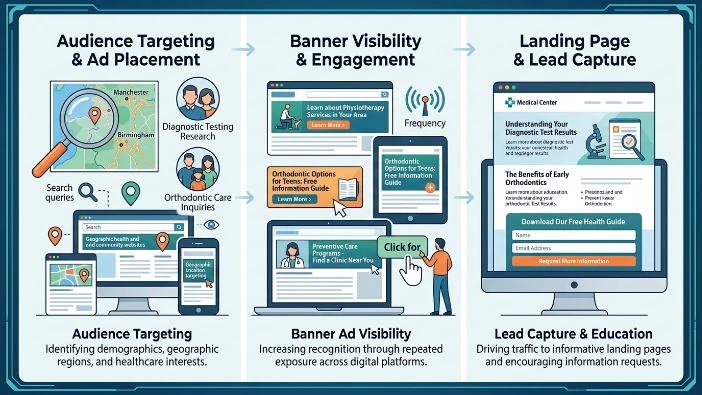
Lead generation begins with audience targeting. Medical centers identify geographic regions, healthcare interests, and patient demographics. A private clinic in Manchester, for example, targets adults aged 30 to 60 searching for diagnostic testing information. A dental center in Birmingham targets parents researching orthodontic care for teenagers.
Healthcare lead generation relies heavily on visibility frequency. Repeated exposure increases recognition. A patient who sees a banner ad about physiotherapy services several times during one week becomes more familiar with that medical center.
Medical centers also use contextual targeting. Banner ads appear beside relevant content categories such as nutrition articles, fitness websites, mental health blogs, or pregnancy resources. This increases message relevance.
Local targeting improves healthcare lead quality. A medical center in London focuses banner visibility within nearby boroughs. A clinic in Glasgow targets users located within a defined travel radius.
Healthcare advertising platforms also measure impressions, click-through rates, website visits, and engagement duration. These metrics help medical centers understand which banner messages attract audience attention most effectively.
Why do banner ads support healthcare awareness campaigns?
Banner ads support healthcare awareness campaigns because they provide broad digital visibility across multiple online environments. Medical centers use them to educate audiences, increase recognition, reinforce healthcare messaging, and maintain continuous exposure among users researching medical topics across websites and mobile platforms daily.
Healthcare awareness campaigns depend on repeated audience exposure. Banner ads support this process through continuous placement across high-traffic websites and applications.
Awareness campaigns focus on recognition before conversion. Patients often research healthcare information gradually over several weeks. Banner ads help maintain visibility during this research period.
Medical centers use awareness campaigns to introduce healthcare categories such as cardiology, dermatology, physiotherapy, fertility services, pediatric care, and preventive screening.
Seasonal healthcare trends also influence banner advertising activity. Flu vaccination awareness increases during autumn. Allergy-related campaigns increase during spring. Sports injury campaigns rise during football and marathon seasons.
Visual consistency strengthens awareness outcomes. Medical centers often use repeated colors, medical imagery, typography, and healthcare terminology across banner campaigns. Consistent visuals improve memory retention.
Banner advertising also supports public health education. Medical centers use informational messaging about blood pressure monitoring, diabetes screening, smoking cessation, and preventive healthcare examinations.
Healthcare awareness advertising works effectively because it reaches audiences before urgent treatment decisions occur. This allows medical centers to build familiarity early in the patient journey.
What elements make healthcare banner ads effective?
Effective healthcare banner ads contain clear messaging, readable design, healthcare relevance, geographic targeting, and strong visual structure. Medical centers improve banner performance by simplifying communication, matching audience intent, and maintaining trust-focused healthcare presentation standards across desktop and mobile advertising environments consistently.
Headline clarity is one of the most important banner elements. Healthcare audiences scan advertisements quickly. Short healthcare-focused phrases improve readability. Examples include “Private GP Appointments,” “Children’s Vaccination Information,” and “Sports Injury Assessments.”
Readable typography improves engagement. Large font sizes and strong contrast increase visibility across mobile devices and desktop screens.
Healthcare imagery also affects banner performance. Medical centers frequently use images showing healthcare professionals, consultation settings, diagnostic equipment, or wellness-focused visuals. Generic stock imagery often produces lower engagement compared with localized or service-specific visuals.
Mobile responsiveness remains essential in the United Kingdom because large volumes of healthcare browsing occur on smartphones. Responsive banners automatically resize without reducing readability.
Geographic relevance improves performance. A healthcare banner mentioning “Manchester Same-Day GP Access” attracts more local attention than a broad national message.
Landing page alignment is equally important. Banner messaging and landing page content must remain consistent. If a banner discusses physiotherapy services, the landing page must immediately explain physiotherapy information instead of redirecting users to unrelated medical categories.
Trust indicators strengthen healthcare credibility. Medical centers often highlight clinical accreditation, years of operation, specialist qualifications, or regulated healthcare standards within supporting landing page content.
How does audience targeting improve medical banner advertising?
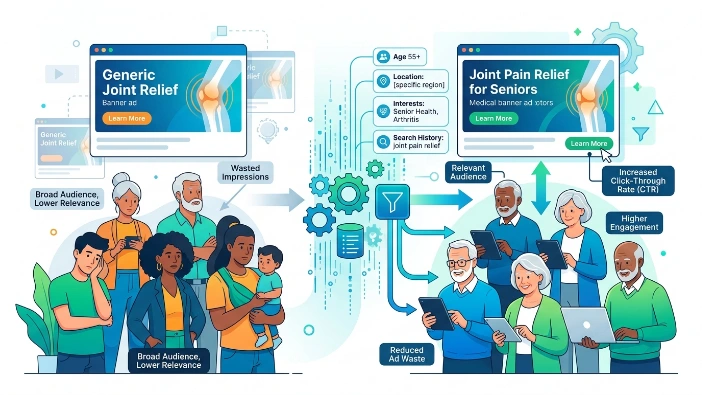
Audience targeting improves medical banner advertising by displaying healthcare messages to users with relevant interests, demographics, behaviors, and geographic locations. Medical centers increase engagement quality when advertisements match healthcare research patterns, medical interests, and local patient intent within digital advertising systems online.
Healthcare advertising platforms categorize audiences according to browsing behavior, device usage, age groups, and online interests. Medical centers use this information to improve advertisement relevance.
A fertility clinic targets adults researching pregnancy planning resources. A dermatology clinic targets users visiting skincare and eczema-related websites. An orthopedic center targets sports injury audiences.
Geographic targeting is especially important in healthcare advertising because most patients prefer nearby treatment locations. Medical centers in Leeds focus advertising within surrounding communities rather than nationwide exposure.
Behavioral targeting also supports healthcare relevance. Users researching preventive care articles, fitness content, or health insurance information often receive related healthcare banner advertisements.
Audience segmentation allows different healthcare messages for different groups. Pediatric clinics target parents. Geriatric healthcare campaigns target older adults. Women’s health centers focus campaigns around maternity and preventive screening topics.
Frequency management is another important targeting factor. Excessive ad repetition reduces engagement quality. Controlled exposure improves recognition while preventing audience fatigue.
Healthcare privacy standards remain important throughout audience targeting processes. Medical advertising systems in the United Kingdom follow regulatory guidelines concerning data handling, consent management, and advertising transparency.
Explore More Expert Insights:
How Healthcare Brands Improve Awareness Using Display Advertising
How Hospitals Attract Patients Using Local Banner Campaigns
What types of healthcare services use banner ads most frequently?
Healthcare services frequently using banner ads include private clinics, diagnostic centers, dental practices, physiotherapy providers, mental health services, fertility clinics, and preventive care programs. These medical sectors rely on awareness-focused visibility because patients often research healthcare information online before contacting providers directly.
Private general practice clinics commonly use banner advertising to increase awareness of appointment availability, same-day consultations, and preventive healthcare programs.
Dental practices promote orthodontics, cosmetic dentistry, routine examinations, and emergency dental care through localized display campaigns.
Diagnostic imaging centers use banner ads to increase awareness about MRI scans, CT scans, ultrasound services, and health screening packages.
Mental health providers often focus on informational campaigns surrounding anxiety support, stress management, counseling access, and psychological assessments.
Physiotherapy centers advertise sports rehabilitation, posture correction, mobility improvement, and injury recovery services through condition-relevant placements.
Fertility clinics frequently use educational awareness campaigns related to reproductive health, IVF consultation information, and fertility assessments.
Preventive healthcare campaigns also rely heavily on banner advertising. Medical centers use display campaigns to increase awareness surrounding blood pressure checks, diabetes screening, cancer screening, and vaccination programs.
These healthcare categories depend on educational discovery. Patients usually begin with online research before considering consultations or appointments.
How do banner ads fit into the healthcare patient journey?
Banner ads fit into the healthcare patient journey by supporting early-stage awareness, repeated healthcare exposure, and ongoing patient education. Medical centers use banner advertising to introduce healthcare information before users actively compare providers, request consultations, or evaluate treatment options online.
The healthcare patient journey often begins with information gathering. Individuals search symptoms, treatments, preventive care advice, or local healthcare availability before making decisions.
Banner ads operate primarily during the awareness stage. Their purpose is visibility rather than immediate conversion pressure.
During the research phase, users encounter healthcare messaging repeatedly across multiple websites and applications. These repeated interactions strengthen medical center familiarity.
As patients continue researching healthcare topics, awareness campaigns gradually transition toward more specific educational messaging. This creates a progression from broad visibility to condition-focused relevance.
Healthcare banner advertising also supports cross-device engagement. A user who first sees a healthcare banner on mobile later revisits the medical center website through desktop browsing.