
Display ads are visual digital advertisements that appear on websites, mobile applications, video platforms, and online learning pages. Coaching centers in the United Kingdom use display ads to increase course awareness, improve student reach, and attract exam-focused learners through targeted educational messaging.
Display ads contain images, headlines, course-related messaging, and enrollment information. These advertisements appear across digital platforms visited by students, parents, and adult learners. Coaching centers use them to introduce exam preparation programs, subject tutoring, and academic support services to relevant audiences.
In the United Kingdom, coaching centers promote preparation programs for GCSE exams, A-Levels, IELTS, SAT, 11 Plus, university entrance tests, and professional certification exams. Display advertising supports awareness at the early research stage before students compare providers or register for classes.
Display ads operate through audience targeting systems. These systems identify users based on browsing behavior, search activity, educational interests, age groups, and location signals. A student reading about GCSE mathematics revision, for example, receives advertisements related to mathematics coaching programs.
Educational institutions use multiple display formats. Static banners use single images and concise messaging. Animated banners include motion graphics. Responsive display ads automatically adjust layouts for desktop and mobile devices.
For readers exploring middle-stage engagement strategies, explains:
How coaching centers build exam preparation interest using banner ads.
For enrollment-focused conversion systems, explains:
How coaching centers turn student interest into paid registrations.
How do coaching centers use display ads to attract students?
Coaching centers use display ads to present exam preparation information to targeted student audiences across digital platforms. These campaigns increase visibility, strengthen academic awareness, and connect learners with relevant preparation programs based on subjects, exams, age groups, and learning intent signals.
Student acquisition begins with audience targeting. Coaching centers define specific learner categories before launching campaigns. Examples include Year 11 GCSE students, A-Level science students, IELTS applicants, and university entrance exam candidates.
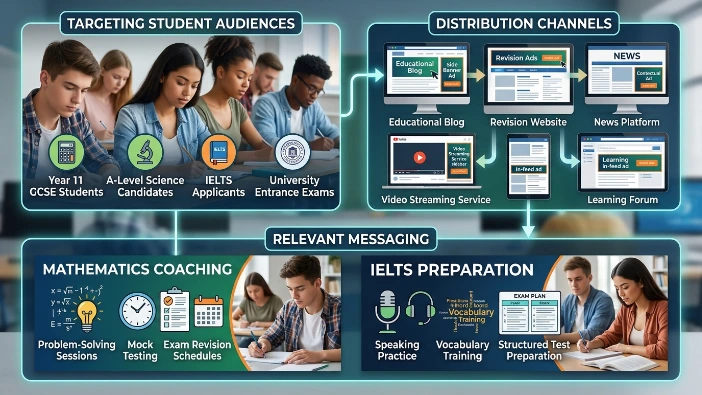
Display advertising platforms distribute advertisements across websites frequently visited by those groups. Educational blogs, revision websites, news platforms, video streaming services, and learning forums become advertising placements.
Ad messaging focuses on educational relevance. A mathematics coaching advertisement highlights problem-solving sessions, mock testing, or exam revision schedules. An IELTS preparation campaign highlights speaking practice, vocabulary training, and structured test preparation.
Geographic targeting supports local student acquisition. A coaching center operating in Manchester targets learners within nearby postal areas. London-based centers target borough-level audiences. Online tutoring providers expand campaigns nationally across the United Kingdom.
Mobile advertising plays a major role in student reach. Many learners access revision resources through smartphones. Responsive display ads ensure educational messaging appears correctly across mobile screens, tablets, and desktop devices.
Seasonal scheduling improves performance. Coaching centers increase campaign activity before examination periods, university admissions cycles, and academic term openings. GCSE preparation campaigns rise during spring revision periods, while IELTS campaigns increase during university application seasons.
Why do display ads improve coaching center admissions?
Display ads improve coaching center admissions because they increase repeated exposure to educational programs across multiple online platforms. Consistent visibility strengthens student familiarity, supports exam-related awareness, and keeps coaching services visible during course research and preparation decision stages.
Student enrollment decisions involve extended research periods. Learners compare subjects, schedules, fees, learning formats, and preparation quality before selecting a coaching program. Display ads maintain visibility throughout this process.
Repeated advertisement exposure increases recognition. A student researching A-Level chemistry preparation repeatedly encounters chemistry tutoring advertisements while browsing educational websites. This repetition reinforces program awareness.
Display advertising also supports parent engagement. Parents searching for tutoring support, exam revision programs, or academic improvement resources encounter coaching advertisements aligned with their child’s education level.
Visual communication improves educational clarity. Coaching centers use subject-specific graphics, examination references, and structured messaging to explain learning services quickly. A single banner can communicate course type, exam focus, and intake timing within seconds.
Audience segmentation improves relevance. Separate advertisements target separate student groups. GCSE English students see different messages from IELTS preparation students. Sixth-form learners receive different course information from primary-level learners preparing for 11 Plus examinations.
Display campaigns also support remarketing systems. Students who previously visited coaching center websites receive follow-up advertisements later while browsing other platforms. This process keeps educational programs visible after initial website visits.
What types of display ads do coaching centers use?
Coaching centers use static banners, responsive display ads, animated advertisements, remarketing ads, and mobile display campaigns. Each format supports different educational objectives including awareness building, student engagement, exam preparation visibility, and admission-focused communication across digital learning environments.
Static banner ads use simple visuals and direct educational messaging. These advertisements commonly include subject names, exam references, and intake information. A static GCSE science banner, for example, displays classroom visuals alongside course timing information.
Responsive display ads automatically adapt to screen size and placement requirements. These formats improve visibility across websites, mobile applications, tablets, and online learning portals.
Animated ads use movement to increase attention. Coaching centers use short transitions, rotating subject highlights, and changing examination messages to improve student engagement.
Remarketing advertisements reconnect with previous website visitors. A student who explored an IELTS preparation page later receives IELTS-related advertisements across other websites. This process increases return visits and strengthens course recall.
Video display advertisements appear on streaming platforms and educational video networks. These advertisements present classroom environments, revision sessions, or teacher-led instruction in visual format.
Mobile-first display campaigns prioritize smartphone users. Educational institutions optimize text size, layouts, and visuals for smaller screens because students frequently access revision material through mobile devices.
How does audience targeting work in coaching center display advertising?
Audience targeting identifies specific student groups based on demographics, academic interests, online behavior, and exam-related activity. Coaching centers use targeting systems to deliver relevant advertisements to learners actively researching educational support, revision material, or examination preparation resources.
Demographic targeting focuses on age groups and education levels. GCSE campaigns target secondary school students, while IELTS advertisements target international applicants and university-bound learners.
Interest-based targeting analyzes online behavior patterns. Students visiting mathematics revision websites, science forums, or exam preparation pages become relevant advertising audiences.
Keyword-based targeting aligns advertisements with educational searches. Learners searching for “A-Level tutoring,” “GCSE English revision,” or “IELTS speaking practice” enter relevant audience categories.
Geographic targeting improves local visibility. Physical coaching centers focus on nearby student populations. Online coaching providers expand targeting nationally across England, Scotland, Wales, and Northern Ireland.
Device targeting improves campaign optimization. Mobile users receive mobile-friendly advertisements, while desktop users encounter larger educational banners suitable for wider screens.
Behavioral remarketing reconnects previous website visitors. Students who explored course pages but left without registering continue seeing relevant advertisements during later browsing sessions.
Audience targeting also improves budget efficiency. Coaching centers reduce unnecessary advertising exposure by focusing only on learners connected to relevant examinations or academic subjects.
How do display ads support exam preparation awareness?
Display ads support exam preparation awareness by introducing students to revision schedules, tutoring programs, subject support systems, and academic preparation timelines. These campaigns increase educational visibility during important examination periods across digital learning and research environments.
Many students begin exam preparation research months before examination dates. Display advertising ensures coaching programs appear during this research phase.
Educational messaging focuses on preparation structure. Advertisements reference mock exams, revision classes, subject workshops, and timetable-based learning systems.
Seasonal awareness campaigns align with academic calendars. GCSE revision advertising increases before spring examinations. IELTS preparation campaigns rise during university application seasons. Summer tutoring campaigns increase during school holidays.
Display advertising also improves subject-specific visibility. Mathematics tutoring advertisements appear separately from English language preparation campaigns. Science coaching programs promote laboratory-focused revision sessions and examination techniques.
Educational awareness expands beyond students alone. Parents researching tutoring support encounter advertisements explaining revision systems, classroom schedules, and learning objectives.
Cross-platform visibility strengthens campaign reach. Coaching advertisements appear across educational blogs, student forums, video platforms, and mobile learning applications simultaneously.
These awareness systems help students recognise available preparation options before beginning direct course comparisons or enrollment research.
Explore More Expert Insights:
How EdTech Platforms Boost Course Sales Using Banner Ads
How Institutes Attract Students Using Local Banner Advertising
What challenges affect coaching center display advertising campaigns?
Coaching center display advertising campaigns face challenges related to audience competition, advertisement fatigue, mobile optimization, seasonal demand shifts, and message relevance. Effective educational campaigns require structured targeting, updated creative content, and consistent performance monitoring across digital platforms.
Competition increases during major examination periods. Multiple educational institutions advertise simultaneously before GCSE, A-Level, and university admission seasons. This increases advertising costs and reduces visibility opportunities.
Advertisement fatigue affects student attention. Learners repeatedly exposed to identical banners gradually ignore the messaging. Coaching centers solve this by updating visuals, headlines, and educational themes regularly.
Mobile optimization challenges also affect campaign performance. Poorly formatted advertisements reduce readability and engagement on smartphones.
Broad targeting reduces efficiency. Generic campaigns shown to unrelated audiences generate lower educational relevance and weaker engagement results. Focused audience segmentation improves campaign quality.
Timing problems also affect visibility. Campaigns launched after major examination preparation periods miss important student research windows.
Message clarity remains essential. Educational advertisements require concise wording that clearly explains subject focus, exam type, and preparation context within limited visual space.
Performance monitoring improves campaign quality. Coaching centers analyze impressions, click rates, student engagement patterns, and audience behavior to refine advertising systems continuously.
How are display ads changing education marketing in the United Kingdom?
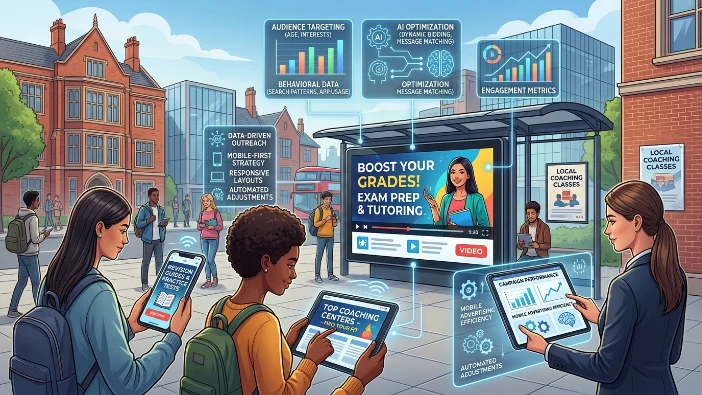
Display ads are changing education marketing in the United Kingdom by shifting student recruitment toward data-driven digital outreach. Coaching centers increasingly use audience targeting, mobile advertising, and behavioral analytics to improve educational visibility and student engagement across online environments.
Traditional offline advertising methods now operate alongside digital student acquisition systems. Coaching centers combine local outreach with online educational visibility strategies.
Mobile learning trends influence advertising formats. Students increasingly consume revision resources through smartphones, video platforms, and educational applications. Display campaigns now prioritize mobile-first layouts and responsive advertising systems.
Data analytics improve campaign accuracy. Educational institutions track audience engagement, advertisement interaction, and student behavior patterns to refine targeting strategies.
Artificial intelligence systems also support automated advertising optimization. These systems analyze performance data and adjust placements, audience selection, and display frequency.
Personalized educational messaging continues expanding. Students receive advertisements aligned with specific subjects, examination goals, and learning interests instead of broad generic educational campaigns.
Online learning growth also increases digital competition. More coaching providers operate hybrid and fully online programs, increasing the importance of visibility across educational platforms.
Display advertising remains an important awareness tool because it supports large-scale educational communication while maintaining audience-specific targeting across the United Kingdom’s digital learning environment.